






Atlit, Israel-based BioFishency said it has developed a progress that eliminates off-flavors in trout that can arise when the fish are raised in a recirculating aquaculture system (RAS).
The company, which provides electro-chemical and biological water treatment solutions for RAS, said it has created a method to remove MIB and geosmin from water and fish tissues. MIB, or methylisoborneol, is often responsible for the “musty” off-flavor in fish and other aquaculture products like shrimp, while geosmin is associated with “muddy” flavors.
According to BioFishency, its “BioFishency ELX” system removed both MIB and geosmin over the course of multiple tests at the company’s R&D facility – which the company touts a “world first” for RAS. The process uses electro-chemical water treatment to remove the off flavors in what the company said is a “multi-stage, single-cycle solution” that requires less energy and low space.
"Off-flavors significantly impact fish quality and value, where BioFishency ELX has proven successful in their removal. Traditional biological RAS, purging under starvation, consumes vast amounts of water, while growers lose approximately 5 percent in fish weight, lowering market value,” BioFishency Co-Founder and CTO Igal Magen said. “BioFishency ELX presents RAS farmers with a sustainable, cost-saving solution that enables fish welfare, and normal growth during purging."
In a release, the company said it has established through testing that the process removes MIB and geosmin in fish in less than 10 days total. During the testing process, the water fish were exposed to was spiked with both chemicals, and the BioFishency ELX system was introduced while “purging and feeding.”
"In seven days, MIB was not detected in the fish flesh, and within 10 days, geosmin was fully removed from the skin and muscles – extraordinary, never-seen-before results,” Ori Lahav with BioFishency said.
Lahav said Yonathan Zohar, a professor and chair of the University System of Maryland Department of Marine Biotechnology, will be performing additional testing of the system on salmon.
BioFishency was established in 2013, and in 2019, it received an investment from Aqua-Spark in a round of funding that raised USD 2.4 million (EUR 2.2 million) in total. The company produces both its electro-chemical water treatment and a biofilter for use in RAS facilities.
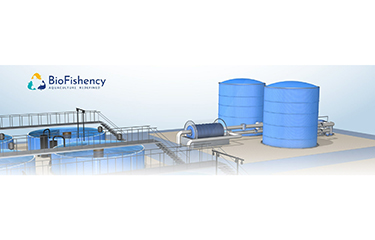
Photo courtesy of BioFishency
