
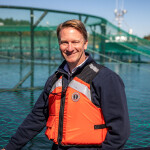

Blue Wave Aquaculture Co-Founder Shaurya Agarwal knows how much work developing a successful recirculating aquaculture system (RAS) takes because he’s already failed at it before.
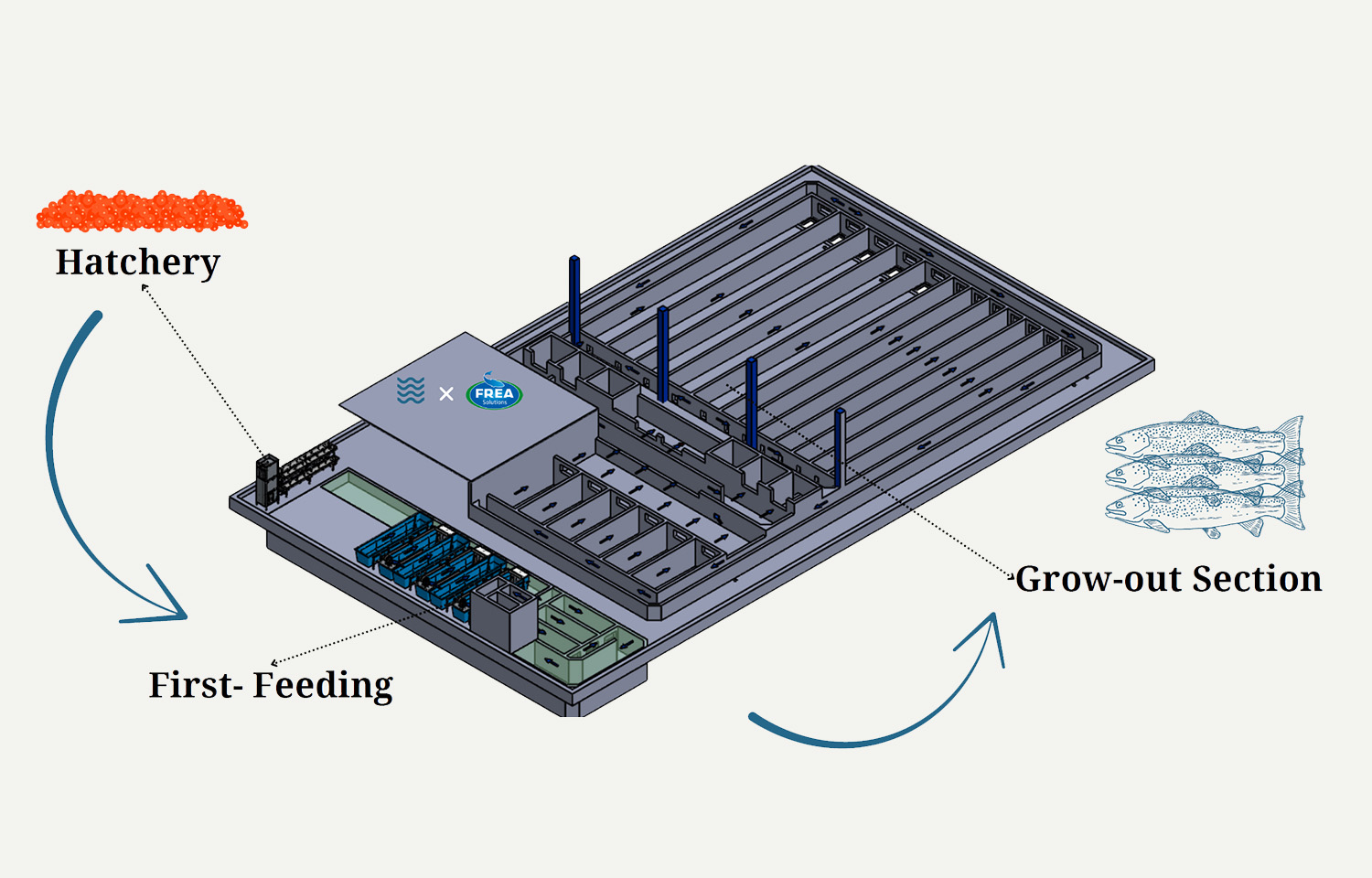
Blue Wave Aquaculture is planning to build what Agarwal called the first commercial-scale trout RAS in India, comprising a 100-metric-ton (MT) facility that can later be expanded to a total of 400 MT of rainbow trout. The company is actively seeking investors for the approximately USD 2 million (EUR 1.7 million) project, which has already raised roughly USD 800,000 (EUR 683,000).
Agarwal told SeafoodSource the new project is the result of years of personal experience. He studied in the U.S., majoring in entrepreneurship with a concentration in marine biology at Bryant University before going on to take courses at Cornell Unversity focused on recirculating aquaculture systems.
He returned to his home country of India in 2020, seeking to pursue a project in aquaculture.
“I started deep into research, understanding what the new trends are and how to get into the industry. I discovered there were two major things popping up in India. One was recirculating aquaculture systems and one was biofloc systems,” Agarwal said.
He said that at the time, most companies in India were moving toward a biofloc system – which uses microbial technology and bacteria to raise fish in a land-based system – because of its low initial starting costs and supposedly "easy execution." According to Agarwal the “easy” part hasn’t panned out as fine tuning those systems is more complicated than it seems.
“You need to be a water quality expert to really do biofloc, so most of the projects fail. I don’t know of any successful biofloc projects in India,” he said.
Agarwal instead took the RAS route and began by doing research and visiting farms in Estonia, Denmark, and Norway to learn more before starting his own RAS system.
“I did a DIY RAS system where I introduced a local catfish. The project kind of failed miserably,” Agarwal said.
Agarwal’s DIY system ran into a host of issues, including cannibalistic catfish, uncontrollable ammonia levels, and dissolved oxygen dropping to just two parts per million.
“Some days we faced catastrophic water leakage from the system; the whole area was flooded at times. It was quite an adventure,” Agarwal said.
Moving on from catfish, Agarwal launched a different RAS product focusing on rainbow trout. That project went slightly better but was still in many ways a failure, according to Agarwal.
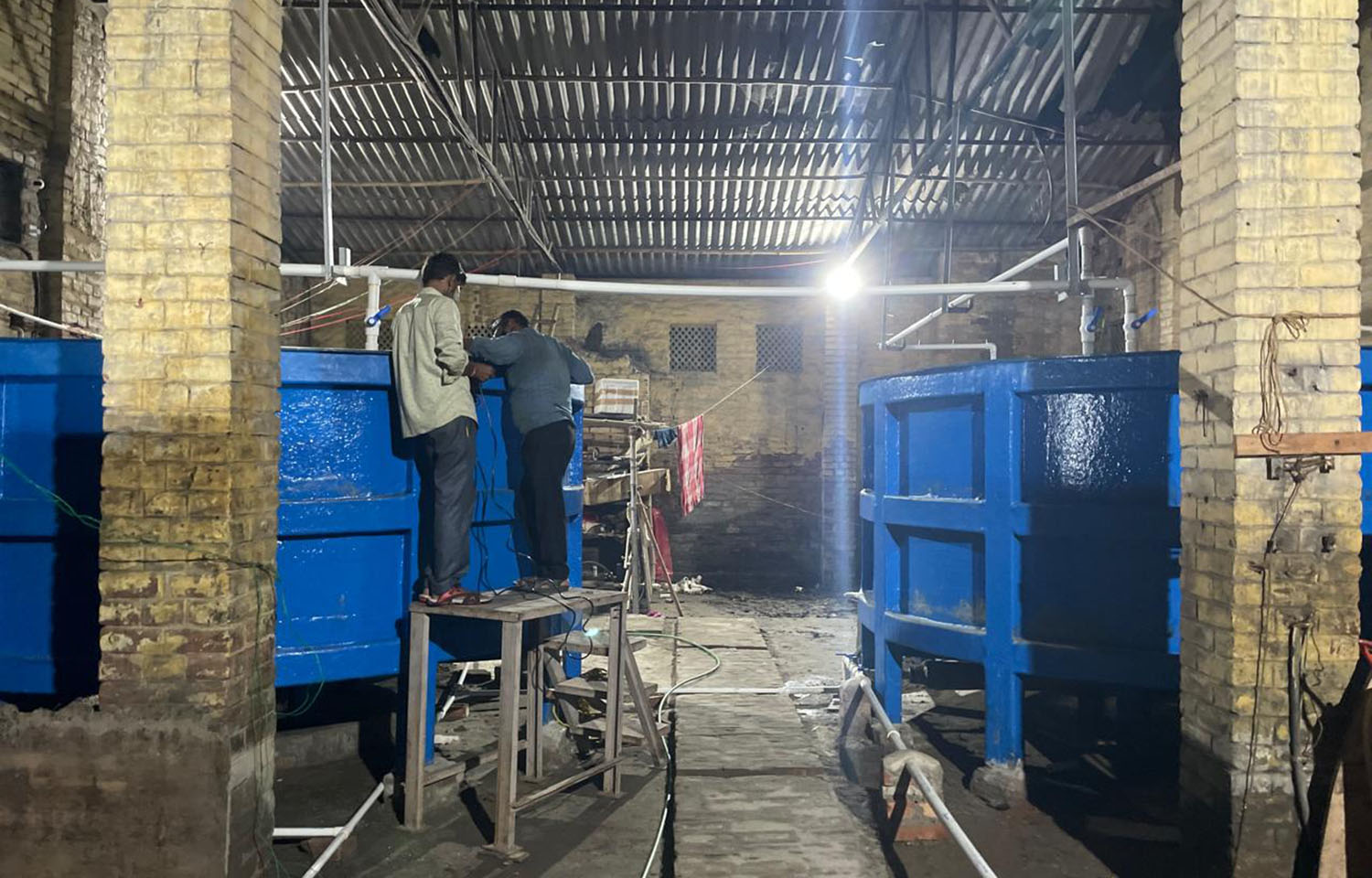
“I introduced the trout, and it failed and succeeded at the same time because I got the growth, I got the main aspects of RAS, but I was facing challenges in terms of machinery. There were a lot of ammonia issues and a lot of water leak issues. When I say water leak I mean 1 liter per minute,” Agarwal said. “I realized that RAS machinery is not something you just invent overnight.”
From that point on, Agarwal partnered with FREA Solutions, a Danish aquaculture firm that provides technologies and products for fish farming and has ample experience farming rainbow trout. The low capex and operational expenditure requirements of the company’s products were exactly what an RAS operation in India needs, Agarwal said.
“It’s so smooth, and it requires so little electricity to function. We thought it would be perfect for a country like India,” Agarwal said.
Agarwal said he chose trout rather than the much more commonly farmed shrimp because shrimp farming is still relatively experimental in RAS farms by comparison, and he wasn’t looking to begin an experimental business.
“The reason why I didn’t choose shrimp for RAS is because it’s still in a trial and development phase. I’m not trying to do research here. I’m trying to build a sustainable long-term business, so trying it out with shrimp was not really what I was planning,” he said. “I would wait for a more robust system to be out in the market before I can start trying it myself.”
Agarwal also said the location away from the traditional spot for trout farms in India’s cooler mountainous regions was also a key decision related to the needs of a RAS. The electrical supply in the smaller cities of those regions is more inconsistent than it is in larger cities farther south, making running a fish farm that requires constant machinery a bigger risk. It also makes for longer transit times to major markets.
The current planned location in Kolkata is just 18 miles to an international airport and 10 miles from the city center, making it close to both domestic and international markets.
That location comes with its own challenges, though, like the need to cool the water supply. Agarwal said he’s already factored that into his plans and observed the challenges of other RAS companies that needed to chill water – like Atlantic Sapphire – closely to make sure their own is adequate.
Agarwal said the company is planning to export roughly 75 percent of its production and will benefit from low construction and operating costs in India. Construction materials like concrete are less expensive in India than elsewhere, as is labor and other key resources.
The company will also save costs by reducing its need for complicated waste management as nearby orchards are planning to use its byproducts as fertilizer – something that is easier to accomplish at an orchard than at operations like a vegetable farm as the waste doesn’t directly touch the products for sale.
He said all considered, the operating expenses per kilogram of trout for many RAS farms was coming out to USD 7.00 (EUR 5.97), while the calculations for Blue Wave were at USD 3.00 (EUR 2.56).
Agarwal said the business side of things is largely being handled by co-founder Vatsal Agarwal, who is also his brother.
“He joined me after my initial pilot was over. He was looking at the company more in terms of the financial angle, and he was questioning me on things like, ‘Where are you going to sell? Do you know how much you’re going to sell?’” Agarwal said. “He has really taken control over that.”
So far, Vatsal has established offtake agreements with nearby companies and has also already sold some of the company’s first products at local markets – which have generated some excitement for fresh fish.
“When we took it to the market it and sold it, it was supposed to sell at INR 800 [USD 9.31, EUR 7.95],” Agarwal said. “But, it sold for INR 1,300 [USD 15.13, EUR 12.92] at auction because the fish was live. They’d never seen live trout in the market before.”
He said the timing is right to begin a trout RAS project in India, as the government is training more than 17,000 farmers in RAS in the country but the country still has no commercial-scale RAS farm.
“There’s no commercial-scale farm to lead the way. We aim to be that farm,” Agarwal said. “In India, people jump on wagons. They need an engine, they need someone to do it, and then everyone wants to jump on that same wagon. This is why we want to do this at 100 tons. We want to demonstrate to them that this is possible so they can start putting money into the system and maybe develop their own farm.”
