






Implementing modern recirculating aquaculture system (RAS) facilities may offer Chilean aquaculture companies a competitive advantage, according to aquatic technology company Innovasea.
“The global perception of animal protein production is changing. Customers are better informed and make decisions based not only on price and look but also considering origin, environmental impact, and certifications,” Innovasea Systems Designer Miguel Martin told SeafoodSource. “Today, global competition is rising, with many countries looking for an advantage with more modern, state-of-the-art RAS facilities. [For Chile] to keep up and retain our position, we must accelerate the transition from older, outdated farms and replace them with advanced, data-driven production approaches.”
Martin is a Chilean who spent nearly a decade in Europe developing expertise in facility management and RAS design, having previously worked at Nofitech and Pure Salmon Technology. He has designed projects all over the world, including in Norway, Scotland, Japan, the Faroe Islands, Brunei, and the U.S. He returned to Chile this year and was appointed to his current position at Innovasea in April.
According to Martin, Chile’s aquaculture and RAS landscape “has definitely changed” in the 10 years he worked abroad.
“While we’ve seen more projects and new sites, which is good, I know there is still room for a more drastic shift to RAS or partial RAS,” he said. “RAS technology has been proven for smolt, post-smolt, and ‘large smolt’ production, and it aligns with the increasing environmental concerns observed worldwide. Chile’s abundance of high-quality, incoming water will still be a competitive advantage in that the water will need minimal treatment before entering the system. I believe aquaculture – especially in Chile – must embrace this transition toward more effective, sustainable, and profitable production methods.”
While high-quality, abundant water may help with RAS facilities, it also will likely keep Chile from transitioning too heavily toward land-based aquaculture.
“For salmonids, I don’t see it coming in the foreseeable future. Similarly to Norway and the other traditional salmon-producing regions, we have a geographical advantage that makes 100 percent land-based production less attractive than for other countries,” he said. “Perhaps hybrid systems such as Salmon Evolution could open possibilities of decentralizing production; however, that would be very site-specific and more a complementary method rather than a gamechanger.”
However, Martin said for other species with higher commercial value, land production could pose a more suitable alternative, but it would need to be aimed at specific niches and/or gourmet products.
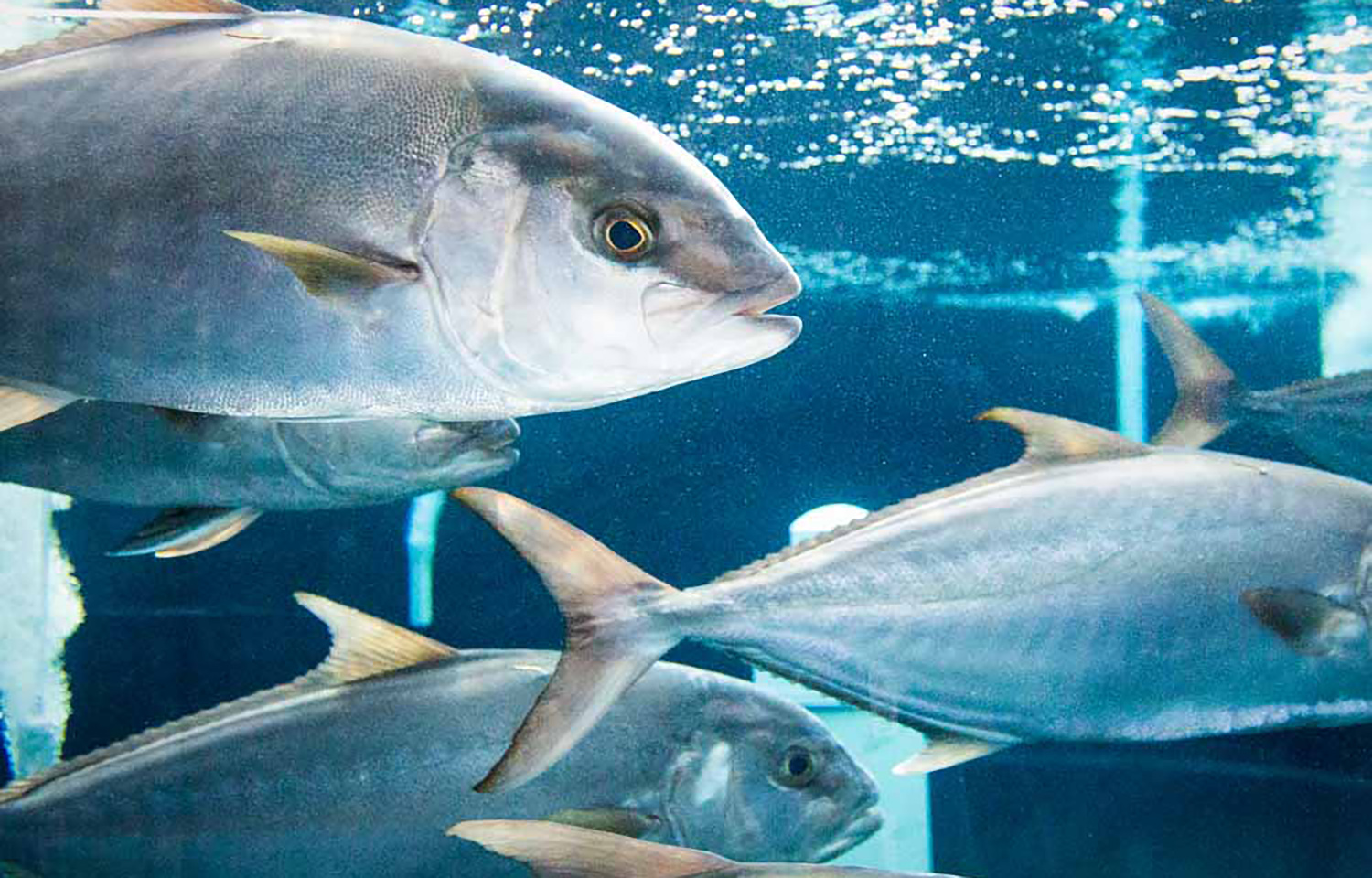
Innovasea has worked with a number of species in land- and sea-based projects, while its sister company, Santomar, located in Baja California, Mexico, produces totoaba and red snapper. Other projects around the world that employ RAS technology have focused on tilapia, cobia, or seriola, and it is in the latter species where Martin sees significant local potential.
“[Seriola] represents an excellent candidate to diversify Chilean aquaculture and an opportunity for Innovasea to localize its global expertise to a specific market. On the other hand, the company know-how could be applied mid/long term for production of native species in their last sprint of the experimental phase, such as corvina or conger, both of which are products with excellent market price and prospects,” he said.
Innovation that will help give Chile a competitive advantage does not just come in the form of RAS technology, Martin said.
He highlighted that Chilean salmon farmers have a number of interesting operations that are employing novel strategies, in particular Salmones Austral’s Piscicultura Arrayanes site.
“They produce post-smolt using fresh and saltwater, growing fish that are better adapted to life in the fjords before the sea-based stage,” Martin said. “This is something that Norway considers key in its salmon production strategy and has been promoted by regulations. Despite the many differences between the Chilean and Norwegian industries, there is a consensus on the welfare and sanitary benefits of transferring more robust fish to sea sites.”
He also pointed to aquaculture firm Lago Sofia’s farm as an interesting example due to its innovative, unique concept of individual recirculation, with a mini RAS attached to every tank to manage water quality. This solution may not be suitable for every site, but the technology provides the highest degree of flexibility and biosecurity, mitigating associated risks, he said.
“The larger the farm, the smaller the margin of error, as contingencies that would be manageable at a lower scale turn into out-of-hand problems. Scaling up a more controllable concept can tackle this issue, allowing the learning curve to correlate with expectations,” Martin said.
Generally, Martin said he is upbeat about the Chilean aquaculture industry’s adoption of modern technology and is excited about how much room there is to grow in the space.
“I think Chile is well-aligned with current industry standards. The collaboration with other salmon producers and suppliers is very good. As a rule, Chile should focus on investing more in proven solutions that will qualitatively improve the final product and brand, raise margins, and allow us to achieve sustainable results – leading to a more favorable view on aquaculture practices,” he said.
