






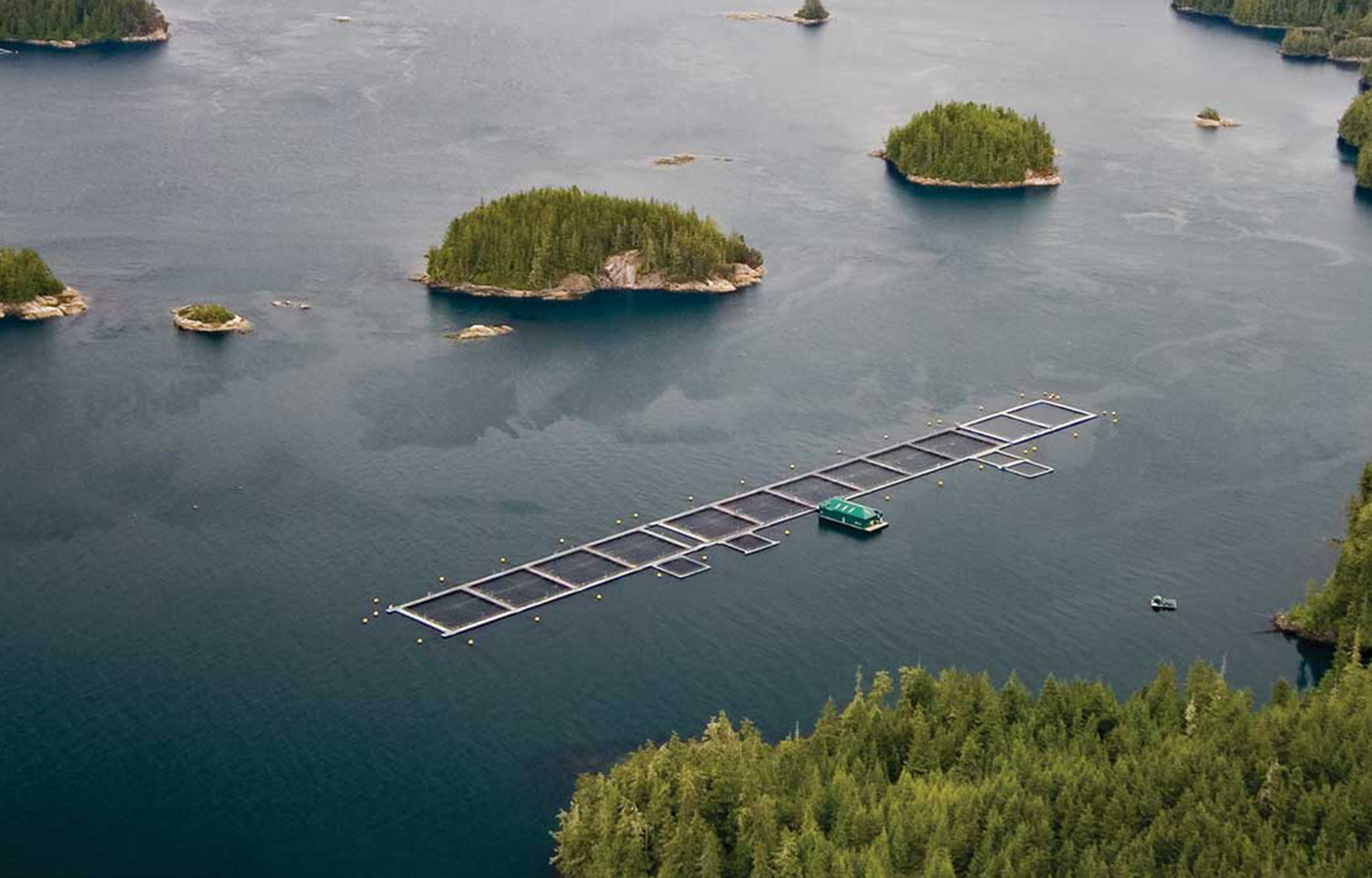
The Canadian government has released its draft salmon aquaculture transition plan to remove net pen farming from the province of British Columbia after delaying the process again in late August.
The Canadian Department of Fisheries and Oceans (DFO) first kicked off the B.C. salmon net-pen transition plan in August 2022 with the launch in engagement efforts to start planning a transition away from in-water aquaculture. That plan was itself started two years after the DFO suddenly announced it was transitioning away from fish farms in the Discovery Islands, B.C. in a decision that blindsided local communities.
Four years after that first announcement and three fisheries ministers later, the DFO has finally released its draft salmon aquaculture transition plan implementing a ban on open net-pen salmon aquaculture by 30 June 2029.
The plan has four overarching themes: support for First Nations, workers, and communities affected by the transition; identifying economic supports to adopt cleaner aquaculture technologies; creating milestones, principles, and criteria for phasing out open net-pen salmon aquaculture; and managing open net-pen salmon aquaculture until the ban is fully implemented.
“This transition plan outlines next steps in the development of a responsible approach to support the transition from open net-pen salmon aquaculture to more sustainable and innovative approaches, a response which will encourage collaboration and partnerships to support long term sustainable economic opportunities in B.C. coastal communities,” the plan states. “Transition will be achieved through collaboration amongst federal, provincial, municipal and First Nations’ governments acting together.”
The B.C. Salmon Farmers Association, which has objected to some of DFO’s actions on salmon farming in the region, said it received the draft transition framework and is still reviewing it.
“Our sector has submitted thousands of pages of documentation to the federal government to show its commitment to this process, and our hope is that these efforts are reflected in the draft transition framework,” the association said. “However, we continue to stress that the timeline for the transition to closed containment by 2029 is unrealistic, unachievable, and risks significant negative impacts on our sector and the communities that depend on it.”
The association pushed for at least a six-year renewal of aquaculture licenses given the timelines salmon farms work with, but ended up only receiving a five-year renewal period.
“This decision will signal continued industry stagnation and uncertainty, resulting in a continued lack of investor confidence in our B.C. aquaculture sector,” Skretting North America Managing Director Trevor Stanley said in a release soon after that decision. “The result is reduced investment in innovation, ultimately forcing us to look for growth and investment opportunities in other progressive aquaculture sectors.”
The association has also objected to the DFO’s assertion that banning net-pen salmon farming is being done for environmental protection reasons. The plan said it is “about protecting ecosystems and wild Pacific salmon,” but BC Salmon Farmers Association has repeatedly pointed out that a DFO study found little link between sea lice on farmed salmon and wild salmon – though other scientists claimed the study was flawed.
“We remain committed to evolving responsibly in partnership and/or agreement with First Nations in whose territories we operate to enhance wild salmon recovery efforts, support self-determination and the path of reconciliation with BC First Nations, reduce any potential risks from farming, foster economic growth in rural and coastal communities, drive technological innovation and development, and build a thriving blue economy in B.C.,” BC Salmon Farmers Association said.
