






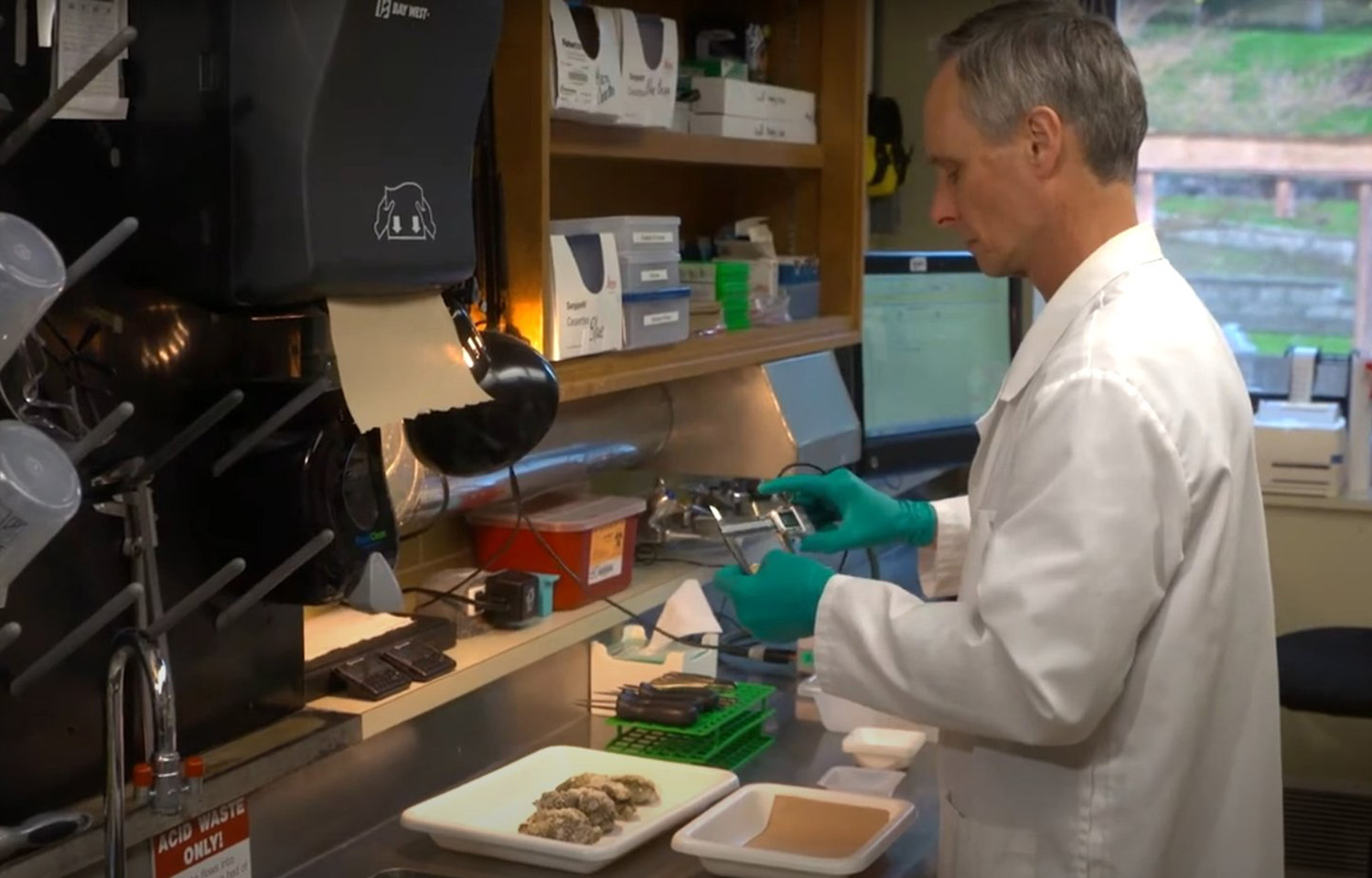
The Canadian Food Inspection Agency (CFIA) has confirmed the presence of two different oyster diseases in Spence Cove, New Brunswick, Canada.
The CFIA reported the presence of multinucleate sphere unknown (MSX), caused by the parasite Haplosporidium nelsoni, and Dermo, also known as Perkinsosis, which is caused by Perkinsus marinus, in Spence Cove. Neither pathogen poses a health risk to humans, and the oysters are still safe to eat; however, both cause increased oyster mortality and decreased growth rates.
“This is the first confirmed case of MSX in New Brunswick and the first confirmed case of Dermo in Canada,” the CFIA said.
To limit the spread of the pathogens, CFIA, Canada’s Department of Fisheries and Oceans (DFO), and provincial officials in New Brunswick are working with stakeholders and Indigenous communities to monitor the situation.
“These actions are part of the Canada's One Health approach to prepare for, detect, and manage animal diseases,” CFIA said. “In addition to existing robust protective measures and increased animal surveillance measures, the CFIA, DFO, and the province continue to conduct tracing activities and testing of oysters to gain insight into the presence of MSX and Dermo in the area.”
The CFIA said its response to the detection will entail movement controls on oysters in the Spence Cove area, further investigations into the potential source of the detection, engaging oyster harvesters and producers to monitor mollusk health, and ensuring information regarding its detection and movement control actions are widely available to producers in the area.
A CFIA spokesperson told SeafoodSource that it "continues to actively investigate and monitor the situation and will provide updates as they become available."
The confirmation of both MSX and Dermo adds to issues for the region’s oyster industry.
CFIA reported the presence of MSX in Bedeque Bay, Prince Edward Island (P.E.I.), in July, which led to quarantines and movement controls in the area. Bedeque Bay is located across the Northumberland Strait from Spence Cove.
According to the CFIA, there is potentially an unknown intermediary host for the MSX pathogen, making it difficult for scientists to determine how it spreads and why. With Dermo, however, the spread is direct from oyster to oyster, meaning contaminated water is the main source of the disease spreading.
Soon after MSX was detected in P.E.I., multiple federal agencies in Canada began to work on helping the oyster industry. The DFO announced plans to provide up to CAD 1 million (USD 716,000, EUR 687,000) in funding to support scientific research to better understand MSX, and Canada Minister of Fisheries, Oceans, and the Canadian Coast Guard Diane Lebouthillier also announced a new science summit on MSX, which took place in Charlottetown, P.E.I., on 13 and 14 November.
The parasite has already had an impact on the oyster industry in P.E.I. In July, Future Seafoods Owner Erskine Lewis told the CBC he was facing issues at his processing facility in Fernwood, P.E.I.. Burleigh Bros. Seafood General Manager Thomas Burleigh told the CBC in a separate story he was worried the parasite would devastate the industry.
"We've been in the business for 90 years. We're really worried if we're going to make it to 100 if this continues to spread," he said.
Oysters are a multi-million-dollar industry for P.E.I. and New Brunswick. According to the DFO, in 2022, oyster aquaculture was worth CAD 14.6 million (USD 10.4 million, EUR 10 million) in P.E.I. and just under CAD 24 million (USD 17.2 million, EUR 16.5 million) in New Brunswick.
Prior to its detection in P.E.I. in July, MSX had only been known to affect oysters in the U.S. in a range stretching from the Damariscotta River in the U.S. State of Maine to Biscayne Bay in Florida. According to the Virginia Institute of Marine Science, it was first documented in 1957 in Delaware Bay where it caused massive oyster mortalities.
