






Fisheries and Oceans Canada (DFO) has reaffirmed its commitment to working with Newfoundland and Labrador aquaculture companies after a local salmon conservation group accused several of the province's firms of committing environmental violations.
In early July, the Atlantic Salmon Federation (ASF) released evidence of what it said was illegal dumping at salmon farms off the south coast of Newfoundland and demanded that the DFO place a moratorium on all new aquaculture expansion.
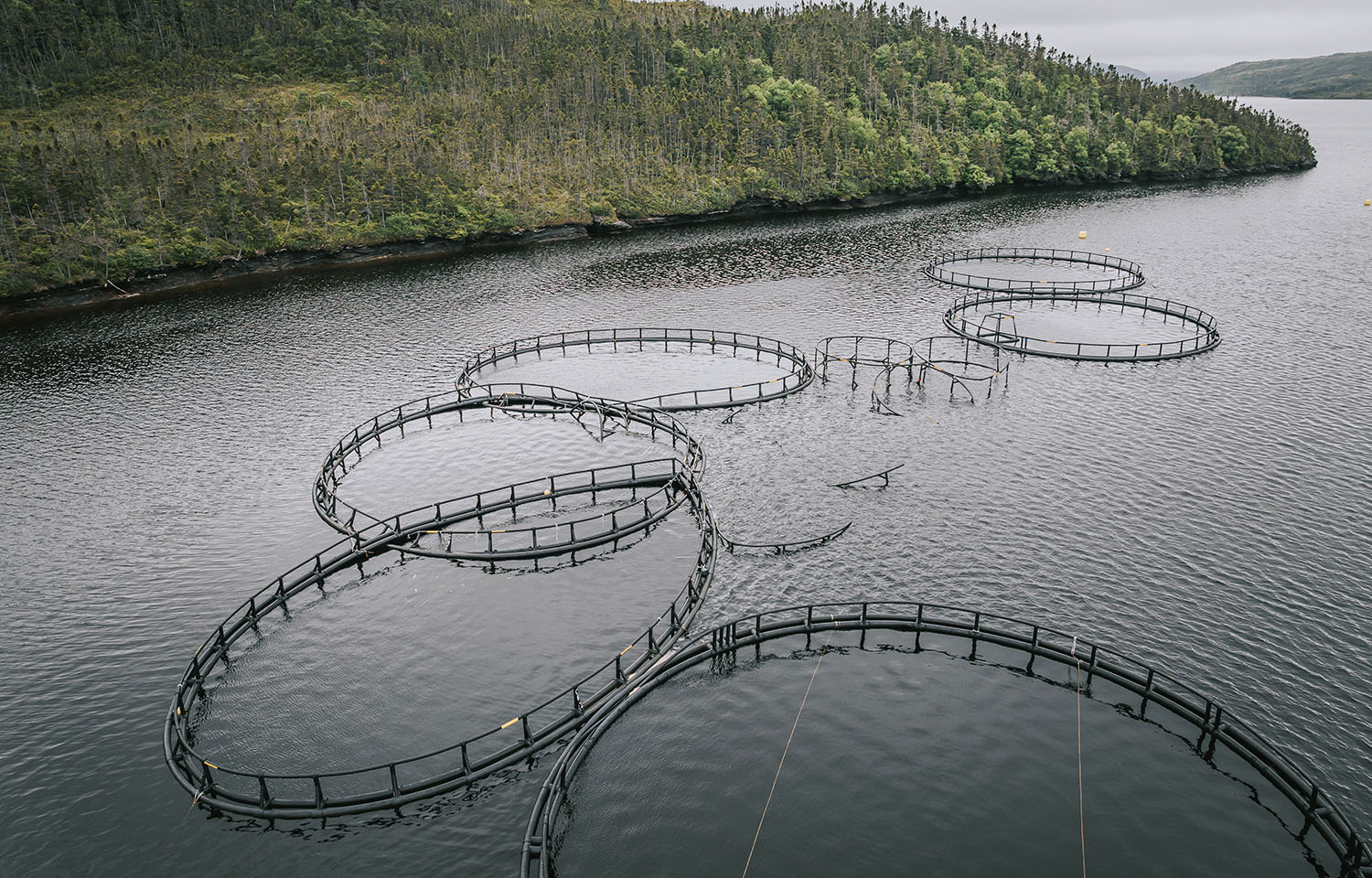
The allegations stemmed from a report commissioned by ASF and conducted by Oxford, U.K.-based image analysis firm Planetixx, which used satellite imagery of the area to identify dumping sites. The ASF then further investigated these sites, taking both underwater and aerial images of the debris featured in the July report.
“Satellite images revealed six sites with clusters of misshapen, oddly arranged sea cages, some of which have persisted in the same location since 2011, when high-resolution images first became available," the ASF said in a release about the report’s findings. "The number of degraded and obsolete sea cages at each location varied over time – from a handful to over 130 in one place.”
Another of the report’s findings was that despite the fact that fish-farming firms in the area had sought to expand, 53 of the 106 sites surveyed were not being used by the aquaculture firms that owned them.
“Given the low utilization of existing sites, the documented plastic pollution, and other well-known problems ... the responsible thing for Canada to do is place a moratorium on all salmon farm expansion in Newfoundland and Labrador until the mess can be cleaned up and problems fixed,” ASF Vice President of Communications Neville Crabbe said.
In response to the report’s publication, DFO told SeafoodSource that while it takes “potential risks to fish and fish habitat seriously,” it had reviewed ASF’s reports and had not found any dumping that contravened Canadian law or which caused “harmful alteration, disruption, or destruction of fish habitat or death of fish.”
Crabbe called this statement an “extremely cynical and narrow response” to a dangerous situation.
"Who is going to defend against the undisputed widespread disposal of industrial equipment at sea?" he said.
The Canadian Environmental Protection Act (CEPA) of 1999 generally prohibits disposal at sea but makes exceptions – with a permit – for debris related to fish farming and processing that does not harm existing habitats or obstruct navigation.
According to Schedule C of the CEPA, these allowable substances can include platforms or structures, including “bulky substances that are primarily composed of iron, steel, concrete, or other similar matter that does not have a significant adverse effect, other than a physical effect, on the sea or the seabed.”
Though the DFO can reference the act to say the structures in question do not violate the law, Crabbe said he believes that the DFO's stance runs contrary to its ban on sea-pen salmon farming in British Columbia, which he said proves the department recognizes the dangers inherent in aquaculture.
“The situation in Newfoundland highlights Canada’s inconsistent aquaculture policies,” he said in a July release.
Nevertheless, the DFO reaffirmed its commitment to working with the aquaculture industry in the nation's Atlantic provinces:
“The Government of Newfoundland and Labrador values our aquaculture industry, which contributed CAD 282 million [USD 204 million, EUR 175 million] in 2024 to support rural coastal communities while producing healthy protein to supply markets around the world,” the DFO told SeafoodSource. "We remain committed to ensuring that aquaculture is conducted in a sustainable and environmentally friendly manner. We continue to value our relationship with aquaculture companies that have been responsive and cooperative with this government’s efforts to achieve economic development and diversification with environmental responsibility."
DFO also said it requires all salmonid-farming firms to submit waste management plans as part of annual site reviews.
