






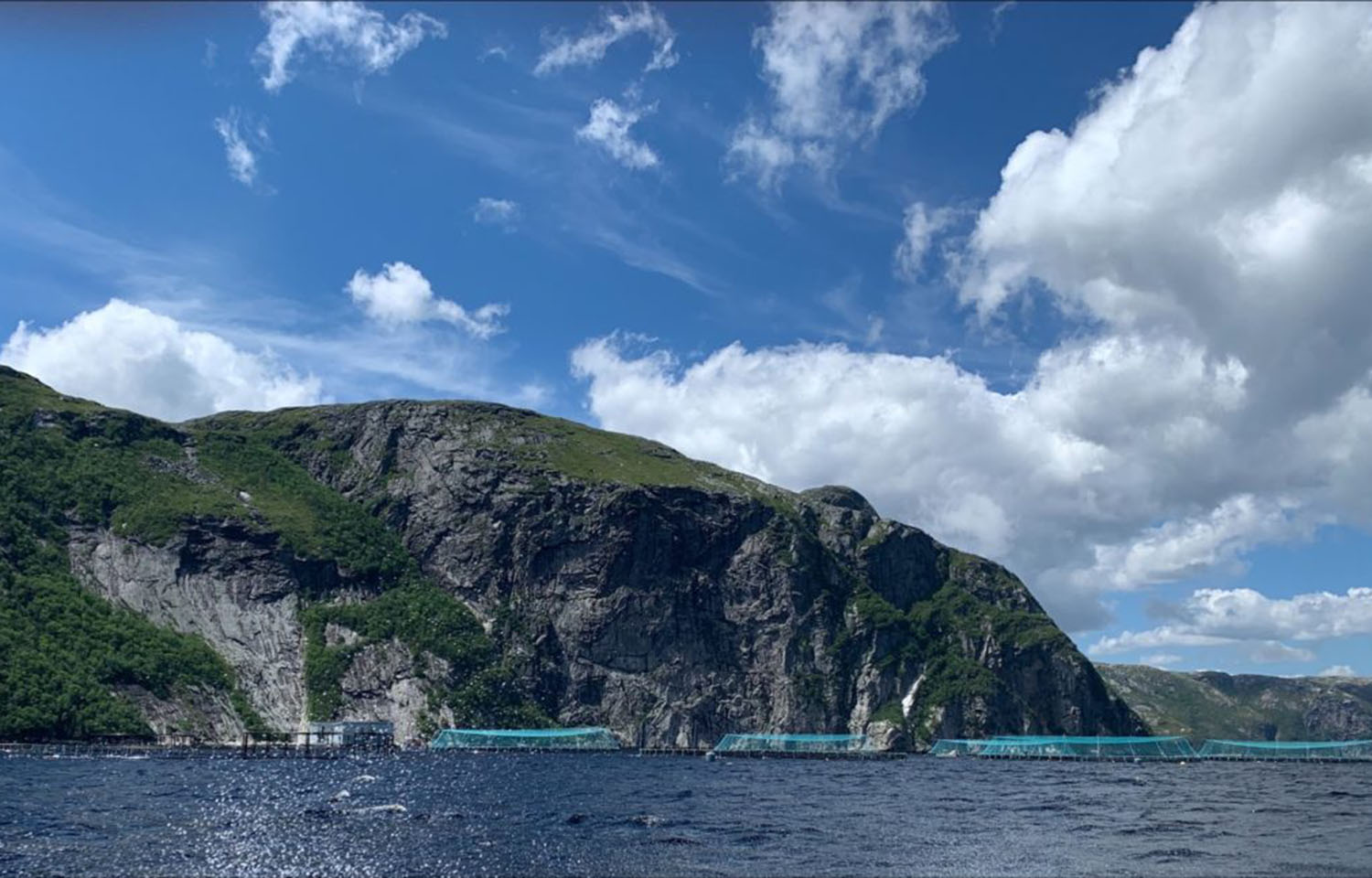
Mowi Canada East has confirmed the death of approximately 400,000 fish acrossthree of its Newfoundland sites: Broad Cove, Harvey Hill East, and Harvey Hill South.
Mowi issued a 4 September statement via Facebook to address “recent public commentary” of the incident, which featured reports that up to 1.7 million fish had been affected by the die off.
The company said the confusion apparently stemmed from its initial report on the Newfoundland Aquaculture Portal, which noted that 10 percent of the site population had been affected, but listed both the number of fish affected by the event and the total population of the three sites as 1.7 million fish. The 4 September statement clarifies that the company is still working to establish a final count of fish affected, and will update the public via the Newfoundland Aquaculture Portal when that task is complete.
This is the second fish die off at Mowi Canada East in recent months, bringing the total number of fish dead up to at least 576,249. The high mortality rates this summer have drawn comparisons to a series of 2019 mortality events that killed approximately 2 million fish at the company’s farms in the area.
Of the most recent event, Mowi said that once 10 percent of the sites’ population was affected (the threshold at which farmers are required to report such events to the government), it informed the Government of Newfoundland and Labrador within 24 hours, and reported the incident on the Newfoundland Aquaculture Portal, as required.
It also revealed the cause of the event. Data from environmental sensors showed the die off was due to thermocline inversion, when cold water from the deep ocean, which contains low oxygen levels, comes to the surface and interacts with much warmer water.
The statement also said the “incident is a painful loss for the dedicated and hard-working staff who have cared for and reared these fish for the last two years.”
“It is an unfortunate fact that all livestock farmers will encounter and must manage environmental mortality events from time to time,” the company said.
Activists and conservationists opposed to salmon farming in the region have already cited the event as more evidence of the potential harm of in-ocean salmon farming.
Atlantic Salmon Federation (ASF) Vice President of Communications Neville Crabbe told SeafoodSource that “for us [this event] is another piece to support our evidence for a stop to expansion.”
Crabbe said that the ASF, a wild salmon conservation organization, has long sought to work with the Newfoundland and Labrador aquaculture industry, but has recently called for a governmental moratorium on new aquaculture expansion in the area.
“The industry seems to be leaping from crisis to crisis while still pushing to expand,” said Crabbe.
Crabbe added that multiple factors that are commonly found in salmon farms usually work in concert to create mass mortality events, including warm water, sea lice, and disease.
“Weakened fish are more susceptible to stress from warm water,” he said.
