






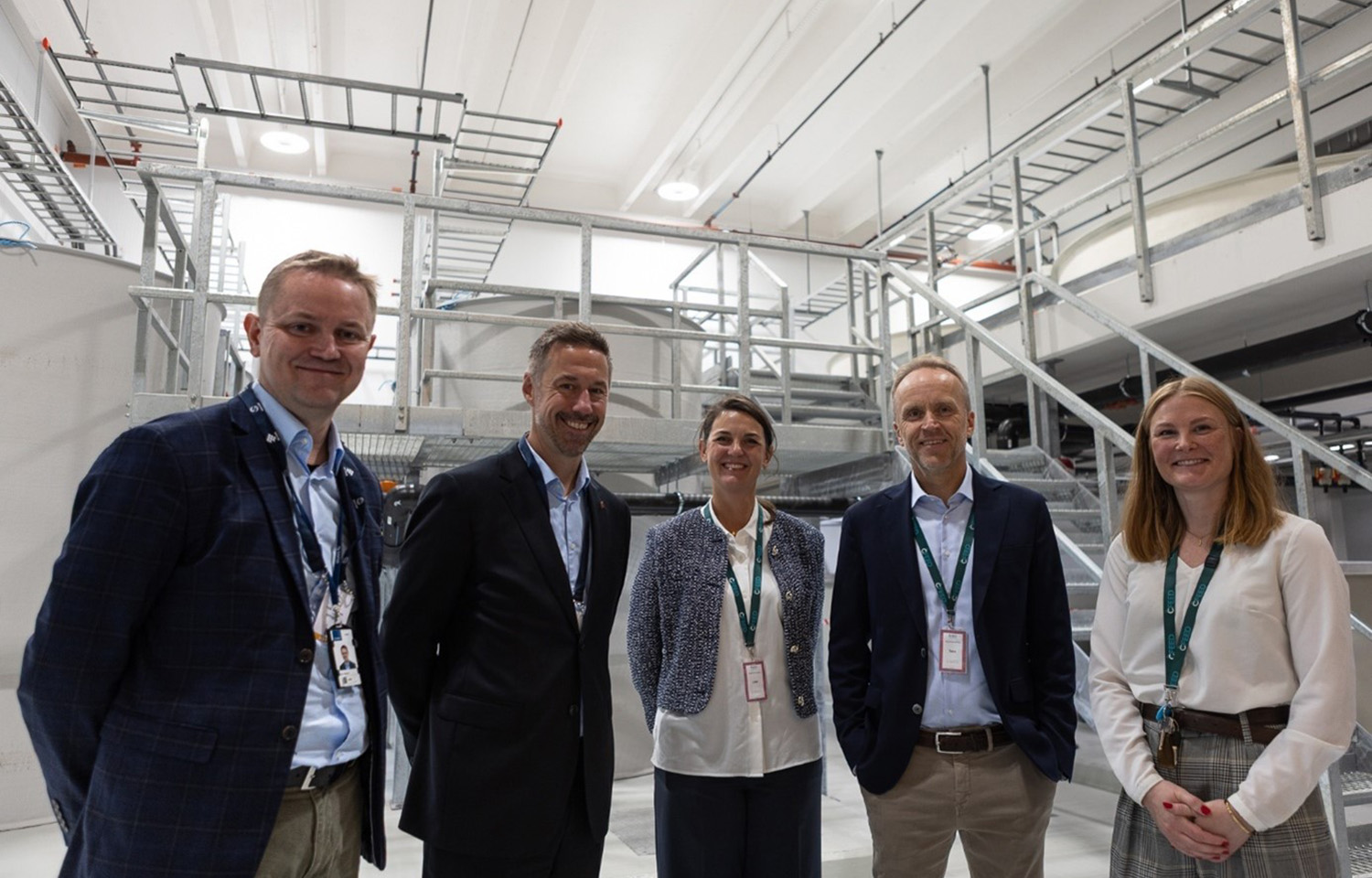
Trondheim, Norway-based aquaculture biotechnology firm CFEED, which grows live hatchable Acartia tonsa copepod eggs for use in fish feed, has dramatically expanded its production facility in Vanvikan, Norway, in order to meet demand from the industry for live feed.
The new facility, which officially opened with a visit from Norway’s Norway's State Secretary for the Ministry of Trade, Industry, and Fisheries Even Tronstad Sagebakken, more than triples the production capacity of the original facility, which was already one of the largest of its kind in the world.
"We're not just scaling production; we're enabling the industry to achieve unprecedented levels of efficiency and sustainability,” CFEED CEO Tore Remman said.
Director of Sales and Marketing Linn Baardsgaard added that the expansion will allow the company to more efficiently produce the microalgae that “allows us to maintain the exceptional nutritional profile that makes our copepods so valuable to hatcheries worldwide.”
CFEED representative Madina Sarzhan told SeafoodSource that live copepods make excellent feed because they contain optimal nutritional profiles that – when fed to larval fish – increase long-term survival rates.
“Larval fish are highly sensitive to feed quality, and copepods closely match their natural diets," she said. "This reduces deformities and disease susceptibility, producing healthier, more robust stock for farms.”
It also means that copepods require no chemical or artificial enrichment in order to be optimal ingredients for feed, she said.
Sarzhan also pointed out that CFEED’s product not only maximizes fish health but increases sustainability by lowering reliance on wild-caught copepods.
CFEED was founded in 2014 by marine biologists from Norwegian nonprofit marine institute SINTEF Ocean. It has grown to become a major producer of copepods for live aquaculture feed.
