

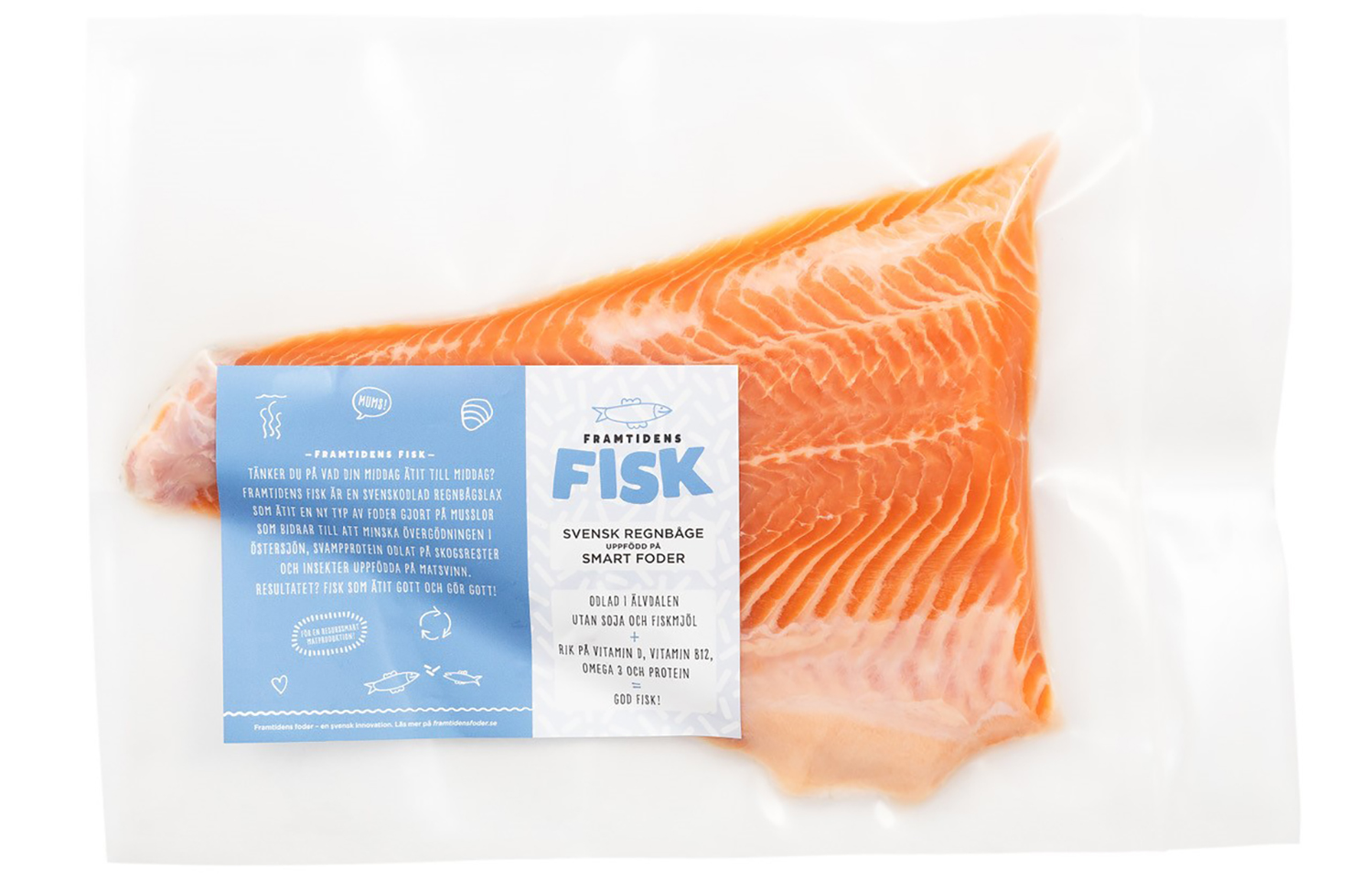
Swedish researchers and aquaculture stakeholders have worked together to launch the world’s first commercially available fish product raised on a feed made from mycoprotein, which are fermented proteins grown from fungi.
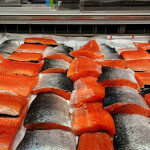
Farmed rainbow trout from aquaculture firm Älvdalslax raised on this new diet, which also includes mussels and insects, has arrived on the shelves of Hemköp and Urban Deli stores and is also being offered by foodservice distributor Fiskhallen Sorunda.
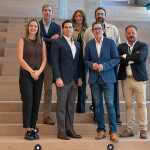
Team members behind the initiative – comprising professionals at Swedish nonprofit Axfoundation, the Swedish University of Agricultural Sciences (SLU), and 25 stakeholder companies, including researchers, farmers, and feed and food companies – said that by turning local byproducts from forests, oceans, and food production processes into nutritious feed, they have generated a circular economy for farmed fish and also strengthened national food security.
Christian Sjöland, the manager on the Axfoundation project “The Feed of the Future for Fish, Pigs, Poultry, and Laying Hens,” called the initiative “the beginning of a major transition,” highlighting the potential for industrial-scale circular feeds that don’t compromise on taste or animal health.
The three protein ingredients will also be tested in pig, chicken, and egg production across Sweden, with SLU Professor of Aquaculture Anders Kiessling hoping to see equally good results.
According to Kiessling, circular feed solutions for farmed fish perform just as well as conventional feeds that typically comprise soy or fishmeal, with sensory tests conducted at the School of Hospitality, Culinary Arts, and Meal Science at Örebro University finding that the fish raised on the innovative diet matches the quality of conventionally fed fish and that growth performance is equally strong.
Kiessling told SeafoodSource there were no real scientific or technical challenges in formulating the new trout feed and that only a few issues arose in logistical and regulatory areas. However, he said this is a common challenge for all new feed sources.
“New materials need to be evaluated in terms of technical suitability, and possible improvements can, in some cases, be made as production of these products scale up in the future,” Kiessling said. “Insects still offer some need for development in lipid protein separation, but new research offers very interesting possibilities in low-fat insects.”
The new circular feed also scored well in comparisons with standard feeds over a complete growth season and in a number of physiological studies on circular raw materials.
Additionally, Kiessling confirmed the feed model could be adapted to other aquatic species with widely varying diets and digestive systems.
“We started with salmonids as it's the dominating species for consumption in our region. In addition, some related studies have been performed with microbial-based feed in tilapia and shrimp,” he said. “We now have a new project starting up where we will broaden our work in tilapia and shrimp, using specifically different fermented feed.”
On the farming side, Älvdalslax didn’t encounter any issues integrating the new feed into its existing operations, according to CEO Anders Beronius.
“It is just as easy to use as traditional feed, which of course is a big pro for our operations,” he said.
At Älvdalslax’s farm, fish are fed in a central feeding system, with the feed doled out in a programmed manner to each cage through hoses. This ensures the process is the same for both the fish eating the new feed and the reference fish swimming in a cage next to them.
According to Beronius, this has been a great way to evaluate the new feed effectively, as it requires the feed to have a composition and consistency that works in similar central feeding systems.
“Since the feed has the same properties as the reference feed, there has been no difference other than that we have handled another version of feed that has been programmed to be fed to the cages where we have the test fish,” he said. “We have fed the test fish exactly the same as we normally do, according to tables for the reference feed. The growth has been just as good as the reference feed, according to the measurements we have made so far.”
Customer feedback has also been positive, Beronius said.
“The Swedish rainbow trout from Älvdalslax is cultivated in fine, cold water in the Älvdalen river, which contributes to a high-quality fish with clean and good taste. This is something we often hear from our customers. This also means that any different, unwanted taste from a new feed should be easy to detect,” he said. “We are really happy to see that the results from the sensory tests show that [the new feed] tastes just as good as fish fed with traditional feed. The taste is described as even more pure and mineral in taste. I see a great potential as soon as it reaches scale.”
The main challenge now, according to Sjöland, is scaling up, as insect, mussel, and mycoprotein ingredients are still produced in relatively small volumes.
For insect meal in particular, the bottleneck stems from sourcing pre-consumer, non-animal food waste as feedstock, he said.
“One solution could be decentralized production units so that waste is processed locally,” Sjöland said. “That way, we avoid transporting heavy, water-rich waste across the country and, instead, move the dried insect meal.”
For mussels, seasonality is the main hurdle, as they can only be harvested at certain times of the year, but building infrastructure such as hydrotreated vegetable oil diesel stations close to the coast or encouraging electrical farming vessels close to the coast could make new farming methods much more efficient, Sjöland said.
Mycoprotein, by contrast, faces fewer logistical barriers, he added, highlighting that it’s largely produced in large bioreactors next to industrial side streams – which ensures stable, year-round supply.
“Insects, mycoprotein, and mussels are all approved ingredients in feed, and the benefits are there – both when it comes to environmental impact and taste of the final product on the plate,” Sjöland said.
The project’s central goal is the Swedish production and sale of poultry, eggs, pigs, and fish raised on feed with low climate impact and resource-efficient ingredients that benefit biodiversity and which can replace a large portion of today’s conventional feed in the long term, he said.
There are also plans to scale distribution if demand grows beyond the initial launch in Sweden.
“We aim to gather the key players for a national feed dialogue at Axfoundation's development center, Torsåker Farm, to find common ground when it comes to what is needed: commitments from retailers, growers, and protein producers in order to make this shift happen. We need a joint plan for how to scale the production of sustainable feed proteins,” Sjöland said.
