



The rapid pace of AI development – and the many opportunities it presents – has created a sense of urgency among industries eager to adopt the technology and unlock its potential. Yet the frameworks for effectively applying it from one business to the next are still taking shape.
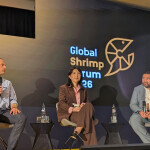
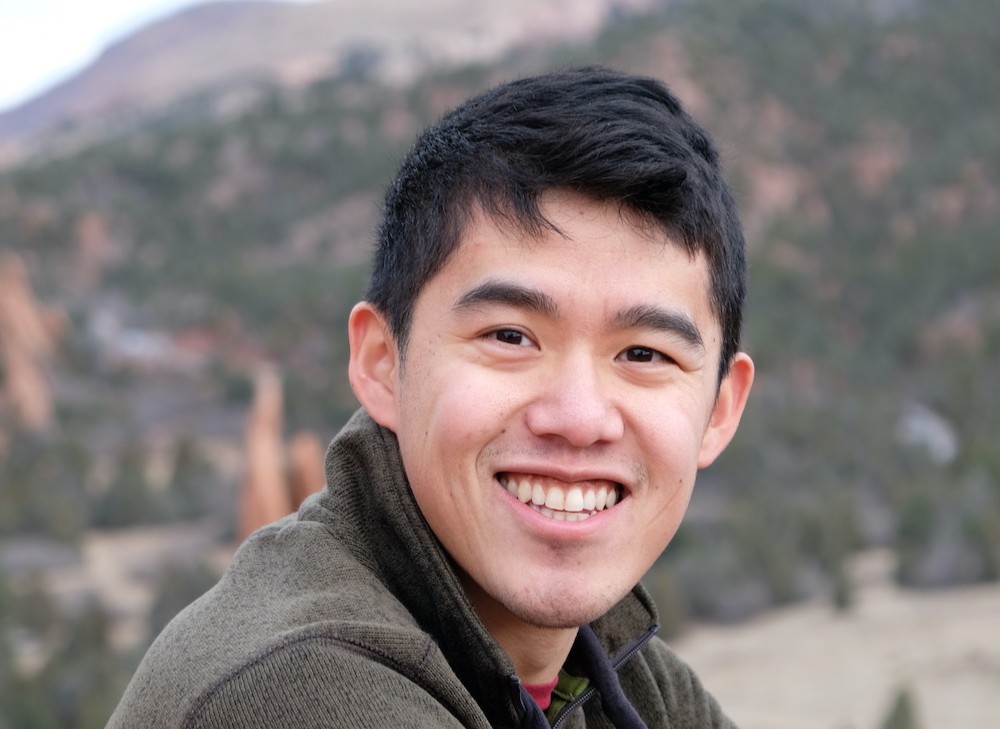
“There’s a lot of lessons from history of not jumping in too quickly [and] jumping in at the right point,” Tony Chen, cofounder and CEO of aquaculture data analytics firm Manolin, said. “I try to tell customers and people within [seafood] to know the problem that you want solved. In order to train AI, you need it to have an answer at the end of the day that's either right or wrong. That's what helps the system get better. And that's the same thing businesses need to do.”
According to Chen, Manolin is trying to do just that by developing user-friendly biological AI models to help improve specific operations at aquaculture farms, including methods to reduce mortality.
“Whether you’re an oyster farmer or a salmon farmer or a tilapia farmer, being able to have that operational efficiency is something that we're all striving towards, and [Manolin is] building models to help customers do that,” Chen said.
After graduating from the Massachusetts Institute of Technology (MIT), Chen took roles building big data systems for various federal agencies in Washington D.C. It was there that he and his then roommate John Costantino encountered oyster farmers in the Chesapeake Bay in the U.S. state of Virginia.
“They told us about the challenges of raising an oyster farm and how many oysters died. They didn't know where it happened and we thought we could help with software and data,” Chen said.
From there, Manolin was born. Founded in 2018 by Chen and Costantino, the company’s mission was to improve aquaculture farm outputs using real time data to recognize patterns and predict future conditions.
“We saw that computers were recognizing patterns in different applications around the world, but we felt like it could be applied towards the ocean space and aquaculture in general,” Chen said.
Although AI is a new and highly advanced technology, according to Chen its application isn't about doing anything novel – rather, it's meant to augment existing services and add an additional layer of capability to systems already in place.
“We call ourselves an AI company, but how a farmer sees us, it's not anything that fancy. It's a new projection. It's a new answer. It's nothing different than … previous ways we've gone about delivering insights or results,” Chen said.
For instance, while experienced farmers already have excellent instincts on how to manage their stock, Chen argues that AI can sharpen those skills even further – identifying patterns in the data that go beyond what farmers can observe with their own eyes and ears.
“We believe that data can help augment that skill set to be even … more powerful,” said Chen. “That's how [Manolin systems get] deployed day to day – when you're choosing whether to harvest or not, what feeds to use, whether to vaccinate or not. Being able to analyze those questions at a moment's notice and understand the trade-offs is really how we try to deploy our system.”
From its inception, one of Manolin’s key missions was to help farmers predict disease. To do that, Chen and his colleagues, who knew very little about aquaculture, were forced to do a lot of research.
“We needed to learn a little bit about what these diseases are … We didn't have a degree in fish health, so what did [we] do? Ten years ago, it was let's go to Wikipedia, let's go to Google, let's read research papers,” Chen said. “And through many years, our team accumulated a lot of resources around these different diseases.”
Recognizing that many in the industry shared the same questions, Manolin launched their collection of resources as an open-source library and soon it was being referenced by AI systems. The problem was the information was not verified.
“We launched it in beta. We never fact-checked it with professors or textbooks. We just put our research out there,” Chen said. “When AI systems started picking up on it, that really brought us to an oh crap moment [of] ‘If AI systems are going to point to it, then let's make it correct.’”
That’s when the team reached out to the Research Council of Norway for grant funding. In April 2026, Manolin announced that it had been awarded FHF (Fiskeri- og havbruksnæringens forskningsfinansiering) funding to improve the library’s content and add more diseases.
The grant lasts through the rest of 2026. With the money, the company plans to update around 50 diseases within the library, bring in more researchers, and set up a moderation system.
“Anyone can contribute. As of right now, we're actually offering stipends for people that are able to add content to it,” Chen said.
As for Manolin’s AI models, Chen said he expects them to only get better.
“I think there is a truth to AI – we've seen it happen over the last three years where every time something new and amazing comes out, somebody says, ‘This is the worst AI is ever going to be. It's only going to get better from here.’ And that's how we view our models,” he said.
According to Chen, future advancements in AI will lead to more automation of difficult tasks during seafood processing and scientific discoveries that could lead to a better understanding of fish diseases and effective treatments.
And while the technology carries real risks – including its energy usage and environmental impacts – Chen said the aquaculture sector has always had to weigh trade-offs in its pursuit of a more sustainable form of protein production.
“If we can solve aquaculture, if we can help it grow in the right way, [we] can actually alleviate a lot of issues in the ocean and in our environment and across a lot of different sustainability metrics,” Chen said.
