

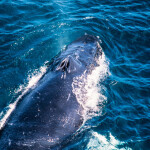
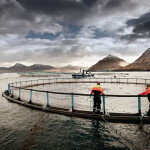
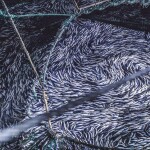

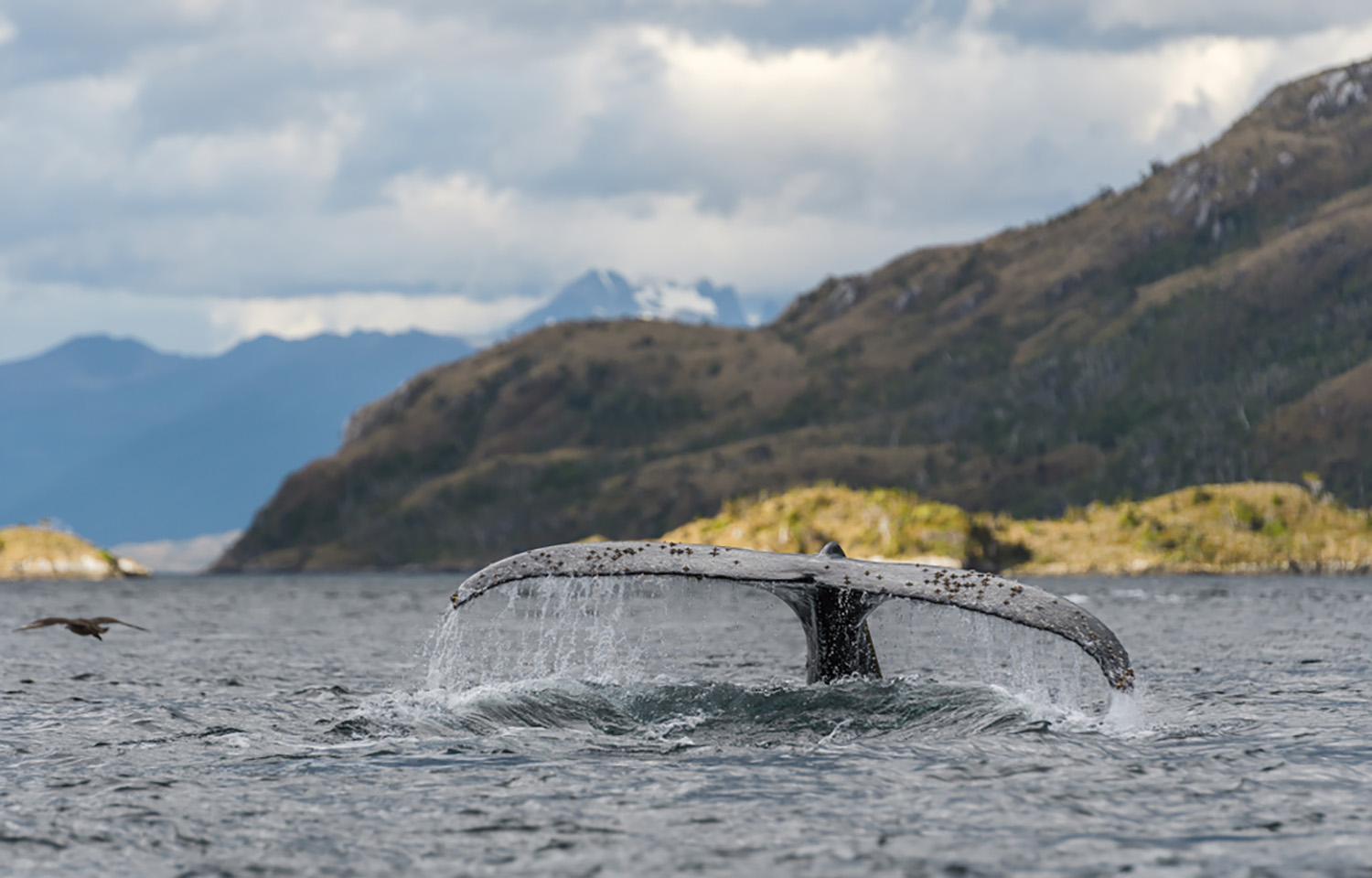
Environmental nonprofit Greenpeace Chile has filed a lawsuit regarding the deaths of two humpback whales found at the end of October in salmon grow-out centers belonging to Australis Mar and Cooke Aquaculture.
The incidents took place on 29 and 30 October inside Kawésqar National Reserve in the Magallanes region and San Rafael National Park in the Aysén region, both of which are in the south of Chile.
In the first case, a dead whale was found in Australis’s Muñoz Gamero 1 salmon grow-out center. Chile’s Superintendence of the Environment (SMA) said it had requested Australis to report the details of the specimen’s conditions at the time it was detected and, in particular, whether it was found entangled in the salmon farm’s nets.
SMA also requested the results of underwater inspections carried out at the center to verify the state of the farm’s nets and pen structure, as well as the result of the necropsy performed on the whale.
In Aysén, SMA similarly asked Cooke Aquaculture to report the conditions in which the dead cetacean was found, particularly whether the death showed evidence of gillnets or entanglement with ropes or moorings.
SMA said it was investigating both incidents in conjunction with Chile’s National Fisheries and Aquaculture Service (Sernapesca).
Sernapesca said it received information from Australis that the humpback whale was already dead when it became entangled in the grow-out center’s nets. Sernapesca then informed the regional prosecutor's office of this news and said it was also monitoring contingency measures adopted by the company to respond properly to such an event.
Greenpeace has been an outspoken critic of salmon development in southern Chile’s Patagonia region. In a report on its website, the environmental NGO said it had joined with the Indigenous Kawésqar community in filing suit against those responsible for the recent whale deaths.
“This action is aligned with our work focus, which is based on constant work with local communities affected by the environmental and social impacts of salmon farming in the area and who have a deep knowledge of the dynamics of these protected areas. To effectively protect these species, it is crucial to stop the expansion of the salmon industry in highly sensitive ecosystems,” Greenpeace Chile Director Matías Asun said, adding that the NGO is calling for “exemplary penalties and fines.”
The lawsuit represents an “unprecedented milestone” in the country's criminal history, according to the NGO, as it will be the first time the nation’s Law 21,595 is invoked.
Otherwise known as the Law on Economic and Environmental Crimes, the law was enacted in August 2023 and introduced changes to Chile’s penal code to hold individual legal representatives responsible for “offenses against the environment,” establishing a series of new crimes punishable with up to 10 years of imprisonment and fines of as much as CLP 7.6 billion (USD 9.5 million, EUR 8.8 million).
Robert Currie, an attorney specializing in environmental regulation and compliance who helped draft the country’s climate change framework law, previously told SeafoodSource that the new law “highlights the importance of environmental compliance and the need for crime-prevention models that are comprehensive and inclusive of the various risks a company may face.”
Currie said at the time that the salmon industry is closely scrutinized for potentially evading the government’s environmental evaluation service (SEIA) and alleged discharges of pollutants that negatively affect water, soil or subsoil, air, animal or plant health, or protected areas.
“The criteria established by law to determine severity are spatial extension, effects over time, damage repairability, impact on endangered species, serious risk to human health, and significant alteration to ecosystems,” he said.
The law establishes penalties applicable to those who seriously affect “one or more of the environmental components of a virgin region, a national park, a natural monument, a national reserve, or a wetland of international importance.”
Greenpeace lawyer Roxana Núñez echoed Asun’s calls for the whales’ death to be prosecuted to the full extent of the law.
“The death of species within protected areas is something that as a country, we not only should not get used to, but on the contrary, we must punish harshly. We have a legal text that was created precisely to prosecute crimes like this, so it seems to us that it is time to turn this law into a living text, which allows us to ensure the protection of our protected areas and the species that inhabit them,” she said. “Due to the seriousness of both cases, we consider it of utmost importance to use the environmental protection tools available in our legislation, with the aim of knowing the causes and those responsible for these deaths and that events of this nature never occur again in our seas, much less in our protected areas.”
According to Leticia Caro, a representative of the Kawésqar Grupos Familiares Nómadas del Mar Indigenous community, whales represent an important connection between the Kawésqar community’s spirituality and worldview, playing an important part in their history and in the memory of their ancestors.
“For us, the lawsuit is important because in the previous cases of dead whales in our territory, as well as in others, there has been no exhaustive investigation nor sanctions for those who were specifically responsible,” she said, referring to a 2020 incident when a dead baleen whale was found entangled in Australis’s Matilde grow-out center.
Both Australis and Cooke have insisted no wrongdoing in the whales’ deaths.
Both companies said they had reported the siting of the whales to relevant authorities and activated contingency protocols. Referring to the 2020 incident, Australis said authorities had established the death was caused by a killer whale attack.
Meanwhile, Cooke said the recent incident took place at a center that was not in operation, as it was in a sanitary pause. The firm also highlighted its voluntary relocation of operations located near protected areas.
According to Chile’s Environment Ministry, humpback whales are considered a species in a vulnerable state of conservation.
Decimated by commercial whaling in the 19th and early 20th century, humpback whales were one of the first species protected under the U.S.’s Endangered Species Conservation Act of 1973.
However, thanks to their recovery – as they are now protected from commercial hunting – the International Union for Conservation of Nature (IUCN) moved the whales from the vulnerable category to a status of least concern, meaning it is at low risk of extinction, though some conservation groups believe that promotion has come too soon.
