


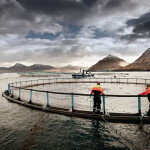

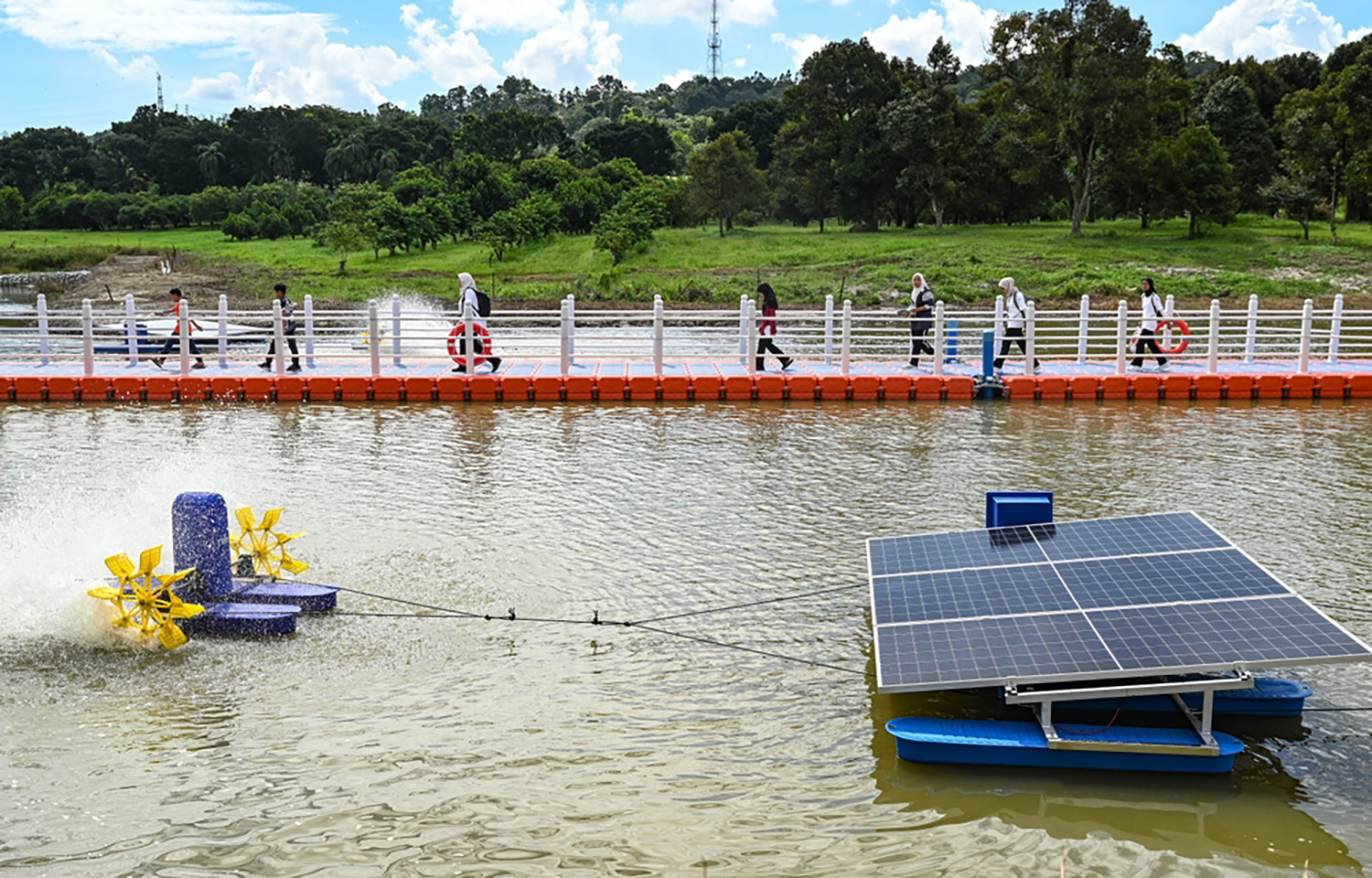
The Fisheries Development Authority of Malaysia (LKIM) is urging fishermen associations to venture into aquaculture as falling marine fish stocks and coastal development squeeze catch totals, particularly within low-income coastal communities.
LKIM Chairman Muhammad Faiz Fadzil said the push is aimed at strengthening national food security and providing more stable income streams for fishermen, many of whom fall into the country’s bottom income group, according to Malaysian National News Agency Bernama.
Citing a continued decline in marine resources, Fadzil said local fishermen could no longer depend on marine catch alone and had to seek more stable income streams.
To fill the gap, he explained that the Southeast Asian country’s Agriculture and Food Security Ministry aims for aquaculture to make up 40 percent of national fish output by 2030, marking a shift toward treating the sector as a core industry.
At the same time, LKIM is working to strengthen fishermen’s associations as commercially sustainable organizations through its “One Association One Business” initiative. As a result, 20 fishermen’s associations are now involved in aquaculture projects, up from 13 two years ago, Fadzil said.
Successful ventures include prawn-farming projects in Johor and cockle-farming operations in Lawas, Sarawak, and Penang, which he said have delivered more stable returns.
In addition, Fadzil said LKIM is rolling out initiatives in Pantai Merdeka in Kedah and Badung in Pahang, working with established private companies as lead partners to equip fishermen with aquaculture and commercial skills, with the goal of enabling them to run their own operations.
“Several ponds will be designated to train fishermen in aquaculture farming and business, enabling them to operate aquaculture ventures within five years,” Fadzil said.
The latest move follows an announcement in June 2025, when Malaysia Deputy Prime Minister Ahmad Zahid Hamidi said a MYR 5 million (USD 1.27 million, EUR 1.06 million) aquaculture initiative, known as Fishermen Economic Transformation Through Aquaculture, would benefit low-income and unlicensed fishermen in the states of Melaka, Negeri Sembilan, and Perlis. The program, which will last from 2025 to 2029, focuses on cockle and mussel farming across four phases and is expected to generate up to MYR 50 million (USD 12.7 million, EUR 10.6 million) in annual returns.
The Department of Fisheries Malaysia is targeting aquaculture output of 530,000 metric tons (MT) in 2026, up from an estimated 510,000 MT in 2025, driven by measures to lift output, including expanded farming activities, seed production, and support for targeted groups, The Edge Malaysia reported.
By the third quarter of 2025, Malaysia’s fishing sector contributed MYR 6.05 billion (USD 1.54 billion, EUR 1.28 billion) to the national economy in value-added terms, while the aquaculture segment generated MYR 3.14 billion (USD 799.5 million, EUR 669.2 million).
