






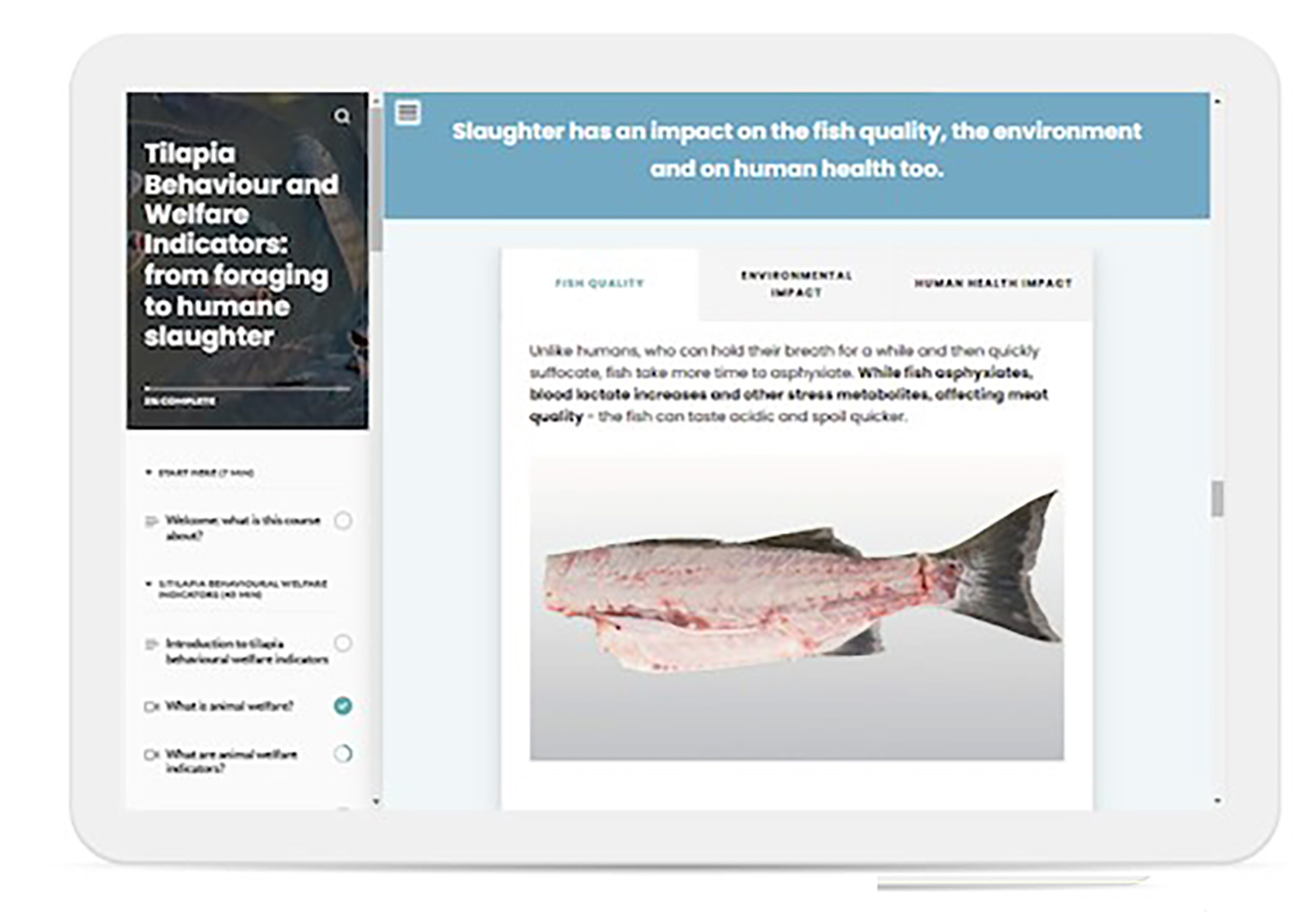
Aquaculture welfare research and development company FAI has released a new online training course intended to improve tilapia welfare around the globe.
“Tilapia Behavior and Welfare Indicators: from foraging to humane slaughter” is the latest program offered by FAI.
"The course is specifically tailored for fish farmers, veterinarians, and seafood supply chain professionals, providing practical insights into critical welfare areas," Sara Barrento, an e-learning and aquaculture program manager for FAI, said in a release. "Participants will gain hands-on skills to assess tilapia behavior and recognize welfare indicators and humane slaughter methods, all grounded in the latest scientific research and best practices.”
Barrento emphasized that there are widespread misunderstandings in the tilapia sector about what constitutes humane slaughter and that the program will be “offering practical examples to help distinguish humane methods from inhumane ones.”
By advancing these practices, we’re not just improving fish well-being; we’re driving a more ethical and informed approach to food production," she said.
The course will also teach fish farmers to recognize behavior indicators, such as swimming and foraging, along a three-score system, which will help them recognize signs of pre-slaughter stress in fish.
FAI currently offers five welfare-focused courses as part of its ongoing Tilapia Welfare Project, which is aimed at improving the lives of farmed tilapia worldwide. Additionally, the organization offers a range of welfare training resources on its FAI academy website, including modules on various welfare indicators such as feed quality, eye health, swimming behaviors, and water quality.
"Tilapia welfare plays a vital role in aquaculture, and we’re working to provide a comprehensive toolkit for improving welfare outcomes. Our research and expertise within the aquaculture sector show that enhancing fish welfare not only results in healthier fish with a better quality of life but also boosts profitability for farmers,” Barrento said.
