
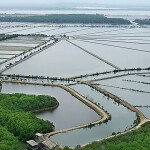


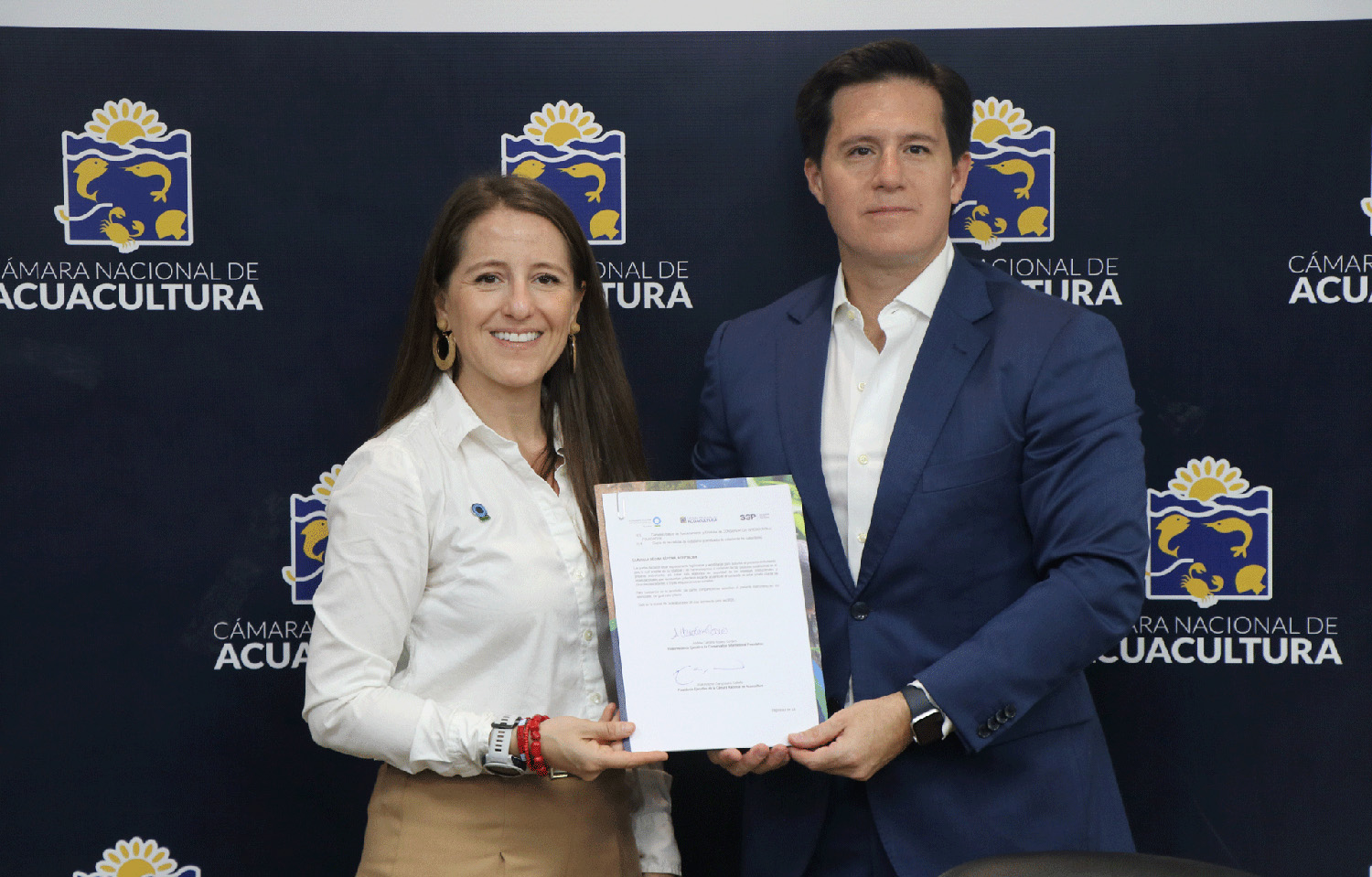
Ecuador’s shrimp industry has signed an agreement with Conservation International Ecuador (CI-Ecuador) to promote the conservation and restoration of mangroves, including through technical studies, community-based initiatives, and the monitoring of mangrove initiatives throughout the country.
Under the agreement – signed between CI-Ecuador, Ecuador’s National Aquaculture Chamber (CNA), and the Sustainable Shrimp Partnership (SSP) – the involved parties will define a cooperation roadmap for mangrove conservation, with an initial focus on 250 hectares of mangroves in priority areas. The partnership aims to restore that area, which is located within shrimp-farming operations, by 2030, thereby contributing to the reduction of around 112,870 metric tons of CO₂ emissions.
Other actions under the agreement will focus on restoration, the development of community nurseries, and the long-term survival of planted species.
“Sustainable shrimp aquaculture requires understanding how production systems interact with surrounding ecosystems and continuously working to improve environmental performance,” SSP Director Pamela Nath noted. “Strengthening ecosystem resilience and promoting responsible production practices are essential to ensuring the long-term sustainability of the sector.”
CI-Ecuador Vice President and Executive Director Carolina Rosero highlighted mangrove ecosystems as “critical natural assets for climate change mitigation and adaptation, biodiversity conservation, and the livelihoods of coastal communities,” while CNA Executive President José Antonio Camposano noted that protecting those ecosystems “is an investment in the long-term sustainability and resilience of our sector.”
The accord comes after another agreement signed in 2022 between the Ecuadorian branch of the World Wildlife Fund (WWF) and CNA, which sought to halt the conversion of natural habitat to accommodate shrimp farming in the country.
Under that arrangement, Worcester, Massachusetts, U.S.A.-based Clark Labs agreed to generate geospatial data for WWF-Ecuador and CNA to analyze and classify land cover in coastal regions where shrimp farming is most common. This data would be used to set a baseline founded on scientific evidence, repeating the analysis annually with the goal of reducing and ultimately ending all land conversion for shrimp farming in the country.
Ecuador has sizable mangrove forests, but surging worldwide demand for shrimp and resulting increased aquaculture activity have put pressure on coastal habitat and wetland areas, WWF said at the time.
