



The administration of U.S. President Donald Trump has announced new tariffs on Brazil, with several exceptions for certain seafood items.
The Office of the United States Trade Representative (USTR) announced new 25 percent tariffs on imports from Brazil following a Section 301 investigation. The USTR said the tariff action follows an investigation it started in 2025, just days after Trump threatened 50 percent tariffs on the country claiming it was treating former Brazil President Jair Bolsonaro unfairly. USTR Ambassador Jamieson Greer said at the time the country’s unfair trade practices were documented in the National Trade Estimate Report, and a recent release by the USTR said it identified several practices by Brazil that gave it an unfair advantage over U.S. businesses.
“Safeguarding American economic interests against unfair trade practices is the bedrock of President Trump’s America First policies,” Greer said in a release.
The USTR listed several unfair trade practices by Brazil, including findings that Brazil disadvantaged the U.S. companies in competing electronic payment services with policies that favor Pix, the largest payment method in the country. It also found Brazil had lower preferential tariffs on certain goods from Mexico and India, putting U.S. goods at a disadvantage.
It also said the country has not done enough to combat illegal deforestation, which persists “to the detriment of the U.S. industry.”
“Whether it is punishing U.S. technology companies for refusing to censor political speech, backsliding on anti-corruption enforcement, or allowing Brazilian farmers to exploit illegally logged land to gain an advantage over American farmers, Brazil’s unfair trading practices have prevented U.S. workers and producers from accessing this important market with over 210 million consumers,” Breer said.
The USTR posted the latest tariff action to the Federal Register, listing thousands of exceptions, which initially didn’t include any seafood items in its publication on 4 June. However, a later publication on 15 July included several seafood items under its exception list.
Current seafood items exempted from the new higher tariffs are:
- Yellowfin tunas, fresh or chilled, excluding fillets, other meat portions, livers and roes, with HTSUS 0302.32.00;
- Bigeye tunas (Thunnas obesus), fresh or chilled, excluding fillets, other meat portions, livers and roes, with HTSUS code 0302.34.00;
- Mackerel, excl. fillets, livers & roes, fresh or chilled, with HTSUS code 0302.44.00;
- Swordfish, fresh or chilled, excluding livers and roes, with HTSUS code 0302.47.00;
- Tilapias, excluding fillets, livers and roes, fresh or chilled, scaled, in immediate containers weighing with their contents less than 6.8 kilograms, with HTSUS code 0302.71.11;
- Tilapias, excl. fillets, livers & roes, fresh or chilled, not scaled, or scaled in immediate containers weighing more than 6.8 kilograms, with HTSUS code 0302.71.50;
- Fish, nesoi, excluding fillets, livers & roes, fresh or chilled, not scaled, or scaled in immediate containers over 6.8 kilograms, with HTSUS code 0302.89.50;
- Tilapias, frozen, excluding fillets, other meat portions, livers and roes, with HTSUS code 0303.23.00;
- Smelts, cusk, pollock, shad, sturgeon, atkafish, fresh-water fish,etc. frozen, excluding fillets, other meat portions, livers and roes, with HTSUS code 0303.89.00;
- Tilapias, fillets, fresh or chilled, with HTSUS code 0304.31.00; and
- Rock lobster and other sea crawfish, cooked in shell or uncooked, dried, salted or in brine, frozen, with HTSUS code 0306.11.00.
The Brazilian Association of Fish Industries (ABIPESCA) celebrated the exceptions, which it said was in part thanks to its work on the issue.
“The decision is the result of technical and strategic work carried out by ABIPESCA in conjunction with the National Fisheries Institute (NFI), the main representative body of the U.S. fish industry, as well as American importers, who acted to demonstrate the economic and commercial impacts that the taxation could have on both countries,” ABIPESCA said in a release.
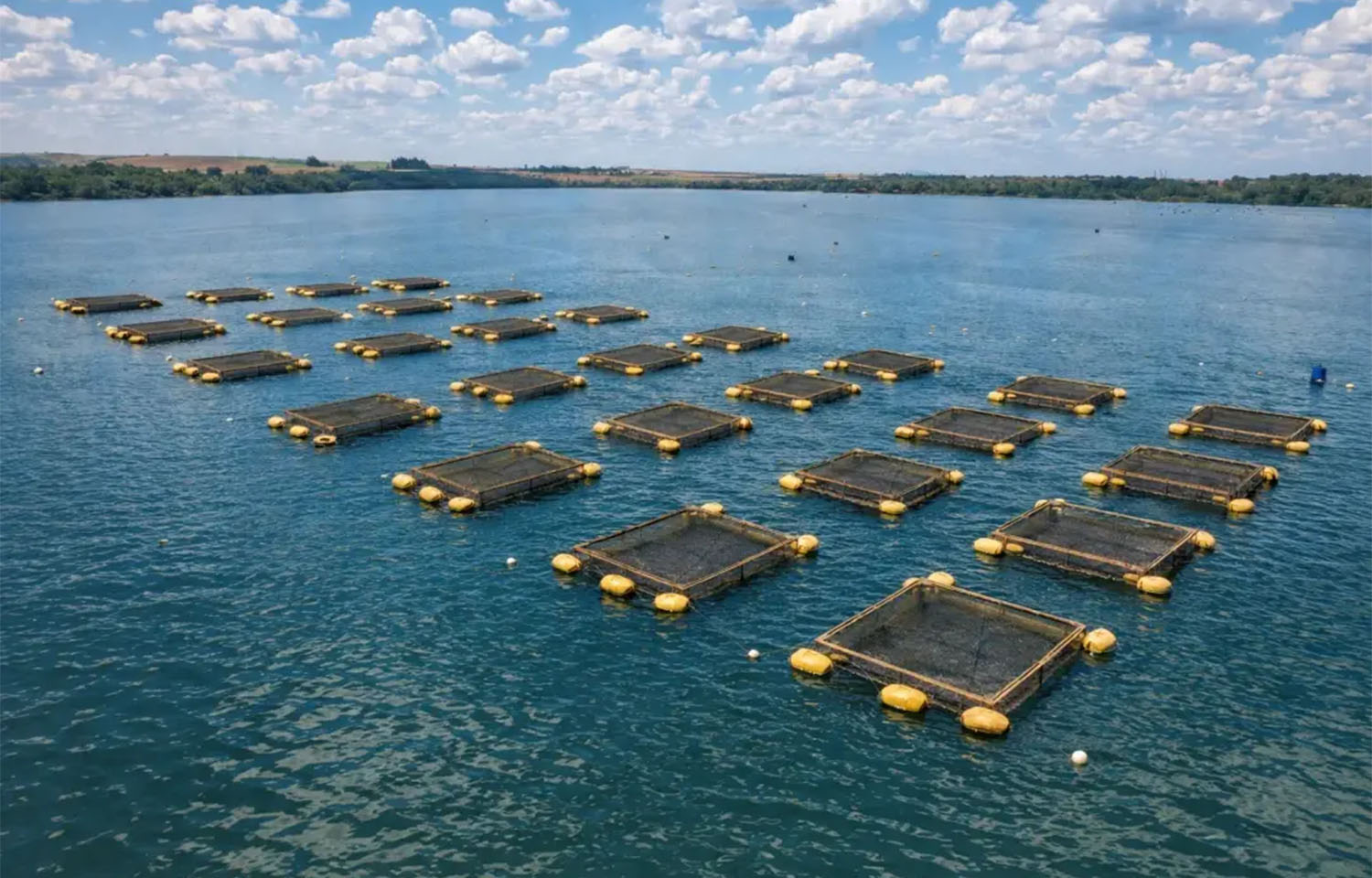
According to the Brazil Association of Pisciculture (PEIXE BR), the U.S. made up 87 percent of the country’s aquaculture exports in 2025, even with tariffs impacting the industry. ABIPESCA also told SeafoodSource in March that if tariffs remained at 10 percent, it could likely grow total seafood exports by 50 percent in 2026.
Brazil’s seafood industry has been eyeing recovery after the U.S. Supreme Court struck down Trump’s International Emergency Economic Powers Act (IEEPA) tariffs, seeing it as an opportunity to target the market on a level playing field with other countries.
“The drop in the tariff is extremely positive because it is a linear tariff, meaning that our competitors will have the same tariff,” PEIXE BR President Francisco Medeiros said when the tariffs first dropped. “This new scenario opens great business opportunities.”
Looking forward, ABIPESCA said it will continue to work to increase U.S. exports, and to gain more exceptions for other aspects of its seafood industry.
“Although it celebrates the exclusion of fish from the new tariffs, ABIPESCA states that it will continue to work on the articulation so that other fish products are also included in the list of exceptions,” it said. “At the same time, ABIPESCA expresses solidarity with other segments of the Brazilian economy affected by the measure and reaffirms its commitment to continue working in cooperation with the productive sector, international partners, and the Federal Government, whose institutional role was also important for the positive outcome.”
