






Global fishmeal and fish oil production was down in March 2026 compared to March 2025 according to IFFO – The Marine Ingredients Organization.
According to IFFO, fishmeal production fell 38 percent in March 2026 compared to the same month of 2025, and cumulative production in Q1 2026 was down 28 percent compared to Q1 2025. Fish oil output also dropped – albeit at a lower rate. Global fish oil production in Q1 2026 dropped 12 percent compared to the same period of 2025.
IFFO attributed the lower drop in fish oil production to regional production resilience with Denmark, Norway, and Spain.
The decrease is based on data shared by IFFO’s members in Chile, Denmark, the Faroe Islands, Iceland, Ivory Coast, Mauritius, Norway, the U.K., the U.S., Peru, South Africa, and Spain. Combined, IFFO members account for 40 percent of total fishmeal production and 50 percent of fish oil output.
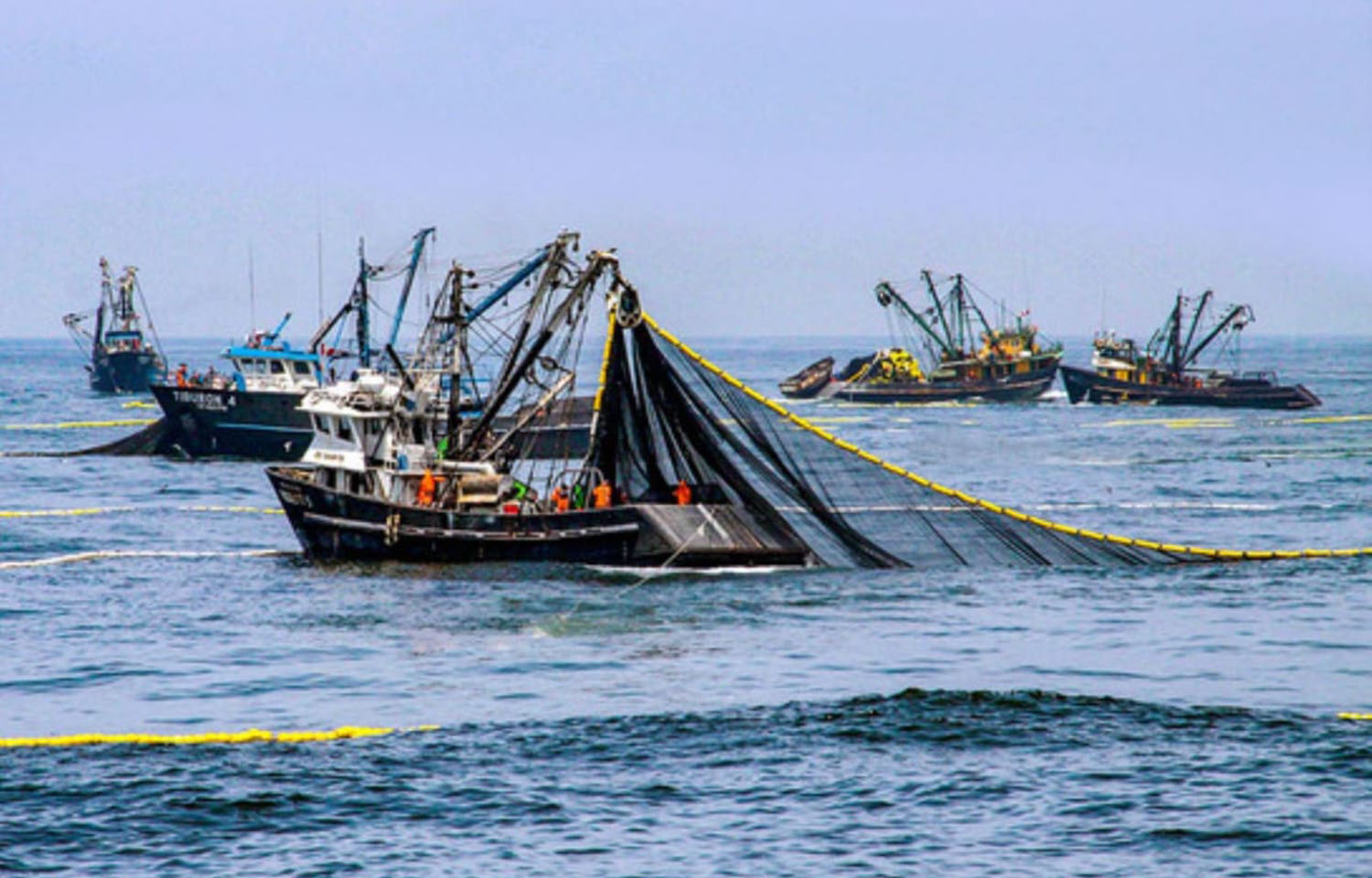
The decrease in Q1 2026 came ahead of the fishing season within Peru’s North-Central anchovy fishery, which kicked off on 1 April. Peru set a total allowable catch of 1.9 million metric tons (MT) for the season, a more than 1 million-MT drop from the 3 million-MT TAC that Peru’s Production Ministry (PRODUCE) set in 2025.
PRODUCE temporarily suspended the anchovy fishery in late April in order to protect spawning populations, suspending the fishery from 24 April to 3 May.
“We are acting responsibly to ensure that anchovy fishing remains sustainable, within the framework of adaptive management,” Peru Minister of Production César Quispe Luján said in a release. “Protecting the resource today means guaranteeing successful future seasons, preserving thousands of jobs, and safeguarding the well-being of families who depend directly and indirectly on this activity.”
According to the ministry, as of 26 April, cumulative catch had reached 439,535 MT.
Peru’s anchoveta fishery accounts for up to 20 percent of global fishmeal production, and the season’s cancellation in 2023 contributed to a 23 percent drop in global fishmeal output that year.
Looking forward, IFFO said China, a key driver of global aquaculture and marine ingredient demand, “has not yet seen the usual fishing rebound season that typically occurs in February and March.” It said data shows domestic aquaculture output and aquafeed production for specialty farmed species increased year over year and that elevated stock levels of some species have supported aquafeed output and fishmeal usage.
However, those same high inventories may mean lower restock rates, and lower farmgate prices for certain species could also cause farmers to reduce production.
“If these conditions persist, feed ingredient demand is likely to decline in the third quarter, which is typically the peak period for aquaculture activity,” IFFO said.
