



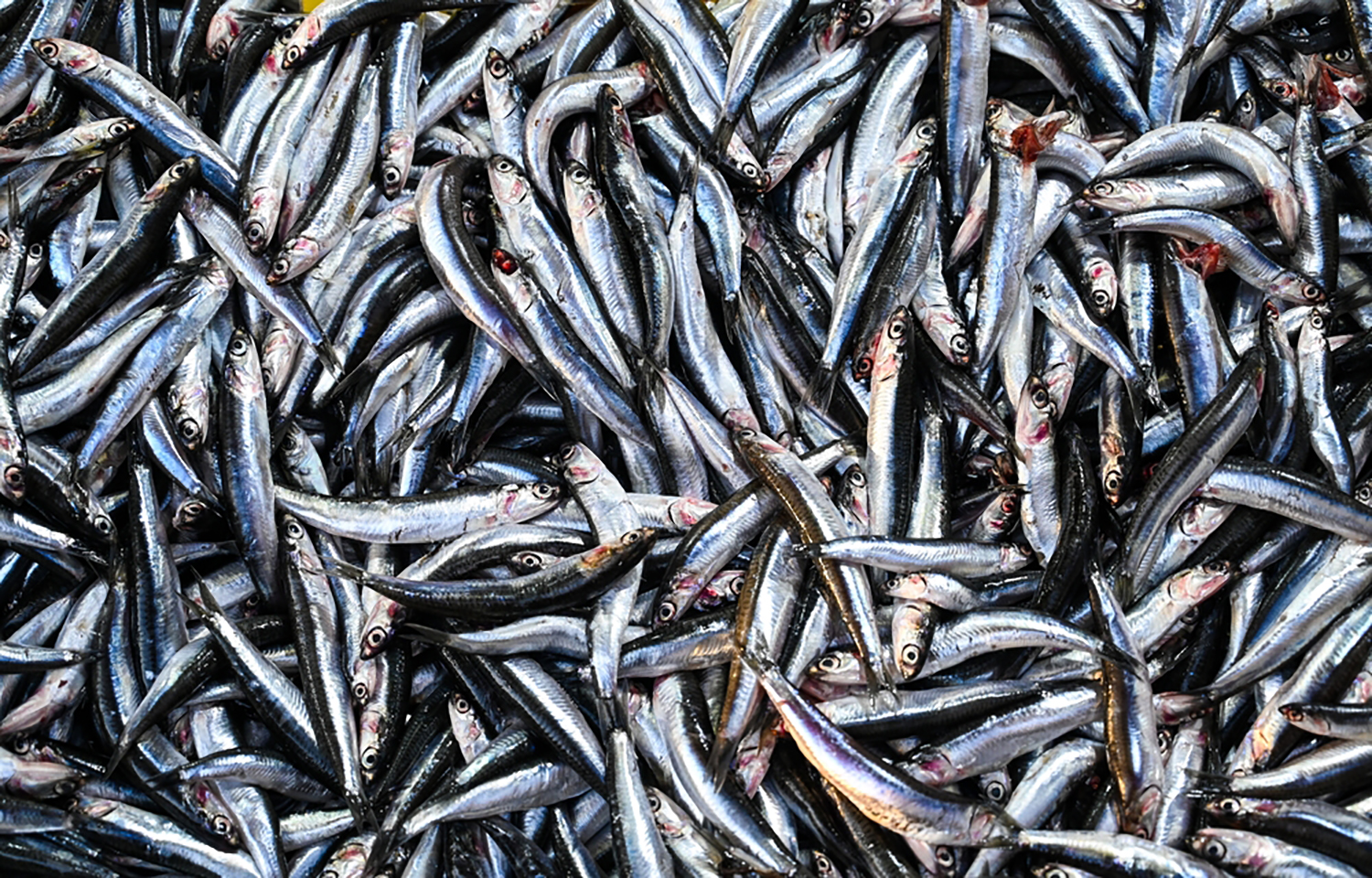
Peru’s Production Ministry (PRODUCE) has authorized the start of the first fishing season in 2026 for Peruvian anchovy (Engraulis ringens) and white anchovy (Anchoa nasus) in the nation’s North-Central fishing zone.
The authority established a total allowable catch (TAC) of 1.9 million metric tons (MT) for the season, representing a more than 1 million MT drop from the 3 million-MT TAC set for the same season last year.
PRODUCE based its ultimate quota decision on information coming from various specialized evaluations, including a hydroacoustic assessment cruise for anchovy and other pelagic resources performed between 16 February and 23 March in which scientists researched the available biomass, its spatial distribution, fish sizes, and the oceanographic conditions of the Peruvian sea.
“The results of these investigations constitute the main technical support for the adoption of fisheries management measures based on scientific evidence, ensuring the sustainability of the resource and the continuity of the country's main fishery,” PRODUCE said on its website.
Previously, scientific predictions of a coastal El Niño weather pattern led Peru’s fishing industry to call for an early start to the fishing season to avoid a sharp drop in catch and the potential economic hardship that would follow.
Authorities usually wait until about mid-April for the first season’s launch, but Peru’s National Fisheries Society (SNP) coordinated actively with PRODUCE to evaluate the possibility of bumping up the launch. With the season opening now, it would seem the industry’s petitions for an earlier start were considered by the government.
“If we do things as usual and leave [the launch] to around mid-April, the sea will probably be already too warm [owing to the coastal El Niño], and we won’t find any resources,” Jessica Luna, the president of Sociedad Nacional de Pesqueria (SNP), which is Peru’s National Fisheries Society, said previously, pointing toward historical precedent to make the case for an early start.
Previous years affected by El Niño weather patterns hit the country’s anchovy fishery hard.
In January 2024, PRODUCE closed the country’s second anchovy season early, following the complete cancellation of the first season of 2023, which Luna called “the worst year in decades” and which led to more than USD 1.4 billion (EUR 1.2 billion) in lost fishmeal and fish oil export sales.
During the most recent season in the North-Central zone, which closed in January, Peru’s industrial fishing fleet captured 1.6 million MT, representing 98 percent of the 1.63 million-MT quota set for the season.
PRODUCE said the recently launched fishing season is expected to lead to exports of USD 855 million (EUR 736 million), representing 18.3 percent of the total estimated fisheries exports for the year. The industrial fishery will mobilize more than 670 fishing vessels and demand over 47,000 direct and indirect jobs throughout the entire production chain.
Peru divides its anchovy fishing areas into two regions – South and North-Central – with different capture limits and seasons set for each. The North-Central is Peru’s main fishing region, with capture measuring several times that of the South region.
Peru’s anchovy fishery is considered the largest in the world. Its catch is used to produce about 20 percent of global fishmeal supplies.
