






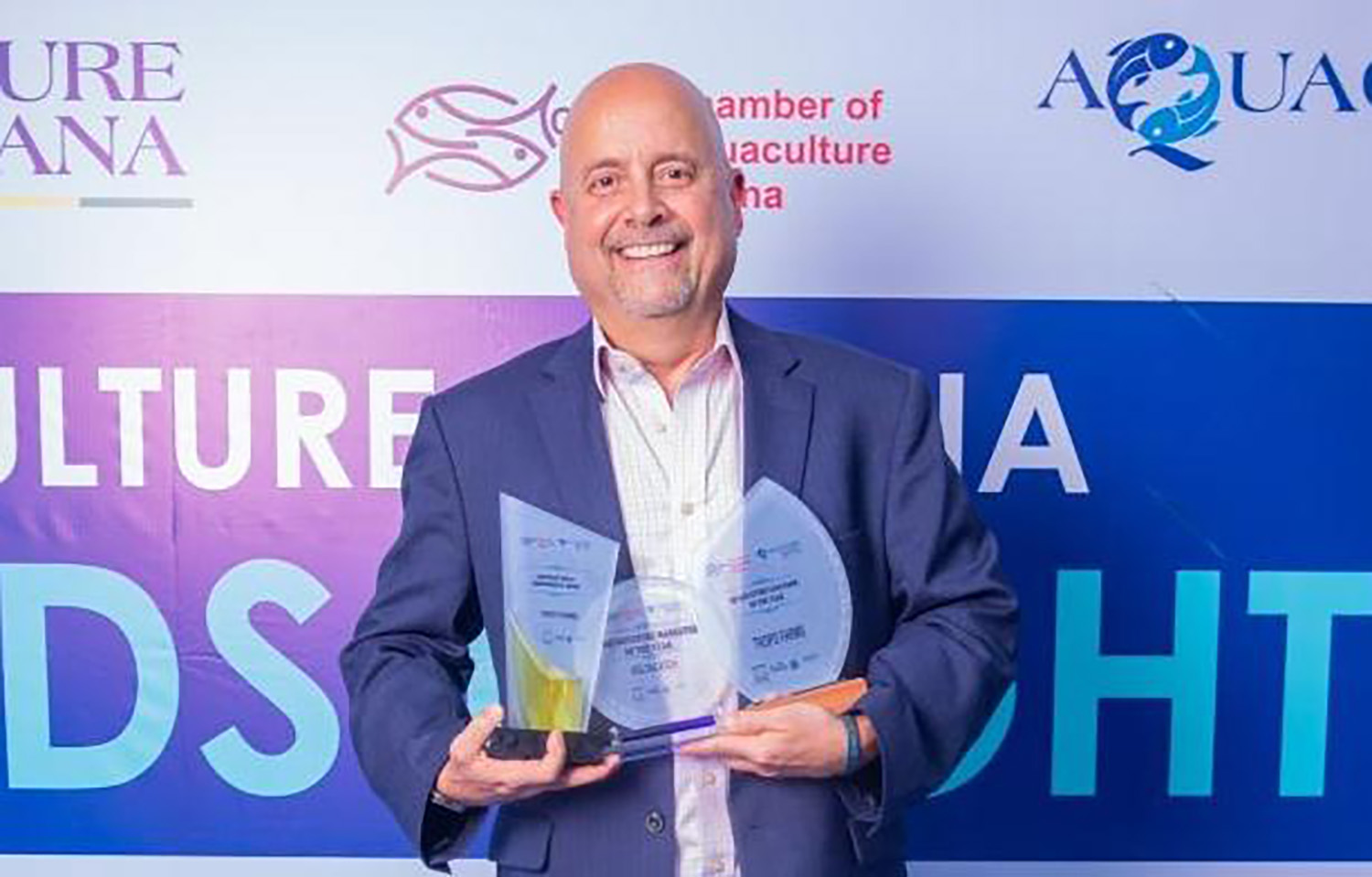
Accra, Ghana-based aquaculture company Tropo Farms plans to incrementally increase its annual fish output to 30,000 metric tons (MT) over the next five years, pursuing external investments in production equipment and processing to do so.
Before pursuing investment, the company began auditing its internal processes, aiming to make them as efficient as possible before turning externally for growth. That process of streamlining production processes, according to Tropo CEO Francisco Murillo, includes management implementing more production cycles in a year at Tropo Farms using its existing assets, therefore enabling the company to achieve increased annual tilapia output volumes without turning outward just yet.
Murillo told SeafoodSource his company has doubled its tilapia production from the 7,000 MT it was pumping out two years ago and hopes to close 2024 with 15,000 MT of the species produced, “without having to invest in additional production assets.”
“We are trying to make our current production processes more efficient without having to increase fish densities in cages in a way that jeopardizes their well-being,” he said.
Now that the strategy has paid off with higher output Murillo said he believes it is the perfect time to look for assistance elsewhere.
To that end, he said his company is close to signing a USD 8 million (EUR 7.5 million) financing deal to support its expansion.
“At the point we are at now, we do need to do investment in capital expenditure, and we are in the final phase of formalizing investment in the company that we want to put into our future growth,” he said.
The funding will be put toward a new processing facility, new cages on Lake Volta, better boats, more refrigerated transportation capacity, and expansion of the company’s hatcheries.
These investments are supplemented by the incorporation of new technology at Tropo, including software provided by Boston, Massachusetts, U.S.A.-based Innovasea, a firm that provides end-to-end solutions for fish-farming and aquatic species research. Innovasea purchased Aquanetix, a U.K.-based aquaculture software company in 2023, which has since been renamed Farm360 and which Tropo Farms is using to better manage its processes.
“We have combined the software we have been using to manage our productions with technologies from Innovasea,” Murillo said.
The technology enables Tropo Farms to collect real-time data about several environmental measurements such as oxygen levels, temperature, and algae, with the data sampled every 10 minutes and utilized to optimize fish feeding practices.
“Through Innovasea, we are developing Al algorithms to allow us to use underwater cameras to sample fish and be able to know the precise size of the fish at any part of the cage,” he said.
With all of this innovation underway, Murillo said his company is now eyeing expanding its operations to other locations across Ghana, especially regions “where fresh fish is not available because of logistical challenges.” Tropo Farms currently operates four locations in Ghana.
In its next phase, Tropo Farms will continue to focus on its current portfolio but also explore such avenues as frozen fish. Currently, Tropo Farms produces fresh and smoked tilapia.
“We also hope to increase our sales, especially in supermarkets, which is something we don’t do a lot right now,” Murillo said, adding that that venture would be undertaken by Volta Catch, the company’s sales and distribution arm.
Murillo said he is confident that Ghana’s high demand for fresh tilapia as a healthy and lean source of protein will be a key driver to the company’s growth over the long term.
“Consumption of tilapia in Ghana is very high, but there is a lot of importation of frozen fish, mainly from other countries,” Murillo said.
Though Murillo pointed toward the domestic market as an avenue for growth, he said another possible expansion avenue includes exporting products. Currently, Tropo Farms sells 100 percent of its fish locally, but Tropo has been testing the waters of neighboring markets recently.
“We have started exporting small volumes to Ivory Coast to test market responses there because there is not very strong production in aquaculture in the country and low-quality Chinese seafood in that market. We see an opportunity to grow in the market and hopefully have it become a significant portion of our seafood sales,” he said.
Murillo said that there are still some obstacles to its continued growth, such as high international prices for raw materials like grains.
“Feed accounts for up to 70 percent of the cost of fish coming out of water, so affordability of our products depends on what happens in the international market for grains, as well as the purchasing power of consumers,” he said.
The drive to achieve more for Tropo Farms ultimately hinges on what Murillo said is his commitment to have “a few right people in key company positions and informational systems that allow [the company] to independently monitor what is going on in the company without having to wait for reports to be produced by someone else.”
This type of leadership led Tropo Farms to win the Aquaculture Farm of the Year Award for Ghana in 2022, and pushes it toward new horizons, Murillo said.
