





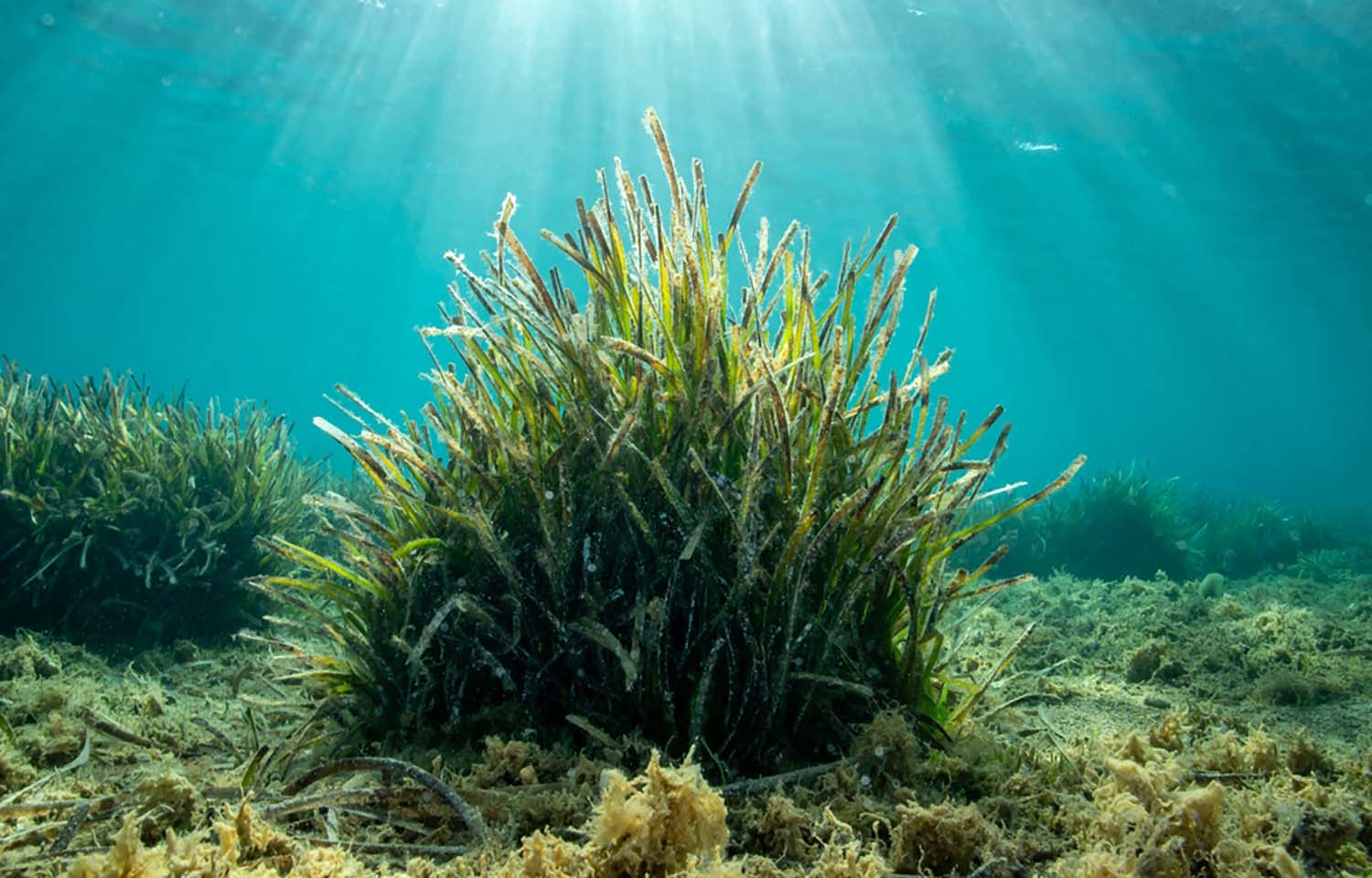
Research conducted by the University of Oxford claims that the rapid expansion of fish farms in the Mediterranean Sea is killing wide swaths of Posidonia oceanica, a seagrass that’s endemic to the Mediterranean and vital to biodiversity and carbon sequestration in the region.
The study focused on the waters around the Greek island of Poros, which hosts both current aquaculture operations and is the planned site for future farms, mainly producing seabass.
The study said that eutrophication due to excess nitrates caused by huge volumes of fish waste and the remnants of fish feed has choked seagrass.
Seagrass meadow cover was 46 percent lower, and leaves were 36 percent shorter within 650 meters of the studied fish farms. Furthermore, the damage was found to persist over a decade after farms had been removed, with full recovery potentially taking centuries, according to the study.
Notably, the study also said that industrial fish farming showed impact on waters up to 900 meters away from the farms studied.
The Oxford findings were presented to Greek Parliament in June as part of a campaign to halt aquaculture expansion in Greece, which has drawn public protests in Poros and other locations.
“We stand united in opposition to the disastrous proposal to expand industrial fish farming 24-fold along our coasts, which presents an urgent and severe threat to our precious environment, local livelihoods, wild fish populations, and the centuries-old way of life cherished by both residents and visitors,” Fay Orfanidou, a member of Aktaia – The Greek Alliance for the Protection of the Marine Environment from Aquaculture, said in a guest post for NGO Foodrise.
The protests have grown louder as the expansion of Mediterranean seabass and seabream mariculture has more than doubled over the past two decades. Greece has seen a 141 percent increase in seabass and sea bream production since 2000, according to the Oxford University research.
Gwilym Rowlands, who supervised the study and is an associate professor of marine conservation and management at the University of Oxford, said that more carefully determined siting of aquaculture farms could allow the industry to continue growing sustainably.
“Revised siting guidelines, long-term ecological monitoring, and stricter environmental impact assessments are necessary to mitigate ongoing degradation,” he said.
The Oxford study was funded by the Rauch Foundation, a U.S.-based nonprofit centered on exploring the nexus between the consumption of food and the systems involved in its financing, sourcing, production, and delivery.
