


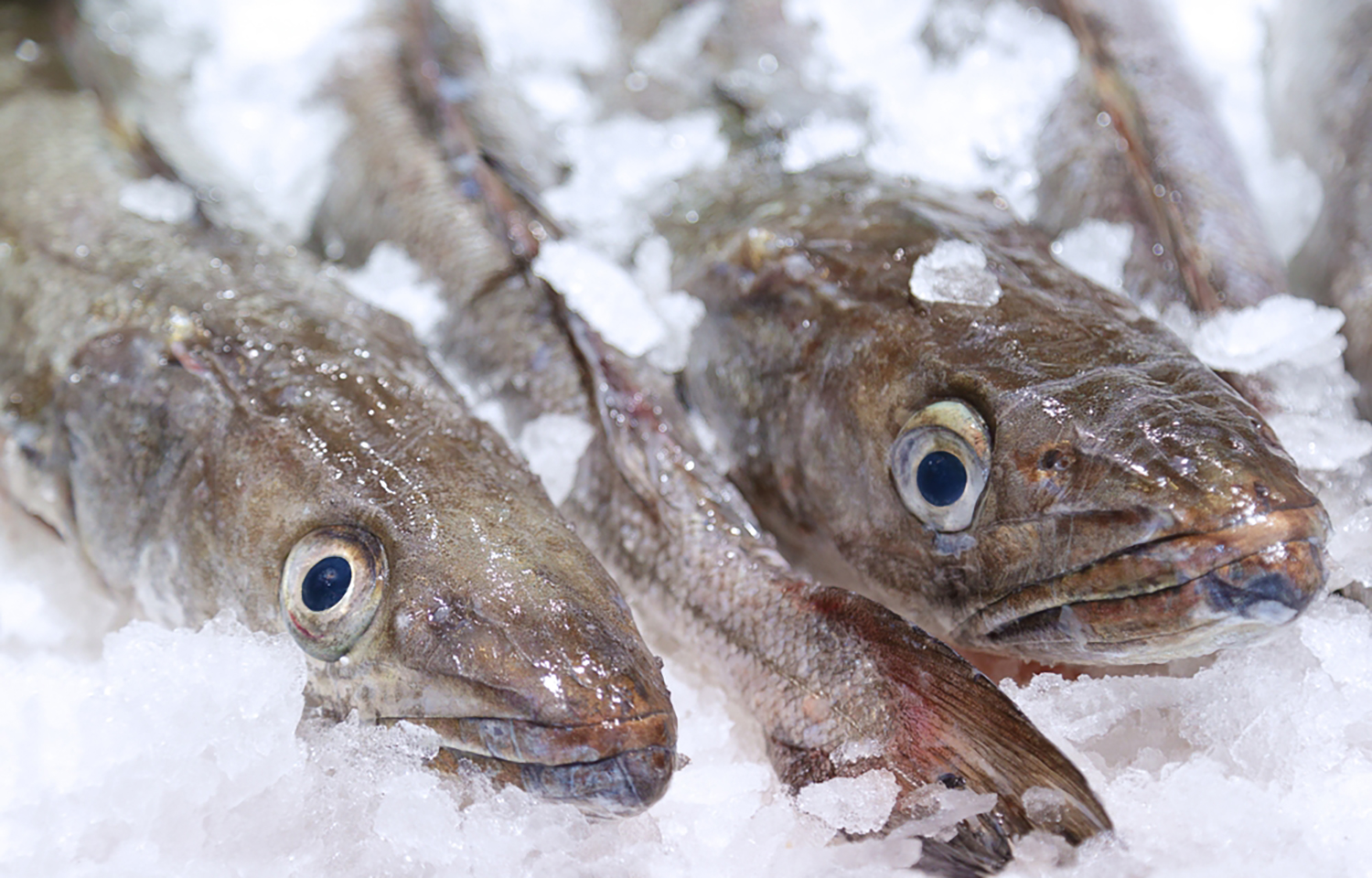
Namibia’s hake trawl and longline fishery has renewed its Marine Stewardship Council (MSC) certificate, remaining one of six fisheries in Africa to possess such a certification.
The Namibian hake fishery targets two species of hake, Merluccius capensis and M. paradoxus, and earned recertification through rigorous, independent assessments led by third-party partner Control Union, which examined hake stocks, fishery management processes, and ecosystem impacts as part of the process, according to an MSC release.
“Since [the country’s] independence, the government, scientists, and industry have worked hand in hand to rebuild the hake resource and create a profitable fishing industry that gives back to people and the environment,” Namibian Hake Association Chair Matti Amukwa said. “Achieving MSC certification, first in 2020 and now, has been a team effort and provides assurance to the world that we are committed to the sustainability of Namibian hake.”
With recertification now secure, the fishery’s stakeholders will continue to collaborate on a “clear harvest strategy with catch targets set in line with scientific advice,” according to the MSC, which said that the fishery will be required to collaborate and share information on stock assessments.
The certification body added that the fishery renewing its certification helps promote new research and also gives Namibian hake a competitive edge in the African fishing industry to meet and expand into new markets.
“Our hake has gained very much in popularity over the last few years, and I think one of the main reasons is that the resource is certified as sustainable and we can show this with the MSC’s ecolabel on our products,” said Tristan Przybylski, an employee at Namibian firm Seawork Fish Processors. “Since the first certification, we have gained access to several new, high-value markets and are known in Europe and elsewhere for our quality hake and good environmental and ethical practices.”
Elsewhere, stakeholders will continue to manage the fishery’s impacts on fur seals and seabirds, the MSC said. Ongoing research in the region includes analysis into bird-scaring lines, which are a type of fishing line that’s used to prevent seabirds from getting caught on baited hooks. Also, the fishery will continue trials with sound-based technology to mitigate interaction with seals while fishing.
“What has been very positive in the case of Namibia is not only the stakeholder collaboration within the country but also the cooperation with external experts and other stakeholders operating on the same resource,” MSC Program Director for Africa, the Middle East, and South Asia Michael Marriott said. “There is a drive to improve, to explore new technological innovations, and a commitment to safeguard the hake resource for the future.”
According to the MSC release, Namibia’s fishing industry is responsible for 7 percent of the country’s GDP and provides roughly 16,000 jobs. The Southwest African nation’s government has instituted measures to improve sustainability across its fisheries, including strict measures to reduce bycatch instituted last August.
Under the new regulations, the maximum bycatch threshold dropped from 5 percent to 2 percent across its fisheries, and the country increased the penalty for violating this restriction from the current 15 percent fee on every kilogram landed above the limit to 50 percent.
The bycatch regulations came soon after Namibia restructured its Ministry of Agriculture, Fisheries, Water, and Land Reform, which was formed via a merger between the country’s Ministry of Mining, Fisheries, and Marine Resources and the Ministry of Agriculture, Fisheries, Water and Land Reform in April 2025.
