


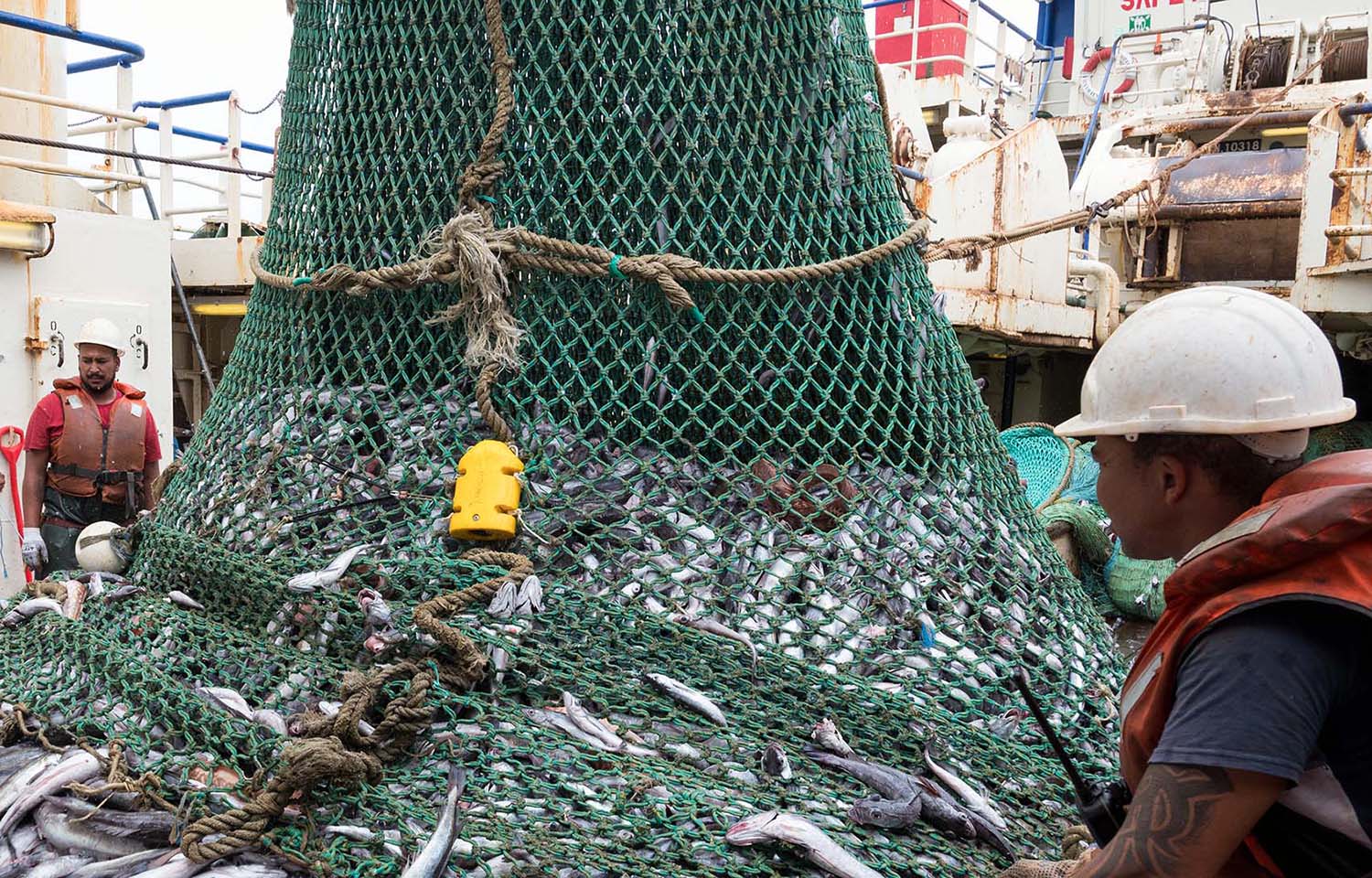
The Marine Stewardship Council (MSC), through its Ocean Stewardship Fund, has provided ZAR 610,000 (USD 34,000 EUR 29,000) to fund three sustainability projects, including the initial phase of South Africa’s first fishing net-recycling initiative, within the country’s hake trawl fishery.
According to the MSC, the funding for the net-recycling effort will provide preliminary support to help the fishery’s stakeholders conceptualize the best methods for discarding fishing nets, provide for the project’s implementation, and develop a research and development strategy – all in an effort to help the fishery transition to meeting the requirements laid out in MSC’s amended 3.1 Version of its Fisheries Standard.
The recycling project aims to repurpose end-of-life trawl nets, which are typically made from synthetic polymers, into densified materials suitable for reuse in the production of high-value plastic goods.
The repurposing will take place within a retrofitted shipping container provided by South African recycling solutions provider and project partner Ocean Plastics Technology (OPT). The retrofitted pod will have the ability to process up to 100 kilograms of damaged, discarded nets and other end-of-life fishing gear every hour, according to the MSC.
“For the past three years, I’ve been talking to the industry about finding a solution to the problem of used fishing nets,” said Estelle van der Merwe, a project lead from OCEAN Action Network, which is another partner of the project. “The support was always there, but the challenge was logistics – baling, storage, and finding appropriate processing technology.”
South Africa’s MSC-certified hake trawl fishery contributes more than 45 percent of the nation’s total fishery value and has a total allowable catch of more than 150,000 metric tons this year, making it a prime candidate for such a sustainability project, according to the certification body.
“The South African hake trawl fishery has been a committed participant in the MSC program since 2004, and maintaining their certification in an ever-evolving sustainability landscape has required ongoing efforts to meet best-practice levels. We’re very pleased to have been able to provide support to this exciting project,” MSC Program Director Michael Marriott said.
MSC is providing the financing through the South African Deep-Sea Trawling Industry Association (SADSTIA), a lobbying group representing the country’s nearly 40 trawler owners and operators active in the offshore demersal trawl fishery.
SADSTIA said it is committed to sustainably responding to increasing environmental pressures and the evolving MSC standard by ensuring responsible disposal and recycling of fishing gear within the hake fishery and across South Africa.
“This grant is a great opportunity to bolster the work our members are doing to fish responsibly and minimize environmental impact,” SADSTIA Chairman Innocent Dwayi said.
Other projects within the hake fishery receiving a piece of the funding include enhancing seabird protection through the employment of Bird Scaring Line (BSL) technology and leveraging AI to better monitor bycatch and stock health.
