


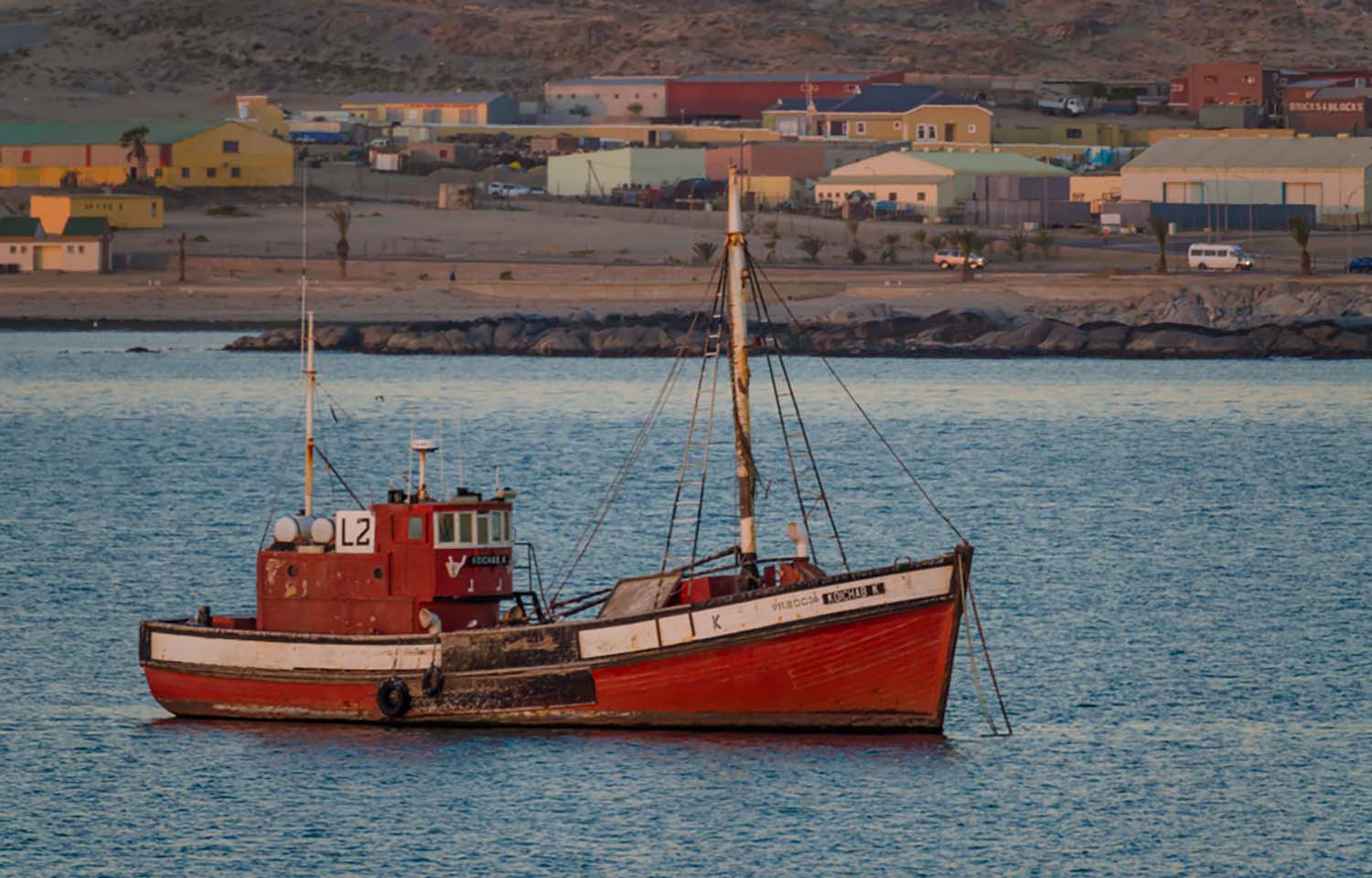
Namibia has approved strict measures to reduce bycatch across its various fisheries, including within its hake trawl and longline fishery.
In early August, the Namibian government decided to reduce the maximum bycatch threshold from 5 percent to 2 percent across its fisheries and increased the penalty for violating this restriction from the current 15 percent fee on every kilogram landed above the limit to 50 percent.
Namibia Minister of Information, Communication, and Technology Emma Theofelus said the government expects the nation’s newly restructured Ministry of Agriculture, Fisheries, Water, and Land Reform to implement the tougher measures as part of the government's wider strategy to protect and improve the sustainability of its marine resources.
Under the new regulations, government agencies will have the power to confiscate fishing gear or seize vessels found to have exceeded the 2 percent bycatch threshold or have the excess catch deducted from future quotas.
The Confederation of Namibian Fishing Associations has criticized the regulations, calling them too general in that they don’t specify whether the new threshold applies per vessel, per year, or to specific bycatch species.
Chairman Matti Amukwa told Namibian media outlet New Era Live that the approved measures to reduce bycatch would only increase the cost of fishing and could even lead to job losses.
“Every fishing sector finds different bycatch species, some under a quota regime and others with no quotas at all. There cannot be a one-size-fits-all solution,” he said. “When the government threatens the industry, it is also threatening jobs. Employees are the most important part of the fishing industry. That must be borne in mind.”
Others, however, have backed the new measure, such as Wet Landed Small Pelagic Association Chair Johnny Doeseb, who said enforcement of the regulations will enhance the sustainability of Namibia's fisheries resources, improve the country's global reputation in implementing marine fisheries best practices, and protect the country's ecosystems and wildlife.
To the latter point, the Namibian Foundation for the Conservation of Seabirds has said previously that bycatch in the country's industrial fishing sector "is a significant cause of mortality of seabirds and is thought to be one of the main reasons for the decline of albatross."
The move to crack down on bycatch represents one of the first moves made under the restructured Ministry of Agriculture, Fisheries, Water, and Land Reform, which was formed via a merger between the country’s Ministry of Mining, Fisheries, and Marine Resources and the Ministry of Agriculture, Fisheries, Water and Land Reform earlier this year.
The two ministries merged to save on expenditures, as Namibia’s fiscal deficit jumped from 2.4 percent of the gross domestic product in fiscal year 2023-24 to 3 percent in fiscal year 2024-25.
“I have decided to establish, abolish some and make several alignments in various government offices, ministries and agencies in order to eradicate duplications, cutting on expenditures and to ensure smooth and effective implementation of our development programs,” Namibia President Netumbo Nandi-Ndaitwah said at the time. “I have also merged some ministries and transferred some mandates to other ministries where we can maximize outcomes.”
Other moves the merged ministry has made include the approval of a three-year consecutive moratorium on pilchard "until the pilchard biomass reaches 1 million metric tons to increase the possibility of sustainable spawner biomass."
The ministry made the move at the end of the 2025 fishing season.
