


Ernesto Rodríguez Leal is the executive director of the Center for Applied Aquaculture Innovation (CAAI), Don Grant is a managing partner of Cuna del Mar, and Tom Pickerell is the global director of the ocean program at the World Resources Institute (WRI).
For too long, we have largely managed the ocean as a source of extraction, rather than a system that requires active stewardship. Every 8 June, the United Nations celebrates World Oceans Day to raise global awareness of marine benefits. This year’s theme, “Reimagine: Beyond the world we know, a new relationship with our ocean,” calls for a shift toward measurable, performance-based ocean management.
We face a perfect storm of systemic challenges: rising ocean temperatures, mounting pressure on wild fisheries, and a surging global demand for healthy protein. A business-as-usual approach will cost the global economy trillions while disproportionately impacting vulnerable coastal communities according to the World Economic Forum. Yet a sustainable ocean economy could deliver USD 5 trillion [EUR 4.3 trillion] in annual benefits by 2050 and generate a return of at least 5:1 on investment.
To prevent marine ecosystems from collapsing under human demand, we must fundamentally rethink how we produce food from the sea. With demand for aquatic food projected to increase by 15 to 20 percent by 2030, we urgently need improved efficiency and sustainability across the value chain.
Moving Beyond Extraction
In this new reality, the traditional concept of sustainability, simply doing no harm, is no longer sufficient. We must transition toward a regenerative model where marine food production acts as a nature-based solution that actively improves ocean health, builds resilience, and creates a net-positive impact on biodiversity and for local communities.
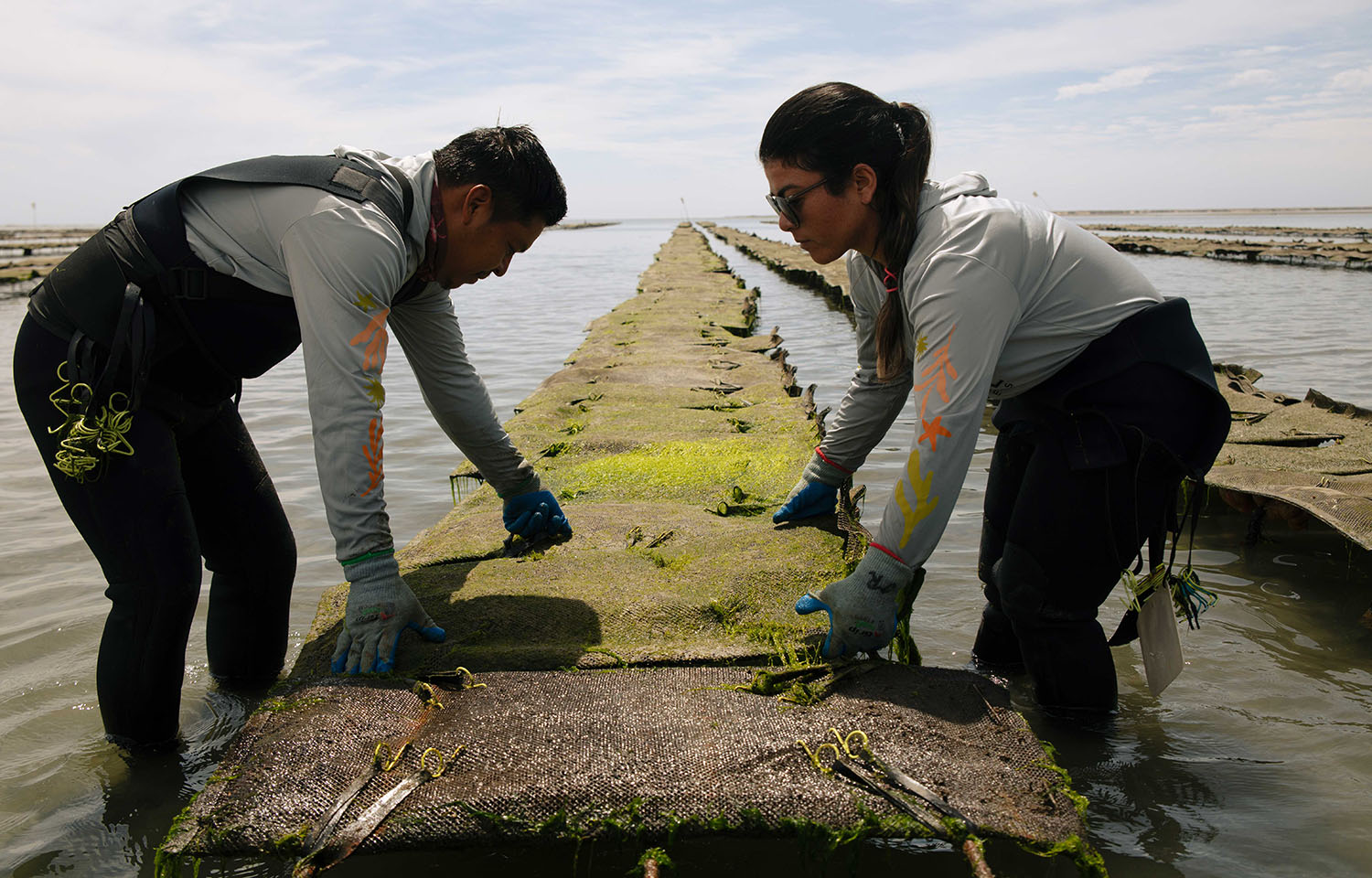
Regenerative aquaculture is vital for meeting future demand while restoring habitats and water quality. Unlike extractive industries, these systems use scalable technology and strategic siting to ensure food security. Aspirationally, we see a future with integrated multi-trophic aquaculture (IMTA), which mimics natural ecosystems by converting finfish nutrients into value for shellfish and seaweed. By bridging economic growth and ecological stewardship, scaling these systems over the next decade can reduce pressure on wild stocks.
Scaling Innovation
Theory must meet practice, and Mexico is emerging as a global leader in this transition. The Gulf of California, a hyper-biodiverse marine ecosystem famously dubbed the aquarium of the world, can serve as a living laboratory. Through a place-based approach, localized, high-stakes research can become scalable, globally applied innovation.
Through Cuna del Mar and the Center for Applied Aquaculture Innovation (CAAI) in La Paz, we demonstrate how enterprise-based models catalyze environmental restoration and local economic growth. As a global collaborative hub, CAAI connects scientists and entrepreneurs to de-risk and scale complex technologies for producers worldwide. These models create jobs within ocean industries that support 233 million livelihoods globally, particularly through regenerative aquaculture. Providing both climate mitigation and adaptation, the World Bank notes farmed fish is a low-emission protein requiring minimal land or freshwater. Cuna del Mar and CAAI have specific interest in warmwater regions, which are uniquely vulnerable to rising temperatures and production pressures.
Because innovation cannot happen in a silo, the CAAI has forged strategic alliances. This includes a memorandum of understanding (MOU) with IMIPAS, the Mexican National Institute of Fisheries and Sustainable Aquaculture, to strengthen the scientific backbone of regenerative practices. By engaging with global conversations advanced by organizations such as the Food and Agriculture Organization (FAO), the Environmental Defense Fund (EDF), and the World Resources Institute (WRI), we ensure our local successes contribute to priorities shared across the international ocean agenda. This model is essential because the challenges of illegal, unreported, and unregulated (IUU) fishing and habitat loss are transboundary, requiring an ecosystem-based approach that spans from coastlines to the open ocean.
A Path Forward
Innovation alone cannot scale without robust governance. This is why the 100 percent Alliance is critical, calling on coastal nations to commit to Sustainable Ocean Plans (SOPs). These SOPs serve as umbrella frameworks that unify fisheries, conservation, and maritime spatial planning into a single strategy for ocean management.
The time has come to move regenerative aquaculture into the mainstream of global food production. For producers, integrated systems can diversify revenue streams, reduce feed costs, and improve resilience to price volatility. This shift requires a bold commitment from the public and private sectors to fund and scale these models with the urgency that ocean health and the climate crisis demand. We must invest in the applied innovation, job training, and new financial models necessary to de-risk these practices for the millions of people who rely on the sea for their livelihoods and billions of people who rely on the sea for their food.
As we reflect on World Oceans Day, we must recognize that the ocean is a system that must be actively managed to remain productive. By embracing regenerative models and management of our waters, we can ensure that we are actively contributing to its health and vitality. Let us seize this moment to chart a path toward a resilient and thriving future for all.
