



The Philippines Department of Agriculture is testing whether it is feasible to farm Australian redclaw crayfish in the country’s freshwater ponds as it looks to diversity its aquaculture sector.
“We want our farmers to grow profits, not just crops,” Philippines Agriculture Secretary Francisco P. Tiu Laurel said of the initiative. “With proper observance of good aquaculture practices and biosecurity measures, the culture of redclaw crayfish offers huge potential that could sustainably transform fish farming in the Philippines.”
The pilot project is being run by the Bureau of Fisheries and Aquatic Resources (BFAR), along with private-sector partners, and the government said it is focusing on developing the new aquaculture sector with an emphasis on sustainability and biosecurity.
“The project signals a careful, strategic approach,” BFAR said in a release. “Redclaw crayfish fetch premium prices, but they also carry ecological and market risks. By emphasizing biosecurity, controlled trials, and private-sector partnership, the DA is signaling a new aquaculture playbook – value, sustainability, and discipline over rapid, unregulated growth.”
The country passed national rules governing crayfish aquaculture last year, requiring all broodstock and craylings to be sourced from certified local hatcheries of BFAR facilities. The National Freshwater Fisheries Technology Center currently has 30 female and 10 male breeders, with plans to expand to 200 breeders. That operation will be able to produce up to 5,000 craylings per cycle, with up to five cycles annually.
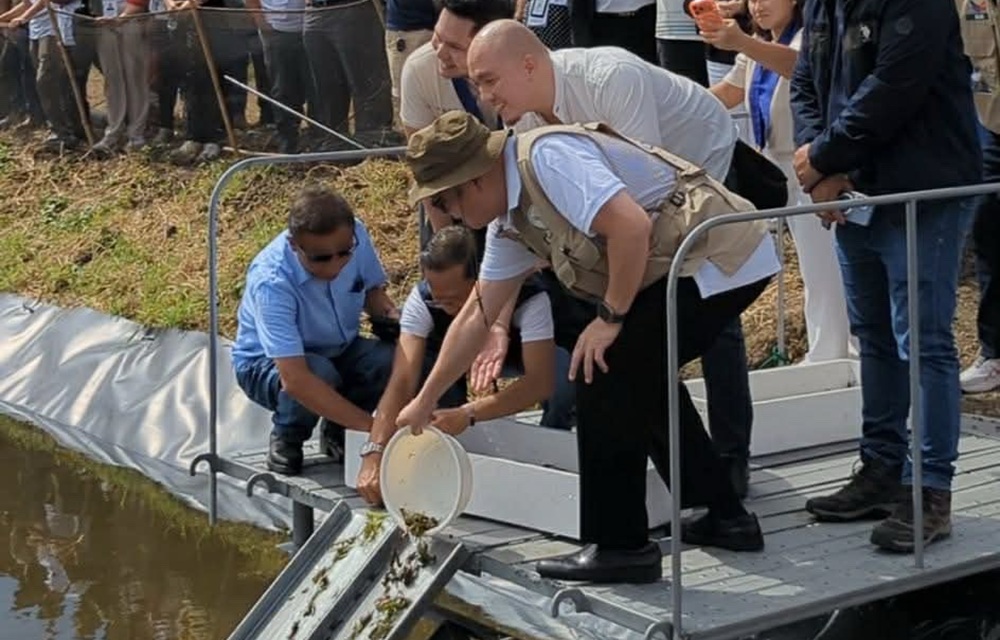
In January, BFAR held a ceremonial stocking of 14,000 craylings for an on-farm verification. The test will run for four to five months, with operators testing different stocking densities across four ponds.
If the pilot proves successful, BFAR said next steps will include full technology demonstrations, packaging protocols, and wider adoption.
