






Proximar Seafood said in its Q3 2024 results it has sold its first-ever salmon harvest from its recirculating aquaculture system (RAS) facility in Japan, but ongoing turbidity issues and customer preferences have it delaying it Q4 harvest plans.
Proximar Seafood has been operating its Atlantic salmon RAS since October 2022 and is aiming to achieve targeted annual production of 5,300 metric tons (MT) from its facility near the foot of Mount Fuji. The company has so far harvested just 1.2 MT in a trial harvest, but the company said the first harvest already shows it has a big advantage over other salmon producers.
“Proximar is the first producer of Atlantic salmon in Japan, years ahead of the competition,” Proximar Seafood Joachim Nielsen said in a press release. “We are now finally able to supply the Japanese population with domestically produced Atlantic salmon.”
According to Proximar, its first batch of salmon managed to achieve a premium pricing of NOK 130 (USD 11.84, EUR 11.17) per kilogram, which is a price premium over the imported Norwegian salmon it is currently competing against.
“The premium price achievement for our fish in the market is another confirmation of our business model, demonstrating the significant cost advantage of local production in Japan,” Nielsen said.
The company said NOK 130 is a roughly 10 percent premium over imported salmon from Norway, which it said it considers the relevant benchmark against which to measure. According to the company, it received a superior grade on 99.2 percent of its salmon, with an average head-on gutted harvest size of 4.03 kilograms.
“We continue to see strong interest from high-end buyers and are very pleased to see how our fish has been accepted in the market, not only through price achievement but also seen in the demand,” Nielsen said. “We are the only company that can deliver fresh, domestic Atlantic salmon to Japanese consumers, and we see strong enthusiasm also among the consumers.”
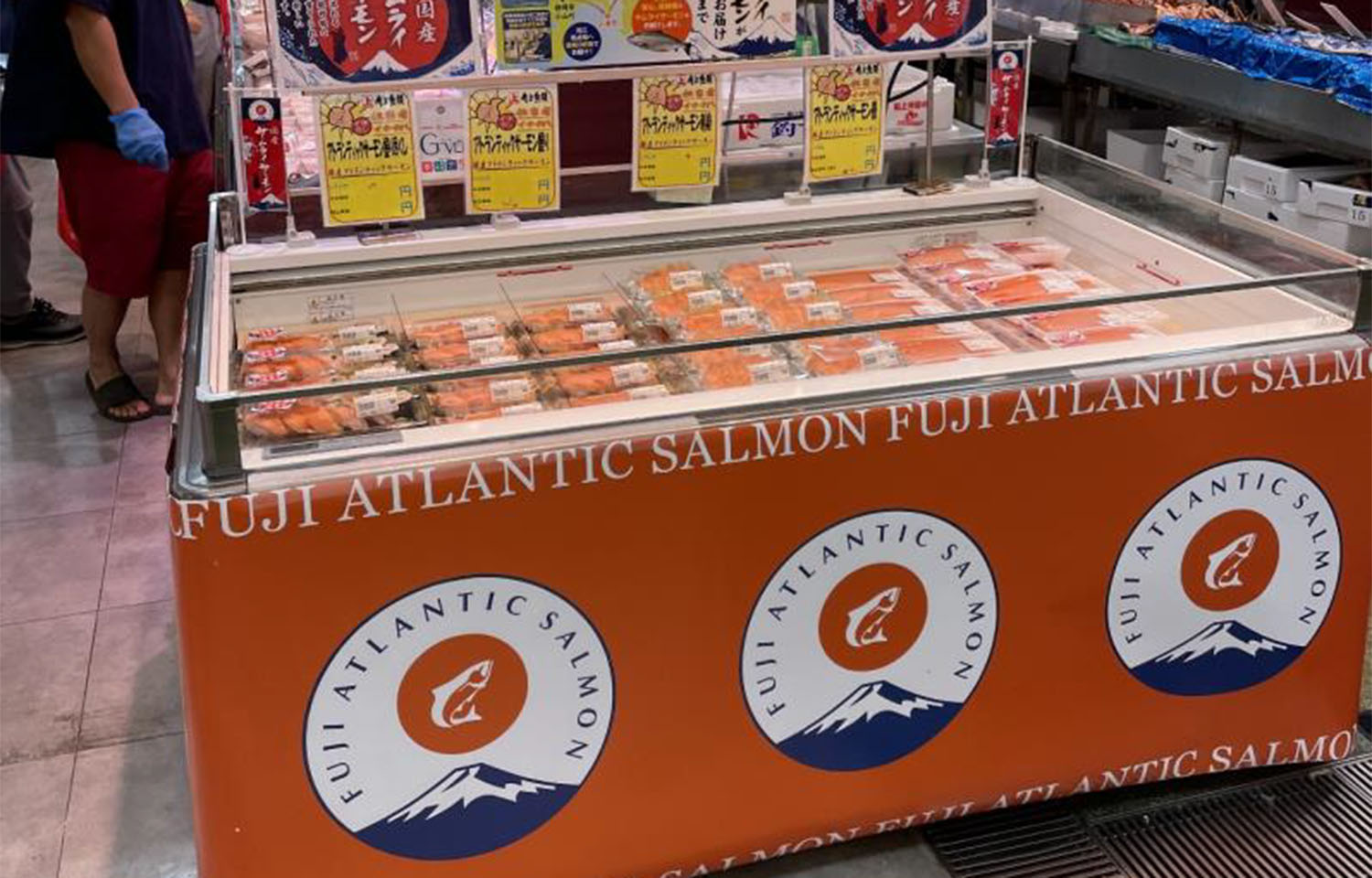
When it announced its first harvest, it also revealed that it will be selling its salmon under the brand “Fuji Atlantic Salmon,” referencing its proximity to the famous landmark. The company said that it is seeing strong awareness and recognition of the brand and that it has gained media attention in Japan.
Nikkei Shimbun – one of Japan’s largest economic news publications – highlighted land-based salmon farming in a recent story that prominently featured Proximar’s plans to harvest salmon domestically.
Proximar Seafood said it is continuing to build up biomass at its facility and that it reached 733 MT by the end of Q3 2024. However, it added that ongoing turbidity issues forced it to restrict feeding in the grow-out stage during the quarter, which resulted in lower growth rates.
Proximar first reported water quality issues related to the turbidity of the water in Q2 2024, which the company said had no direct impact on the fish health or performance. Since first reporting the issue, Proximar has installed a new ozone system that is now providing a full dosage to one of the company’s RAS modules with “very clear results” and reduced turbidity. The company said it will complete ozone installations at its remaining modules later this month, which should solve its issues.
In the meantime, the turbidity issues in Q2 and Q3 2024 resulted in lower growth rates and impacted planned harvest volumes for 2024. Proximar said it expects to harvest 80 MT in 2024 and push the remaining volumes it had previously scheduled into Q1 2025. It said it still expects to harvest 4,700 MT combined between 2024 and 2025.
“Proximar continues to expect the full capacity of phase 1 of 5,300 [MT] to be reached in 2027,” the company said.
The company also said it has secured a JPY 300 million (USD 1.9 million, EUR 1.8 million) loan agreement from a Japanese bank to use for working capital purposes and to buffer its liquidity. The company said the loan matures on 31 August 2025.
