






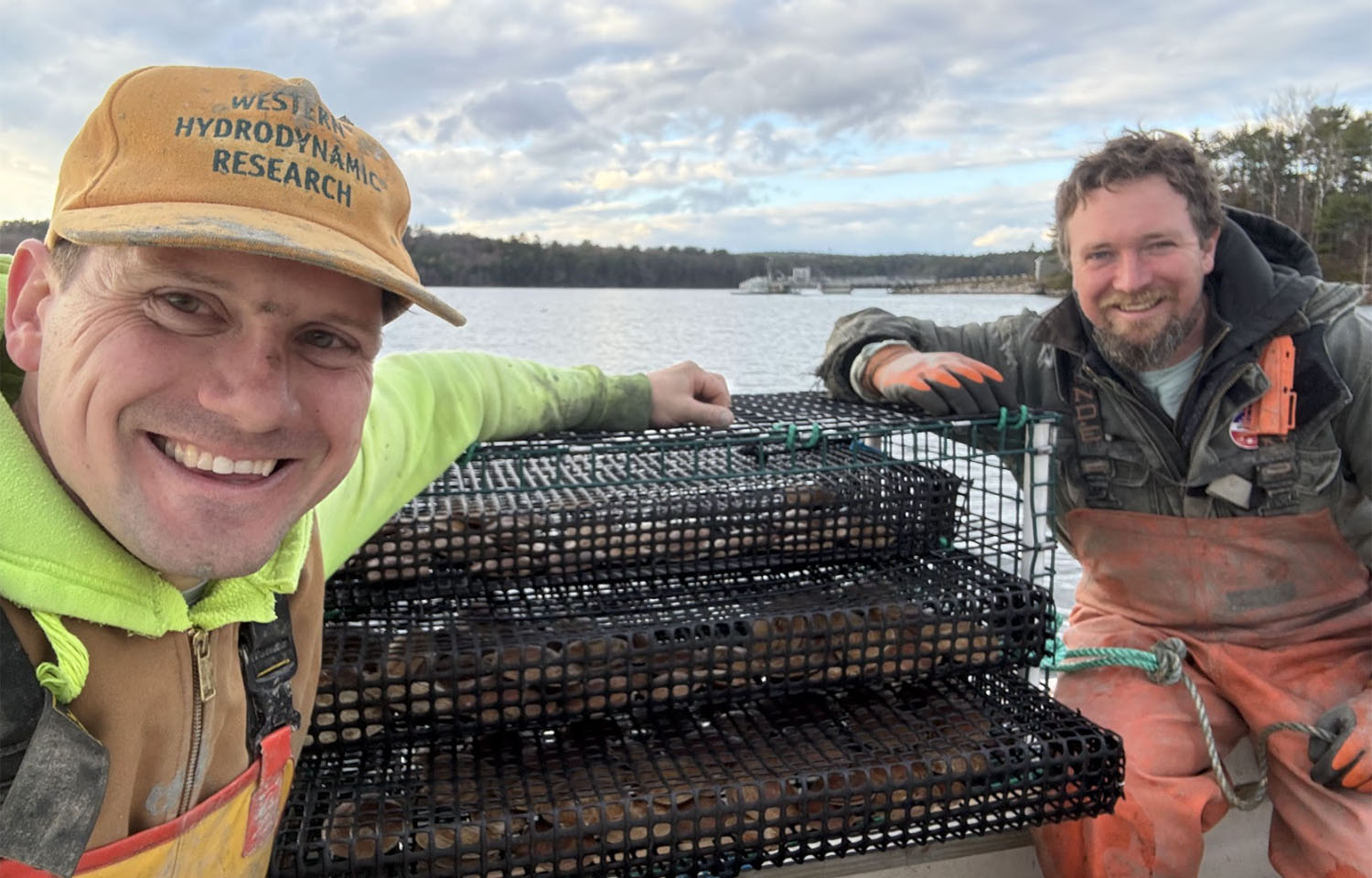
Seascale co-founders Jon Steuber and Charlie Walsh have watched the coast of Maine change over the last few decades and founded a company designed to add resilience to the coastal economy they live in.
“We both live on the coast in fishing communities and both have spent a lot of time in the back of boats. We recognize how important fishing, lobstering especially, is to the local economy,” Walsh told SeafoodSource.
Historically, Maine coastal fishermen could tap into one of many different species, including shrimp, groundfish, and pelagic species like herring. These days, many of those fisheries are either vastly diminished or nearly nonexistent.
As a result, lobstering is now the main source of income for fishermen in the state. The state’s commercial catch value across all species increased to over USD 700 million (EUR 600 million) in 2024, and lobstering made up USD 528 million (EUR 453 million) of that total. That means lobster completely eclipsed every other fishery by value, and even the second-most-valuable fishery of softshell clams earned over 30 times less than lobster.
“It used to be the case that fishermen in the state of Maine were diversified,” Steuber told SeafoodSource. “That has all ended up becoming narrowed down to this almost monoculture of lobstering.”
That lack of diversification leaves lobstermen vulnerable to fluctuations in the fishery – which was the catalyst for Walsh and Steuber to create Seascale. Seascale’s product is relatively simple in concept: a lobster trap-sized container that has everything needed to raise North Atlantic sea scallops on the bottom of the ocean with minimal input, giving lobstermen a new source of revenue.
The idea of side-stream revenue for lobstering isn’t new, but Walsh said after they looked at existing options, none of them seemed to fit and most seemed to require fishermen to take on different responsibilities oriented around aquaculture rather than fishing.
“We were trying to find a way to make aquaculture fit into a fishing model, rather than make a bunch of fishermen change their businesses into becoming farmers,” Walsh said.
The driving concept behind the company’s product is that anyone in the lobster industry looking for a secondary revenue stream could purchase a set of the company’s “Maine Scallop Pots” and load it onto their boat alongside lobster traps. The devices are the same size and weight as a lobster trap, are manufactured by the same facilities that make lobster traps, and can use existing equipment onboard a lobster boat.
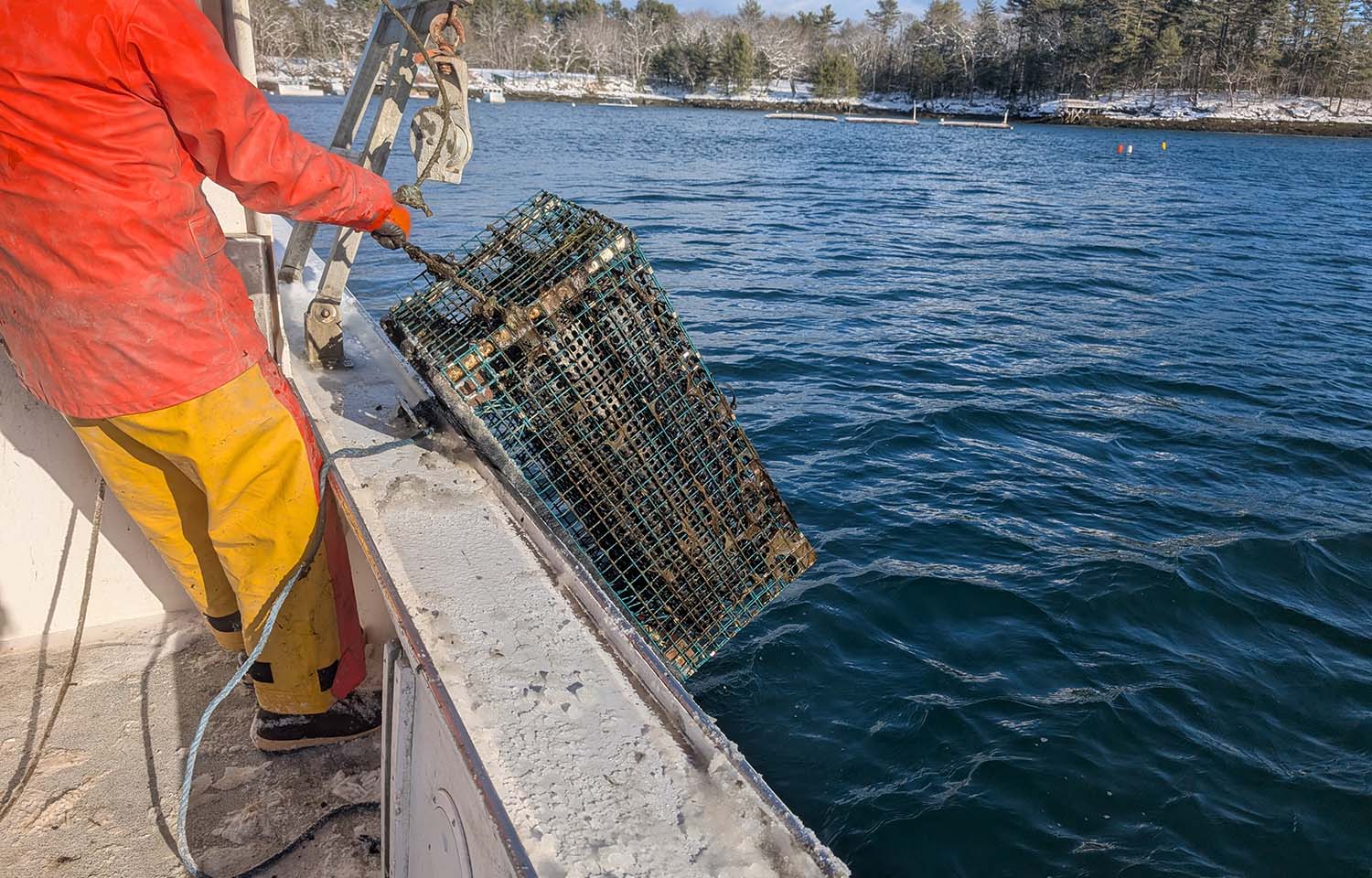
That means lobstermen don’t need to buy any special new equipment, don’t need to modify their boats, and because the system is used for raising scallops, they don’t need to change their day-to-day operations.
Steuber said they chose scallops because of where the species grows best.
“There has been a lot of focus on oyster aquaculture in the state of Maine. But recognizing that, if we’re trying to meet lobstermen where they’re at in a very real geographic sense, these folks are out in deeper water,” Steuber said.
Scallops can thrive in the deeper waters that lobstermen typically fish in, meaning anyone buying into Seascale’s model doesn’t need to make additional trips between day-to-day fishing to make the aquaculture part of the business work.
Walsh said another part of arriving at the model is making sure fishermen have the time to use it.
“These guys don’t want a second full-time job. They can’t, and don’t want, to capitalize hundreds or thousands of dollars of equipment into another full-time job,” Walsh said. “If you’re going to provide something that they could do to supplement their income, it can’t interfere with what pays the bills, which is fishing.”
A lobsterman using Seascale’s product can drop a string of the trap-sized devices in deep water near where they already fish and leave the scallops to grow for months at a time without much maintenance. Because Seascale’s devices are made to be located in much deeper water, the amount of fouling that occurs on the lines and traps is reduced – which again saves time and work.
Walsh and Steuber said the idea itself is so simple people they talk to have been surprised no one has tried it yet. However, the execution of making a product that really works as intended has taken a lot of time and effort.
“Once you hear it, it seems like a very simple solution for things, but it has taken a lot of gear iteration and a lot of experimentation to get it right,” Walsh said. “Jon and I in my barn were trying it out with Atlas gloves and working with the device saying, ‘If you can’t do this on the rail wearing giant insulated gloves, it won’t work.’ Everything about interacting with this device has to be at least as easy as a lobster trap.”
The other aspect of the business is proving that the devices can successfully raise scallops. Seascale has done trial runs of raising scallops in a number of locations and found the devices work even in areas where scallops would normally struggle.
“We’ve had scallops growing in half-a-fathom of water in the Damariscotta River since October. We refer to it as the Thunderdome for scallops because they have no business surviving or living in that area,” Steuber said. “We’re talking a muddy bottom, low depth, high wave action, huge fluctuations in terms of water temperature – and these little buggers are as happy as they could be.”
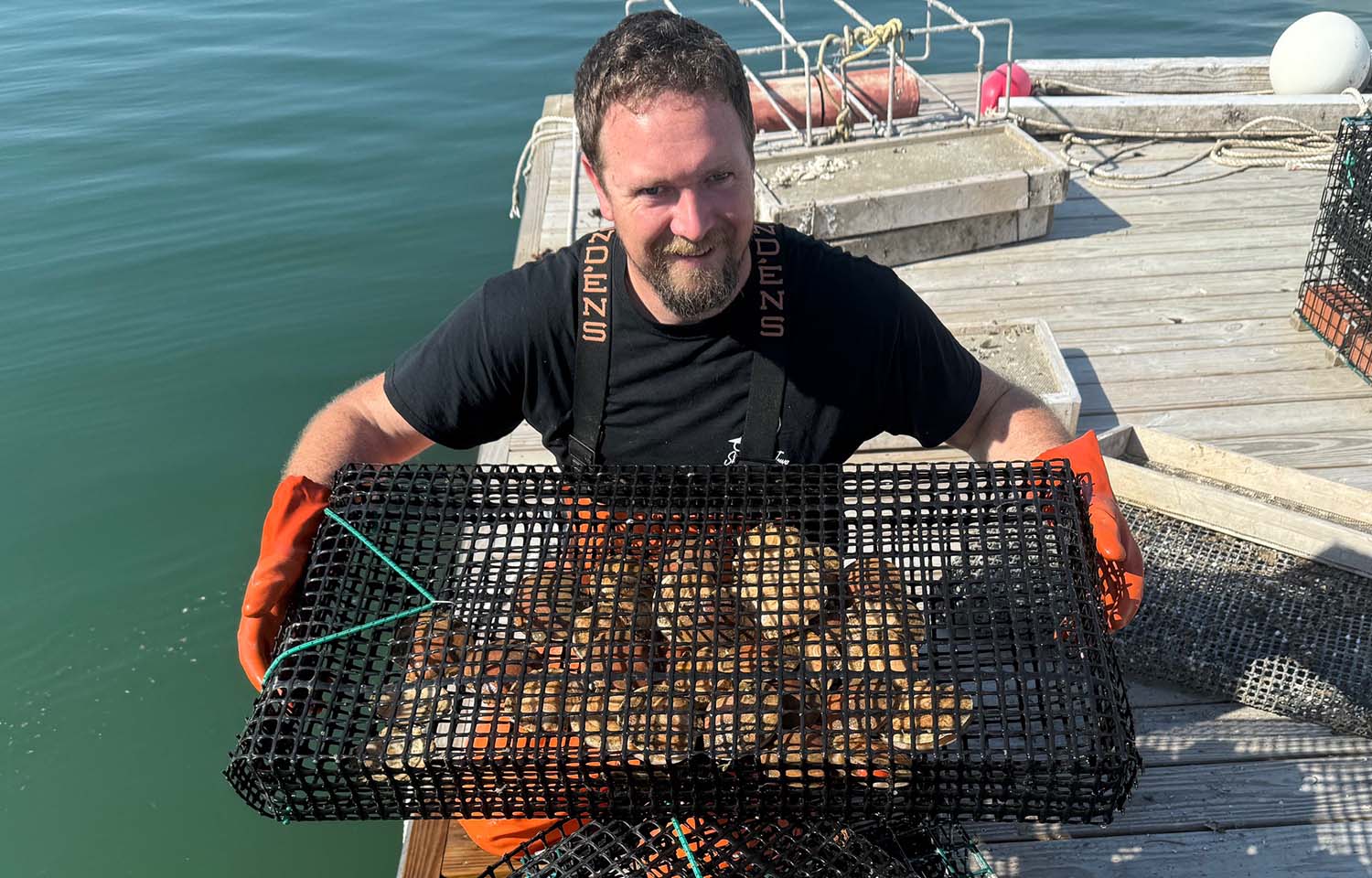
The University of New Hampshire has also been doing studies on the effectiveness of the system and has also seen positive results, they said.
Now that the prototypes have been worked out and the idea has gone beyond the “barn and a yellow legal pad,” the company has moved to full-fledged production. Seascale’s devices are manufactured by Brooks Trap Mill in Thomaston, Maine, which has made traps for a range of fisheries in the state, including lobstering, for decades.
“We don’t need to, and don’t want to, scale an entire aquaculture factory,” Walsh said. “Those good jobs and established businesses already exist.”
Seascale has also had to get buy-in from fishermen and from state officials. In the state of Maine, aquaculture can only be performed with the appropriate permission from the government, and Seascale has worked with officials with the Maine Department of Marine Resources (DMR) to secure this.
“We’ve been in conversations with the DMR about the use of the Maine Scallop Pot,” Walsh said. “DMR has been informative as we explore how this gear might fit into future aquaculture pathways that serve working fishermen and support the resilience of Maine’s coastal communities.”
Walsh and Steuber also said the way the devices appear on the surface has reduced friction with coastal landowners since all that shows to any onlooker is a lobster buoy – an iconic feature of Maine’s coastal waters for hundreds of years. The traps also interfere little with existing fishing since lobstermen can drop a set of the devices in areas there would already have traps present.
Walsh and Steuber said that looking even further down the road, there’s opportunity for other trap fisheries in various locations. The idea could work for something like Dungeness crab on the West Coast of the U.S. or blue crab in the Chesapeake Bay if the form is adapted and the species to farm fits the area.
“I think you would have a lot of opportunity to be able to scale this regionally,” Steuber said.
For now, though, the goal is getting more adoption and hopefully developing a new revenue stream for lobstermen that helps diversify the fishery and add to the coastal economy in a positive way.
“We live in these communities. I want these to be healthy communities, and lobstering has been the engine of Maine’s coastal middle class incomes – both through the fishing itself and all that it supports,” Walsh said. “We want to keep these small coastal towns and their pretty incredible rural economies turning.”
