






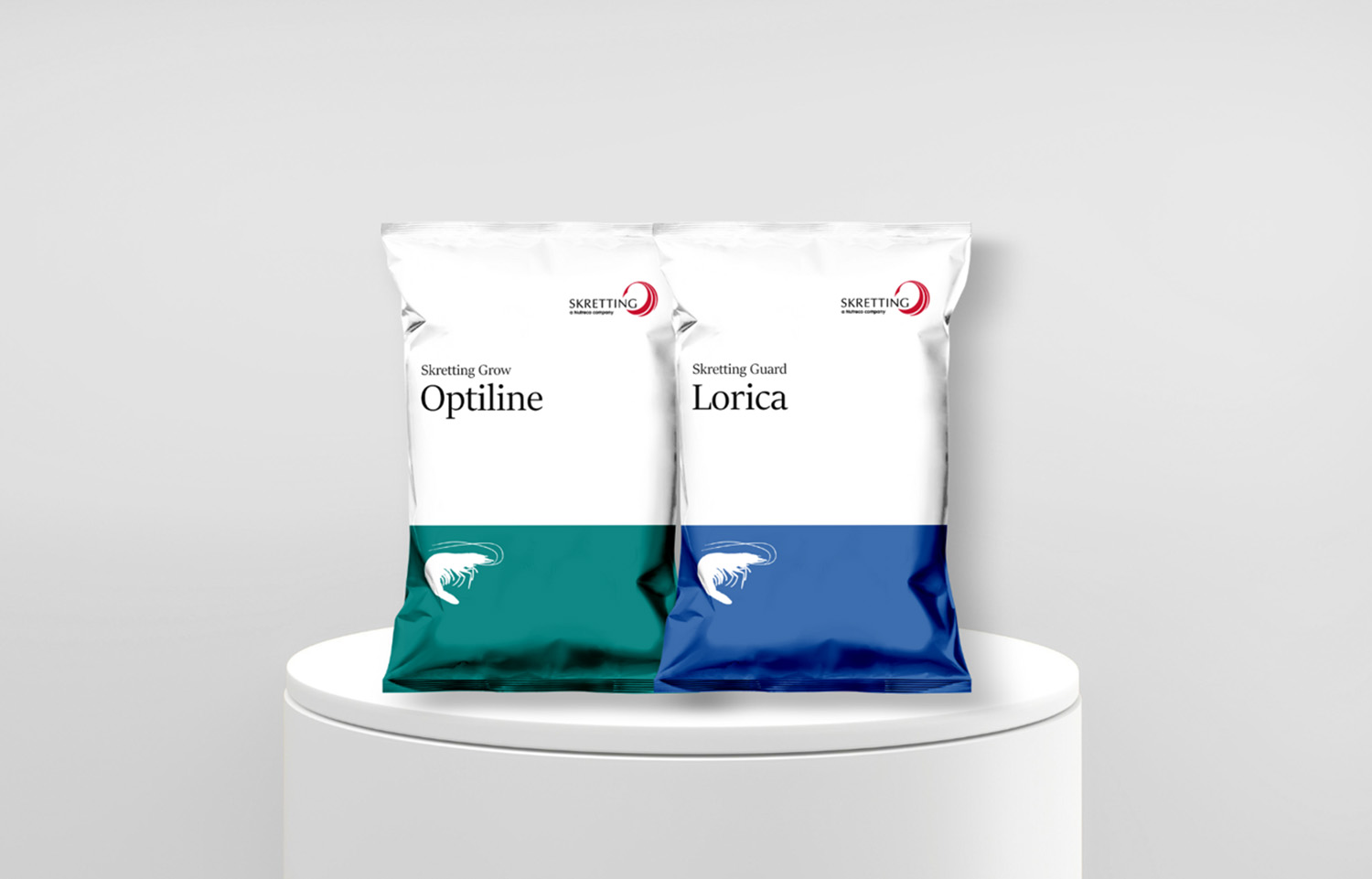
Stavanger, Norway-headquartered feed producer Skretting has expanded its functional feed portfolio with three new product launches – Necto for fish health and Optiline and Lorica for shrimp growth and health – all formulated with the aquafeed company’s new proprietary phytocomplex platform.
Built on blends of targeted plants, the company’s phytocomplex technology is already driving measurable gains in robustness, growth efficiency, and resilience at a time when farmers face mounting health, climate, and regulatory pressures, according to Skretting Innovation Director Alex Obach.
It has been almost 18 months since Nutreco, under which Skretting is the global aquaculture feed division, opened its Garden of the Future in Thurgau, Switzerland – the hub of its phytotechnology program. There, a dedicated team of plant experts is developing ingredients that deliver physiological benefits when incorporated into feed, with the aim of improving performance, health, and welfare across aquatic and terrestrial species.
“A lot has happened since the launch,” Obach told SeafoodSource.
Discussing the science behind the new platform, its commercial relevance, and how Skretting plans to stand out in a crowded feed space, Obach said he is convinced that phytocomplex technology represents a “step change” for aquaculture.
One of the clearest examples, he said, concerns inflammation – “one of the big diseases of the 21st century.”
Chronic inflammation affects salmon, shrimp, seabass, and many other farmed species, impairing performance and weakening disease resistance. The Garden of the Future’s plant-screening work has already produced candidates that outperform essential oils and other plant extracts the industry has relied on until now, Obach said.
“What we saw with the phytocomplexes was another level,” he said.
In the Optiline products, launched in October, scientists identified a plant that, when added to feed, improved glucose uptake in shrimp muscle cells, boosting growth rates by up to 10 percent.
“There’s a plant for almost any situation like this,” Obach said. “Now, we are working with them on plants that have antimicrobial benefits. We’re also looking for anti-parasitic effects, antioxidant effects, and so on. There are 11 opportunities that we’re looking at right now – in addition to the three we have already launched.”
Many of these applications draw on human and terrestrial animal nutrition, Obach said, but aquaculture remains largely untapped, including for some of the sector’s biggest problems. Several plants are currently being tested for their potential to combat sea lice, for instance.
“We are opening a completely new avenue in our research, which hasn’t been explored before,” Obach said. “Until now, as an industry, we’ve pretty much been using the same few dozen plant extracts in our diets. Having 300,000 species of plants and millions of variations is a big gamechanger. We’ve never had so many opportunities at our disposal. I believe, based on what I’ve seen so far in terms of results with the phytocomplex-enhanced diets that we’re launching, we’re going to see a lot of performance improvements over the next couple of decades.”
Beyond Optiline’s growth improvements, Obach highlighted that trials with Necto have shown a 30 percent reduction in mortality, while Lorica, launched first in Ecuador, has delivered a 10 percent improvement in shrimp survival in commercial production ponds.
“I’m very excited. We all are,” he said. “Because when you’re a scientist, what you want to see is consistency in results. The consistency we have seen with these new products makes me believe this is absolutely the future.”
Ecuador is the first major market to feel the impact of phytocomplexes, with Optiline and Lorica already selling at volume there. Asia, Obach said, will follow once regulatory approvals for the relevant plant ingredients are secured, and on the fish-farming side, Necto is gaining rapid traction in Southern Europe, with ongoing trials in seabass, seabream, and trout.
“In the first half of 2026, we’ll really see it picking up dramatically,” Obach said.
Salmon is the goal after those launches, though it requires additional infrastructure and process optimization, he explained.
“We’re testing and running competition studies, but there’s a lot of infrastructure work to factor in, including getting the grinding capacity in place,” he said.
Regardless of the future hurdles, Obach said he believes phytocomplexes will ultimately reshape how the industry thinks about diet categories.
“So far, we have been working in a very pure way; when we develop a diet, it’s either a grower diet or a functional diet. But now, I think it’s going to become a bit more nuanced,” he said. “Because of what phytocomplexes offer on a broader level, the distinct differences between these two categories are likely to become more blurred.”
This evolution mirrors the changing conditions farmers face. As species such as salmon adapt to rising water temperatures, nutritional needs are shifting, creating more opportunities for targeted, condition-specific formulations.
“With climate change, different farming systems, and the understanding that one size doesn’t fit all, we all need to be more adaptable and flexible; that is key to the future of this industry,” Obach said. “The fish need to grow, they need to convert feed and energy, they need to survive, and the end quality has to be good. But the way we're going to achieve those goals is going to look different going forward. Having a good toolbox of phytocomplexes – and particularly phytocomplexes that help in specific conditions – will help us do that.”
Skretting’s breakthroughs come as experts have predicted shortages of fishmeal as early as 2028 without alternative feed developments like phytocomplexes.
