



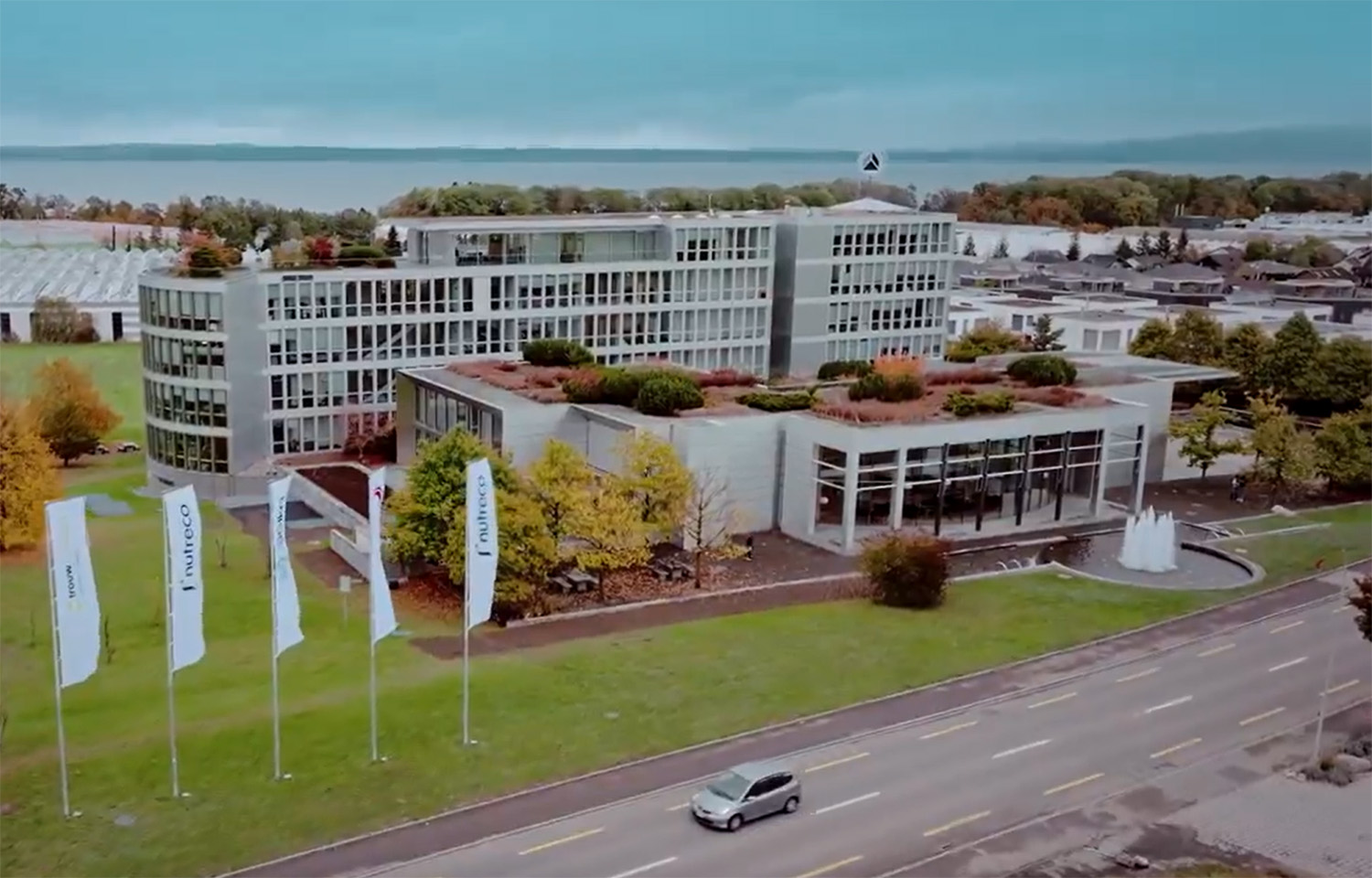
Amersfoort, Netherlands-based food-processing company Nutreco has announced the opening of its Garden of the Future facility in Thurgau, Switzerland, which will serve as the new hub for the company’s phytotechnology program.
“What we’re harnessing is the incredible power of the plant kingdom,” Nutreco CEO David Blakemore said at the official opening of the facility on 5 June.
Located in an area of Switzerland known as the Phyto Valley, due to the high density of phyto-pharmaceutical companies, startups, and laboratories in the region, the garden will serve as the central location for all of Nutreco’s phytotechnology-related activities – from experimental cultivation to plant development and production.
The work completed at the garden will apply to both Nutreco's aquaculture and land-based animal production sectors, supplied through its Skretting and Trouw Nutrition business lines, respectively.
Led by director Bernd Büter and ethnobotanist Karin Berger, the garden includes a 500-square-meter experimental greenhouse for plant breeding and propagation, a 5,000-square-meter vegetative mass propagation greenhouse, around 30 hectares of cultivation space, and a Future Garden that puts the facility’s novel plants on display.
Two Nutreco-made machine-learning algorithms, one of which identifies plants capable of solving complex market issues and one that enables those same plants to be produced at sufficient scale, are critical to the garden’s success, according to Blakemore. This system allows Nutreco’s network of growers to ensure consistent, sustainable plant supply and its global logistics arm to ensure reliable delivery, he said.
“What we do here is a gamechanger. We are copying no one. We are creating a new frontier – a new reality; it’s not theory, it’s happening now,” Blakemore said. “The challenges are real, and the world is counting on us and our innovation.”
The facility is specifically focused on creating phytotechnology solutions, also known as phyto-complexes. These complexes comprise plants or plant metabolites that, when added to feed, have physiological impacts that consistently support the performance, health, and welfare of aquatic and land-farmed animals.
According to Blakemore, who took over the role of Nutreco CEO effective 1 June, the Garden of the Future will help Nutreco address many of the specific challenges its customers face and support them in improving their operations.
He said Nutreco’s phyto-complexes are being developed in direct response to existing market challenges and that many of the phyto-complexes come from plants that haven’t been cultivated before. Therefore, supply chains for these new plants are completely new.
“This is not a problem looking for a solution, and it’s not a solution looking for a problem. What [this is] is a connected team that’s collaborating and working on a capability that can produce a pipeline of solutions to the biggest problems impacting this industry,” Blakemore said. “The future is now, and what we're talking about today is not things that we hope, wish, and think; it’s the result of the last three years of hard work and putting together the system. It's very exciting for us to be at this moment in this journey.”
Blakemore said to ensure that 2050’s estimated global population of 10 billion people will have access to nutritious diets and enough food to survive, there’s a “tremendous need for innovation.”
He also acknowledged that the requirement to produce 60 percent more food to feed that population within the planet’s natural boundaries while at the same time decreasing waste and emissions is “a very daunting challenge” – but one that Nutreco aspires to address.
“Our common goal is a sustainable food system that enables future generations to lead a healthy life and that we leave a healthy planet for the generations that come,” Blakemore said. “Our focus is to make sure we're leveraging our expertise to continue to optimize speed formulations, to continue to be a thought leader in the development of new solutions, and also to be a thought leader in alternative proteins and new technologies for the industry. We will certainly continue to lead in the digitalization of this industry and do everything that we can to help farmers continue to professionalize their operations.”
Nutreco Chief Science Officer David Bravo said some 450 unique plant material samples have already been collected at the facility, along with field trials and production taking place in seven countries. Four phyto-complex products have already been launched and 17 more are in the pipeline.
“We live in a time and in an era where we have fabulous technological improvements,” he said. “The future is complex, and we must change the way we think and work. Plants are genius; we need to be able to understand the way they behave, the way they interact, and the way they communicate in order for us to create new technologies that are different.”
