






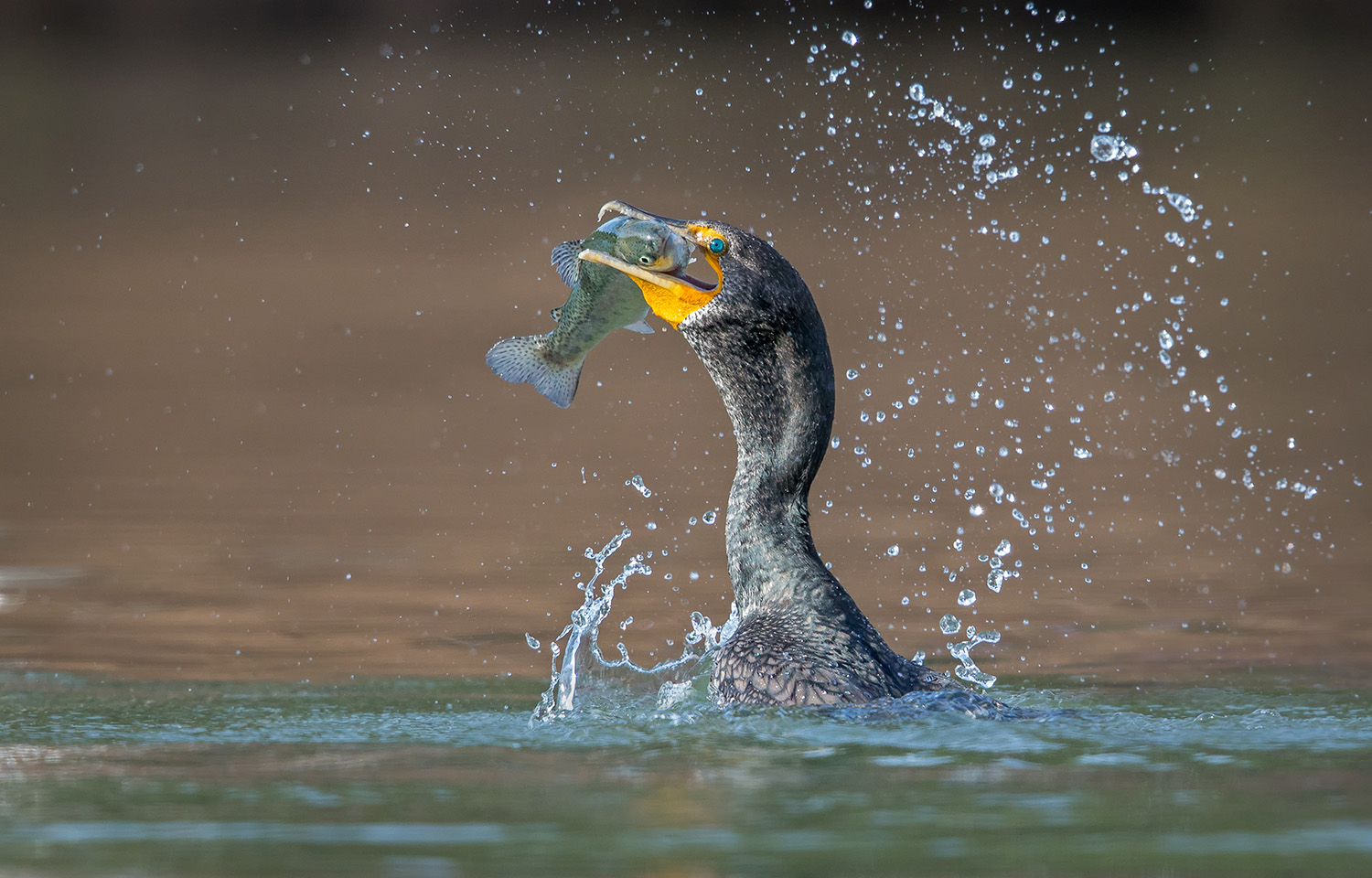
U.S. lawmakers are pushing legislation that would allow catfish farmers to protect their fish from a rising issue: cormorants.
A waterbird that can be found across vast swaths of North America, double-crested cormorants feed primarily on fish – including catfish. According to legislators, the birds eat roughly 1 pound of fish per day and frequently prey on aquaculture operations, costing producers “millions of dollars in losses” annually.
To address the growing issues, U.S. Senator Katie Britt (R-Alabama) and U.S. Senator Tom Cotton (R-Arkansas) have introduced the Cormorant Relief Act, which would authorize aquaculture producers to cull double-crested cormorants.
“Every year, Alabama’s catfish farmers battle predatory double-crested cormorants in addition to the high input costs and overreaching regulations experienced by our entire agriculture industry. This common-sense bill allows our aquaculture producers the ability to better manage these cormorants that cause millions of dollars of losses year after year. Catfish is a vital part of our state’s economy, and I will always support our hardworking farmers and processors,” Britt said in a statement.
Companion legislation has been introduced in the U.S. House by Representative Mike Ezell (R-Mississippi).
"Cormorant overpopulation is hurting fish populations and threatening industries that depend on healthy fisheries," Ezell said in a statement. "This bipartisan bill gives Mississippians the ability to manage these predatory birds and keep our aquaculture industry protected. Protecting our fisheries is key to supporting local economies and farmers, and I’m proud to work with those leading this effort."
The U.S. Fish and Wildlife Service (USFWS) used to allow aquaculture producers to cull cormorants. In 1998, the service adopted the Aquaculture Depredation Order, allowing landowners, operators, and tenants engaged in commercial aquaculture to kill cormorants eating their fish. The depredation order was amended in 2003, while a second order allowed government employees to kill cormorants found eating “public resources of fish.”
Those two orders remained in effect until 2016, when the U.S. District Court for the District of Columbia vacated them, finding that USFWS had not adequately considered alternatives. USFWS can still issue individual permits to farms and aquaculture operations being affected by cormorants, but the Cormorant Relief Act would remove the need for individual permits.
The bill has received backing from the aquaculture industry, with endorsements from the Catfish Farmers of America and the National Aquaculture Association.
“The legislation is a return to ... assisting farms throughout the Central and Southern United States in effectively managing a rapidly growing population of farmed fish-eating birds,” National Aquaculture Association President Sebastian Belle said. “Bird populations expanded during the 18-year period when the first Aquaculture Depredation Order was in place. There will be no change in that growth under this bill. Fortunately, the legislation does relieve the USFWS of the task of issuing individual farm regulatory permits. The agency has been unable to do so in a timely manner which has created uncertainty in the farming community. Farms will continue to report their bird management efforts to both the USFWS and the USDA Wildlife Services.”
