


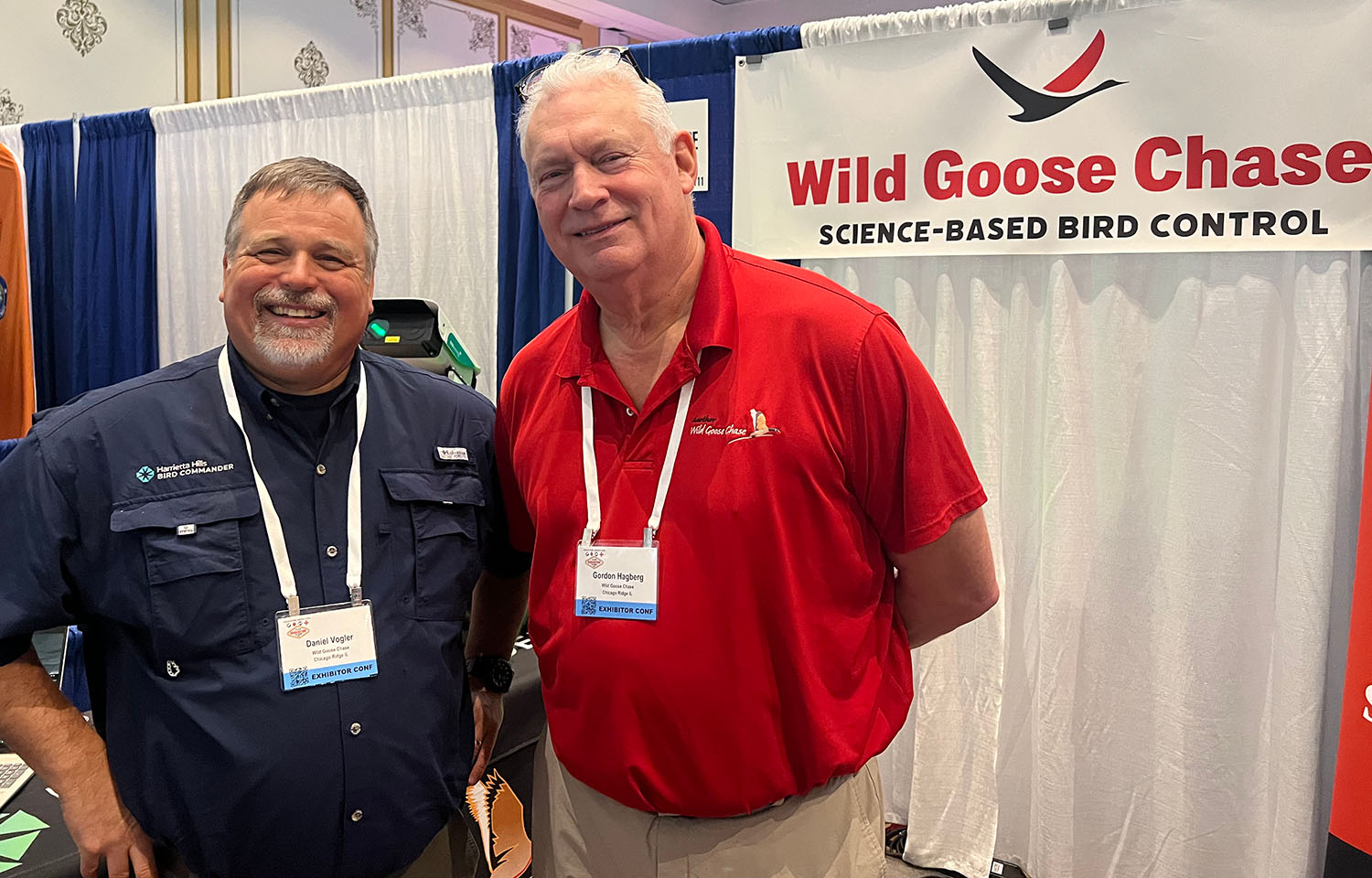
Chicago Ridge, Illinois, U.S.A.-based Wild Goose Chase has been providing bird control services since 1998, helping commercial properties, agricultural operations, manufacturing facilities, and now aquaculture farms, among other clients, manage their bird problems humanely and effectively.
About three decades ago, the first problem Wild Goose Chase set out to solve was large populations of Canada geese causing issues on commercial industrial properties in the Chicago suburbs. The firm provided, and still provides, these clients with services that abide by guidelines spelled out in the Migratory Bird Treaty Act of 1918, which makes it illegal to take, possess, or kill over 1,000 species of birds in the U.S., including geese.
The firm's client portfolio really began to grow when the bird flu outbreak of late 2014 to early 2015 heavily affected poultry farms around the country. According to the U.S. Department of Agriculture, over 50 million chickens and turkeys in the U.S. were killed or eradicated to quell that particular spread of the flu.
“We started getting calls from commercial poultry farms asking whether there was any technology they could use to help move migratory waterfowl, which were carrying the bird flu,” Wild Goose Chase Vice President Gordon Hagberg told SeafoodSource at the 2026 Aquaculture America Conference in Las Vegas, Nevada, U.S.A.
After getting those calls, Hagberg said the firm bought laser technology from a company in the Netherlands and began offering that as part of its wide range of bird-deterrent products, which also includes bird wires and spikes, mild electric shock tracks, gel discs, window treatments that reduce bird collisions, or letting trained dogs guided by professional handlers scare away birds.
“Birds have very good eyesight, so when they see the laser, they get startled, call out a distress call, and move,” he said. “We were the first installer in the country and soon started moving into other verticals.”
Some of those verticals have included dairy operations, vineyard and blueberry farms, and, as of three years ago, aquaculture facilities.
Wild Goose Chase’s first aquaculture client was Dan Vogler, who is an owner and operator of Harrietta, Michigan, U.S.A.-based trout farm Harrietta Hills, which farms rainbow, brook, and brown trout but also provides pond and water management services.
Vogler told SeafoodSource he was hesitant at first to adopt the technology but eventually implemented a Wild Goose Chase-provided laser system on his property, finding immediate results. He has since become a partner in selling the technology.
“It worked fantastically, and I said, ‘Boy, I know a lot of guys in the aquaculture industry struggling with birds,’” Vogler said.
With Vogler’s help, it has found success with various aquaculture clients in the Great Lakes region, and Hagberg said Wild Goose Chase is now considering possible expansion opportunities within the larger North American aquaculture industry.
“There is a lot of interest from Canada, as well as the East Coast, from shellfish producers dealing with seagull issues,” Hagberg said. “It’s not new technology, but it’s just a matter of getting the word out.”
Vogler added a caveat that any expansion into new species would require plenty of research into the issues each producer faces, as well as any possible regulations that may arise.
But, he also said the opportunities for the technology are enormous.
“How many fish farmers have you met who do not complain about bird predation? None, ever, anywhere. So, there is an enormous number of people who need to deal with these issues,” Vogler said.
Many aquaculture operations in the U.S. deal with bird issues, regardless of location.
The issue of cormorants, for example, has progressed to a point in the American South that the U.S. House of Representatives passed a bill in December 2025 that would authorize more aquaculture operations to cull double-crested cormorants.
“Double-crested cormorant populations continue to increase, with little to no predation, an expanding prey base, and growing rookeries in the Southeastern United States,” the National Aquaculture Association stated in a release. “The North American Breeding Bird Survey Trend Results estimated a growth rate of 1.52 percent through the U.S., with some areas as high as 8.11 percent. This increasing population, coupled with delays in obtaining depredation permits, has led to significant cormorant predation and economic losses of farmed fish.”
