



Two United States senators have introduced bipartisan legislation to establish a task force to determine why shellfish populations on the East Coast of the U.S. are declining.
“South Carolina’s shellfish industry depends on healthy bivalve populations, and this task force will support the research needed to develop science-based solutions that protect both our natural resources and the livelihoods they sustain,” U.S. Senator Tim Scott (R-South Carolina) said in a release. “From commercial fishermen to restaurant workers and the tourism industry, this directly affects the families and communities that depend on them. I’m pleased to co-sponsor this bill to study the declining bivalve populations and develop informed solutions to safeguard our state’s coastal economy and heritage.”
Together, Scott and U.S. Senator Sheldon Whitehouse (D-Rhode Island) introduced the Quantifying Uncertainty and Action to Help Optimize Growth of Shellfish (QUAHOGS) Act to coordinate efforts between scientists, industry, the federal government, regulators, and other stakeholders to determine a any root causes for decreases in shellfish populations. According to the lawmakers, East Coast shellfish landings have “mysteriously declined for years.”
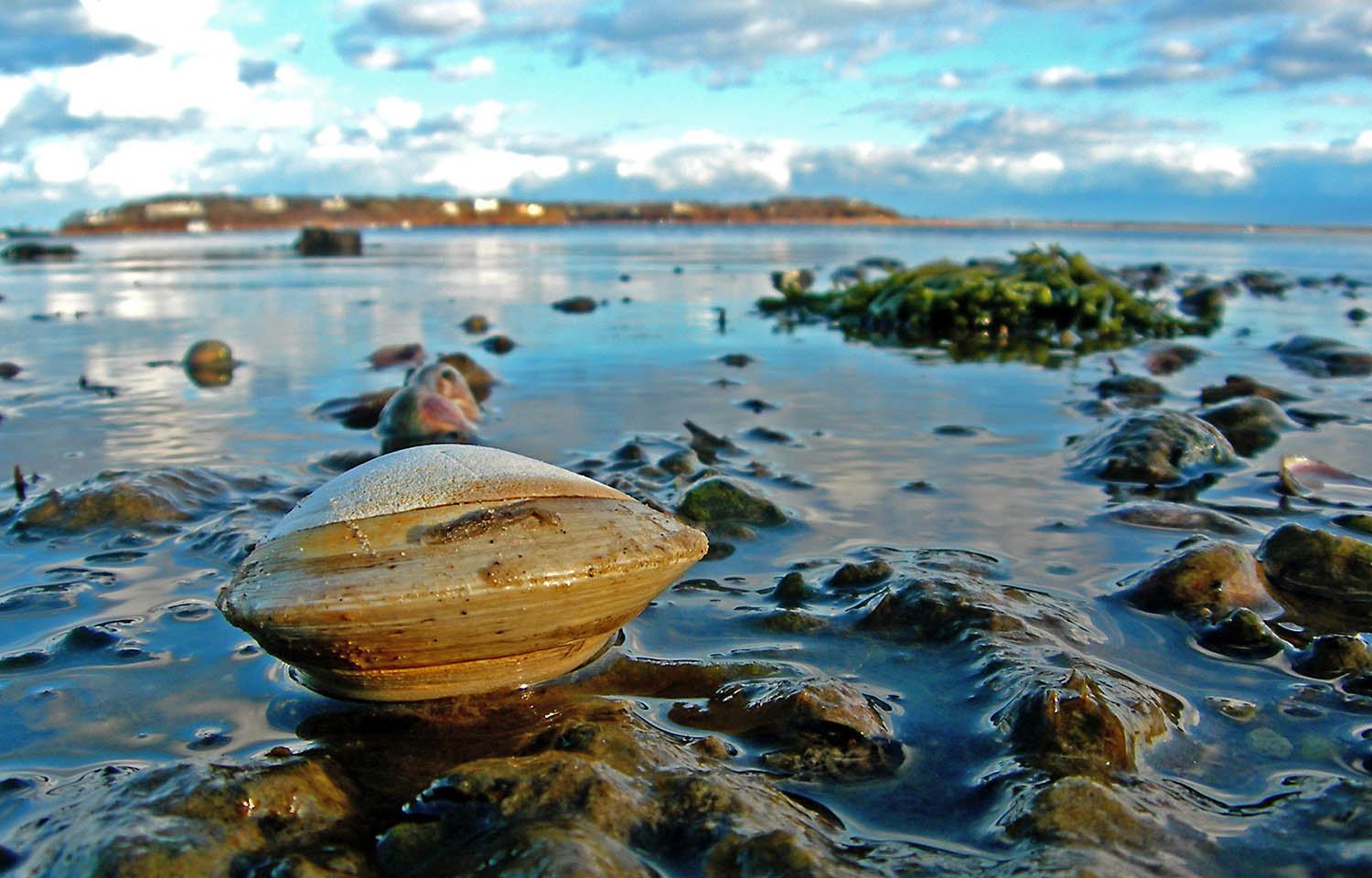
“Hard clams used to be one of the top fisheries in Southern New England, and the decline in population has been drastic in several states. It was only a few decades ago that Rhode Island exported millions of dollars of clams to Europe,” Executive Director of the East Coast Shellfish Growers Association Executive Director Bob Rheault said in a statemen. “In order to rectify the decline, it is of paramount importance to determine the cause so we can take appropriate steps to recover the population and this important fishery.”
While ocean acidification, nitrogen reductions, seagrass loss, and lower phytoplankton production have all contributed to the issue, Scott and Whitehouse said, the industry and regulators need a better explanation in order to address the problem.
“Quahogging in Narragansett Bay is a quintessential Rhode Island trade whose harvest brings us the Ocean State summer staples of clear chowder and stuffies. Unfortunately, quahog and other shellfish landings are in steady decline across the Eastern Seaboard, and it’s been difficult for shell fisherman and researchers to pinpoint exactly why,” Whitehouse said in a release. “My bipartisan bill with Senator Scott would assemble a federal research task force to investigate why certain shellfish populations are declining and help protect a pillar of Rhode Island’s Blue Economy.”
The QUAHOGS Act would establish the East Coast Bivalve Research Task Force, chaired by a NOAA representative. The task force would also include representatives from the U.S. Environmental Protection Agency, the Department of Agriculture, and the East Coast fishery management councils and representatives from state agencies, academic experts, and at least one Tribal representative. The group would be charged with synthesizing current knowledge on shellfish populations into a research report and highlighting any barriers to shellfish aquaculture.
In addition to the East Coast Shellfish Growers Association, the legislation has also been backed by the South Carolina Shellfish Growers Association.
