





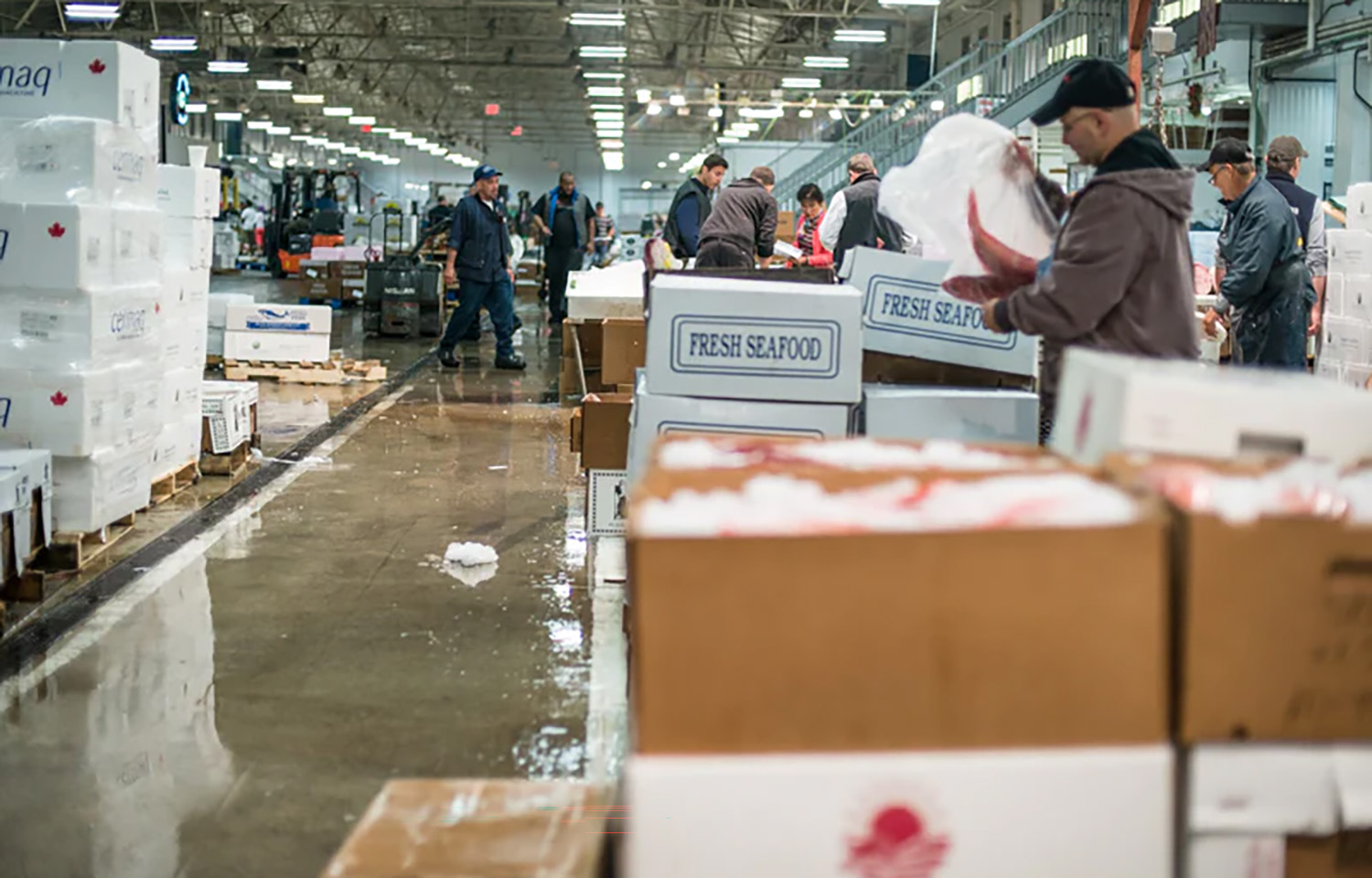
The Fulton Fish Market has received USD 25 million (EUR 21.9 million) in funding from the New York City Council, which it plans to use to modernize its operations.
In early July, District 17 New York City Council Member Justin Sanchez, who oversees areas of the Southern Bronx including Hunts Point where the market is located, led the charge in securing the funding as part of the council’s USD 125.8 billion (EUR 110.1 billion) budget it recently passed for its 2027 fiscal year.
“We are honored to celebrate a USD 25 million investment from our District 17 NYC Council Member, Justin Sanchez, that will help shape the future of Fulton Fish Market,” the Fulton Fish Market Cooperative (FFMC) said in a post on LinkedIn. “As the largest wholesale seafood market in the United States, FFMC is a critical part of NYC’s food supply chain, supporting thousands of jobs and supplying seafood to businesses not only in the five boroughs but throughout the region. This investment will help modernize critical infrastructure … and strengthen the market and the community that supports us.”
FFMC CEO Nicole Ackerina further explained to SeafoodSource that the funding will help transform the market into a modern, state-of-the-art, sustainable cold chain facility, as well as a community asset.
“The funds will allow FFMC to open its doors to visitors, create new economic opportunities, and modernize its infrastructure,” she said, adding that specific projects the funding will help bring to life include eco-friendly refrigeration and a demonstration and training kitchen.
Founded in 1822, the Fulton Fish Market is the oldest and largest fish market in the country, handling between 1 million and 2 million pounds of fish nightly. Now, with 23 vendors, the cooperative supplies roughly 45 percent of New York City’s seafood while also serving buyers across the broader Northeast region of the U.S.
“Over the last three years, it is slowly but surely coming back,” Ackerina said, referencing the period since she took over as CEO in June 2023 when the seafood industry was still dealing with the aftermath of Covid-19. “I had the intention of making us relevant again as the industry was changing – and not in the market’s favor.”
By addressing longstanding vacancies in the market, as well as infrastructure issues, Ackerina said FFMC’s volume has recovered to about pre-Covid levels.
Now, she aims to increase consumer awareness of FFMC’s offerings, both via e-commerce and in-person experiences.
“Wholesale distribution is our number one priority … but we are looking at our model and seeing how we can bring in members of the general public,” Ackerina said, highlighting that FFMC recently started a tour program, hosted a dinner series, and held a concert.
Another successful way to raise consumer awareness about FFMC and seafood in general, according to Ackerina, has been through social media channels. Among several initiatives in this space, content creator Michael-Ann Rowe, through her Fishionista YouTube and Instagram channels, has filmed several episodes of her online show at FFMC, featuring 10-minute seafood recipes that are tailored for consumers looking for cooking inspiration.
“It brought a lot of attention when it went live on social media,” Rowe said. "[FFMC] is the industry, and I am [representing] the consumer. I’m trying to bridge it together.”
Though the market is growing and the new batch of funding will help it grow further, Ackerina said that higher fuel costs and other economic challenges have been “enormously impactful.”
“I think that’s why we continue to see seafood costs so high,” she said.
In addition to fuel costs, vendors have been impacted by rising insurance costs and New York City congestion pricing, which is an additional fee charged to deliver in certain areas of Manhattan.
The result of the myriad impacts is a higher cost on consumers, Ackerina said, acknowledging “people tend to cut out items they view as a luxury item” such as seafood.
However, Ackerina said she wants to change consumer perceptions and see seafood consumed as frequently as chicken and beef by emphasizing education on how to prepare seafood and generating better awareness on the wide range of affordable and convenient seafood products available.
For instance, she said many vendors at FFMC have created convenient seafood products that are pre-cleaned and pre-portioned.
“I would love to see seafood be more of a household item. People don’t know how simple it can be to prepare, [so] it’s more commonly consumed when people dine out,” she said.
