




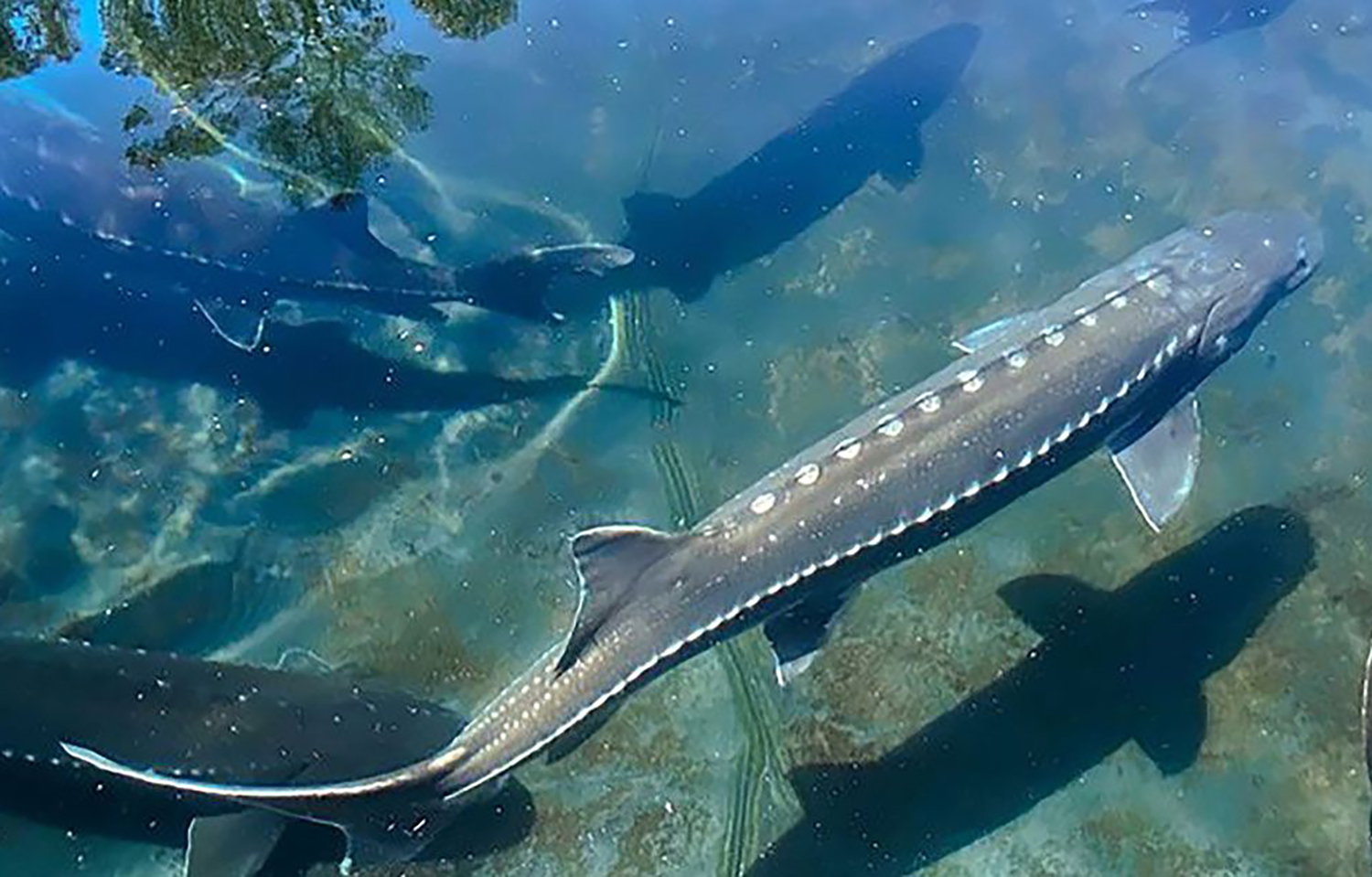
A team of scientists from the University of California San Diego, University of California Davis, and the University of Washington plan to use a mobile camera mounted system to determine the anatomical traits of white sturgeon.
The proposed approach aims to reduce the need for farmers to manually handle and sedate sturgeon while simultaneously enhancing production.
“Thanks to funding from the [U.S. Department of Agriculture’s National Institute of Food and Agriculture] and U.S. National Science Foundation, we will be able to create advanced machine learning models … to analyze images to distinguish between male and female fish with increasing accuracy over time,” UC Davis Postdoctoral Fellow Edwin Solares said. “Traditional sex determination methods – such as ultrasound – require extensive handling, trained staff, and significant labor, whereas our proposed system eliminates stress to fish, increases throughput, and reduces costs.”
The researchers teamed up with California sturgeon producers to collect preliminary images to train the AI models. The models were then trained to identify subtle distinctions between male and female sturgeon that are imperceptible to the human eye.
According to University of California Cooperative Extension Specialist Jackson Gross, the AI models initially showed 76 percent accuracy but have now improved to 90 percent. The team aims to boost accuracy further by expanding the dataset from hundreds to tens of thousands of images.
“One of the key goals of our project is to develop a user-friendly, farm-level solution for sturgeon producers, and because AI technology has advanced significantly, we believe it is fully capable of sexing small younger fish in a farm environment,” University of Washington Professor Adam Summers said. “Our software will run on a mobile platform and receive over-the-air updates, requiring minimal training for farm staff and ensuring seamless integration into daily operations.”
The researchers also plan to conduct a comprehensive review of existing AI applications in aquaculture, specifically when it comes to sex determination.
“As our study progresses, our findings will not only benefit sturgeon producers but also serve as a model for AI applications in aquaculture more broadly,” Summers said. “This innovation could set a new standard for non-invasive, efficient fish management, paving the way for further technological advancements in the field, which will also help current conservation efforts for endangered species of sturgeon and possibly other fish species.”
Similarly, researchers in Spain have also been trying to help sturgeon farmers determine the sex of their farmed fish as early as possible to maximize production.
Pasaia, Spain-headquartered AZTI, a science and technology center working to promote the United Nations' 2030 Sustainable Development Goals, has developed and patented a DNA-based innovation, which requires just a small tissue or blood sample to determine sturgeon sex.
