

The Venezuelan government has claimed the owner of the South American nation’s largest shrimp-farming firm was involved in a plot to overthrow President Nicolás Maduro.
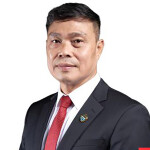
Venezuela Interior and Justice Minister Diosdado Cabello said in a recent press conference that he had infiltrated and dismantled a plot to overthrow the president, claiming the plot was headed by opposition leader María Corina Machado and involved José Enrique Rincón – the owner of Venezuela’s largest shrimp-farming firm Grupo Lamar – as well as his sons Juan Diego and José Enrique.
“[Rincón has] direct links … with the terrorist María Corina Machado … and a significant number of others. They are all identified,” Cabello said in a broadcast on the state channel VTV, but did not name others as the case is ongoing.
According to Cabello, Rincón met and recruited judges, prosecutors, businessmen, retired military officials, and others to participate in the “No to Christmas” operation, which he said entailed the delivery of weapons to people detained in the country’s prisons and other actions intended to destabilize the country to overthrow the government.
The case is still under investigation, and companies are actively being raided, the minister reported, without providing further details.
Following his statement, a government resolution led to the appointment of an administrative board – chaired by the country’s minister of fisheries and aquaculture and comprising six members – to temporarily occupy Grupo Lamar “to guarantee production and availability of aquaculture feed.”
Rincón and his sons have fled the country in response to the investigation.
Grupo Lamar is the main producer and exporter of shrimp in Venezuela and operates in the country’s northwestern state of Zulia. Besides the shrimp aquaculture firm, Rincón owns processed food factories, chicken and egg producers, and the Encava truck dealership.
In 2023, Grupo Lamar Chairman Luis Comella Barboza told SeafoodSource that the company accounted for 80 percent of Venezuela’s total shrimp production, operating 32 farms, two aquafeed plants, five hatcheries, and five processing plants, having grown its annual revenue to USD 200 million (EUR 190 million) in its focus on selling small-sized shrimp to Europe.
Though he was bullish on the firm’s growth at the time, he emphasized how important the Venezuelan government would be in whether the company had a chance to grow further.
“The government has realized that it's best to leave us alone. It took time, but they realize it’s best to let us do what we're doing,” Comella Barboza said at the time. “This is one of the companies or one of the sectors that produces jobs in the private sector in rural areas in Venezuela. The government sees this and lets us keep the business running.”
Comella Barboza’s comments came on the back of several years where the government and Grupo Lamar seemingly worked in harmony.
In 2016, then-Minister of Fisheries and Aquaculture Ángel Belisario Martínez and Zulia Governor Francisco Arias Cárdenas inaugurated a Lamar shrimp feed factory, with the Rincón family having invested USD 3.5 million (EUR 3.3 million) into the project.
Rincón was also recognized in 2023 by industry association Fedecámaras, which named him regional entrepreneur of the year.
Now, however, Cabello has said Rincón is accountable for “the plot of corruption, ill-gotten money, [and] mafias responsible for the disappearance of people.”
Maduro has been president of Venezuela since 2013. Under his rule, 7.7 million Venezuelans have fled the country.
Grupo Lamar was producing about 10,000 metric tons (MT) of shrimp annually in 2018, and by 2023, the figure rose to about 60,000 MT, generating around 10,000 jobs, according to figures presented by Business Director José Enrique Rincón. The plan was to produce 100,000 MT in 2024, he said at the 2023 Global Shrimp Forum.
