


Maynard, Massachusetts, U.S.A.-based AquaBounty Technologies is ceasing all salmon-farming activities, and its CEO David Melbourne has resigned after years of little progress and financial losses.
AquaBounty announced the move on 11 December, revealing Melbourne resigned effective immediately on 6 December after just six months in the role. The firm's board of directors also announced it was winding down hatchery operations at its Bay Fortune recirculating aquaculture system (RAS) facility – the last salmon RAS facility the company was operating.
“AquaBounty will immediately begin to wind down its Bay Fortune operation, its only remaining operating farm, including the culling of all remaining fish and a reduction of substantially all personnel over the course of the next several weeks,” AquaBounty CFO and Interim CEO David Frank said.
The facility was the last farm AquaBounty was operating after it sold its RAS facility in the U.S. state of Indiana to Superior Fresh in July and its RAS facility in Rollo Bay on Prince Edward Island, Canada, in September.
Both of those sales aimed to solve cash crunches at the company, which lost USD 27.5 million (EUR 26.2 million) in FY 2023. The company’s losses spiked in Q2 2024 to over USD 50 million (EUR 47.6 million) due to a non-cash impairment charge associated with the sale of its Indiana-based facility, and it posted more losses in Q3 2024.
Frank said the losses have stacked up to the point it can no longer operate its Bay Fortune facility.
“We prioritized maintaining operations at the Bay Fortune facility but do not have sufficient liquidity to continue to do so,” Frank said. “We have been working for over a year to raise capital, including the sale of our farms and equipment. Unfortunately, these efforts have not generated enough cash to maintain our operating facilities. We, therefore, have no alternative but to close down our remaining farm operations and reduce our staff.”
Along with Melbourne stepping down, COO Alejandro Rojas and Chief People Officer Melissa Daley were both let go from the company after those positions were eliminated.
“Over the course of the next few months, we will continue to work with our investment banker to assess alternatives for our Ohio farm project, and we will continue to market and sell available assets to generate cash,” Frank said. “We will keep all stakeholders apprised of our progress.”
The announcement coincided with a steep drop in the value of AquaBounty’s stock. As of 11 a.m. EST on 11 December, the firm's stock price had dropped over 26 percent in a single day.
AquaBounty told SeafoodSource it had no further comment about the decision.
The cessation of salmon farming signals the end of nearly three decades of effort by AquaBounty to launch farms for its genetically engineered AquAdvantage Salmon. The company originally got approval to sell the product in the U.S. in 2015, 20 years after it first applied for approval to the U.S. Food and Drug Administration (FDA).
The approval saga did not end there; in 2016, the FDA issued an import alert on the product, which banned imports and raised complications for the company as the eggs it used to raise the salmon were sourced in Canada. The import alert was lifted in 2019, but the product faced more obstacles in 2020 after a California court ruled the FDA violated core environmental laws in approving the product.
The FDA then put the product back through an assessment in 2022 and finally reapproved AquAdvantage salmon for sale in 2023.
As the company was working to gain approvals for its genetically engineered salmon, it was also working to establish land-based facilities to grow it.
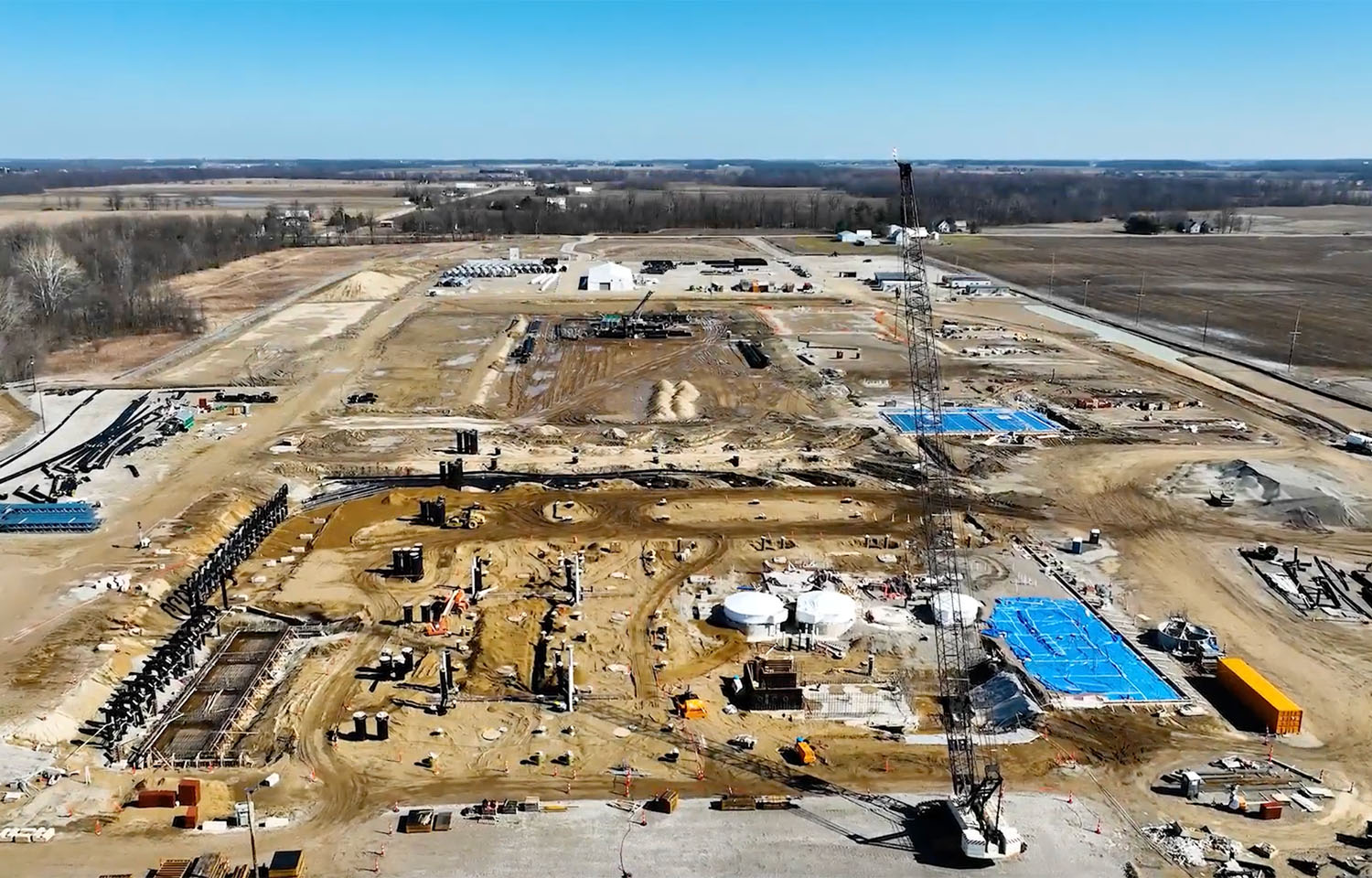
AquaBounty first announced plans for a salmon RAS in Pioneer, Ohio, in July 2021 with a planned annual production capacity of 10,000 metric tons (MT) of salmon per year at a cost of USD 200 million (EUR 190 million). Then, in September 2022, the company laid out an ambitious roadmap of constructing new farms every two years, as well as plans for international expansion.
Then-CEO Sylvia Wulf told SeafoodSource in March 2023 that the company was even investigating a shrimp RAS and that it was transitioning its Prince Edward Island, Canada, facility into a broodstock facility while building a second facility next door.
Those aggressive expansion plans never came to fruition, and less than a year after laying them out, AquaBounty announced it was pausing all work on its Ohio facility in June 2023 after cost estimates ballooned to over USD 375 million (EUR 357 million). Then-CEO Sylvia Wulf said the new estimates meant AquaBounty wouldn’t have the financing needed to bring the facility online.
The company decided to stake its future on generating capital through the sale of other facilities to finance its new facility in Ohio, but those efforts ultimately failed, too.
