




Chilean salmon-farming and industrial fishing firm Blumar posted consolidated revenues of USD 569 million (EUR 487 million) during the first nine months of 2025, which was up 30 percent compared to the same period of 2024.
EBITDA during the period increased 22 percent year over year to USD 82.2 million (EUR 70.4 million), and net profits surged 305 percent to USD 24.7 million (EUR 21.2 million) from the USD 6.1 million (EUR 5.2 million) brought in during the first nine months of 2024.
Blumar CEO Gerardo Balbontín said that the low financial figures in 2024 were largely due to an algae bloom that affected the firm in Q1 2024, a fire at its salmon-processing plant in the Magallanes region, and a delay to last year’s sardine- and anchovy-fishing seasons. The turnaround this year, Balbontín said, was simply the result of operational normalization.
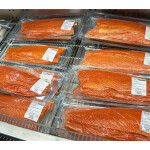
During the nine-month period, Blumar’s aquaculture business accumulated revenues of USD 327 million (EUR 280 million), a 62 percent year-over-year gain driven by a 69 percent increase in sales volume. This occurred even as the average price of salmon slipped 5 percent year over year from USD 7.24 (EUR 6.20) per kilogram whole fish equivalent (WFE) to USD 6.90 (EUR 5.91) per kilogram WFE, largely due to tariffs in the U.S. and a higher global supply of salmon.
In the firm’s fisheries business, cumulative revenues remained relatively flat at USD 233 million (EUR 200 million), reflecting a year with lower prices for fishmeal and fish oil that were partially offset by a 23 percent increase in revenues from frozen horse mackerel, according to the company.
Regarding Q3 2025 specifically, consolidated revenues for Blumar increased 19 percent year over year to USD 164 million (EUR 140 million), while EBITDA before fair value rose 49 percent to USD 14.9 million (EUR 12.8 million). However, the company recorded a Q3 net loss of USD 5.3 million (EUR 4.5 million), compared to a net profit of USD 561,000 (EUR 481,000) in the same quarter one year ago, which it attributed to a drop in the sales prices of fishmeal and fish oil.
During the quarter, Blumar said its fishing operations were also affected by a lower fishing yield and a delay from Chile in the publication of fishing quotas, which affected planning and restricted catch totals.
“The results of the quarter show that Chilean fishing continues to operate with a level of regulatory uncertainty that hinders industrial planning. Delays in key definitions, such as fishing quotas, directly impact the efficiency and profitability of the sector. Having timely and stable rules is essential to protect employment, investment, and the development of companies like Blumar,” Balbontín said.
Looking forward, the company said it will continue to focus on efficiency and operational discipline for both its fishing and salmon businesses, considering a challenging global context of lower prices and higher costs.
