






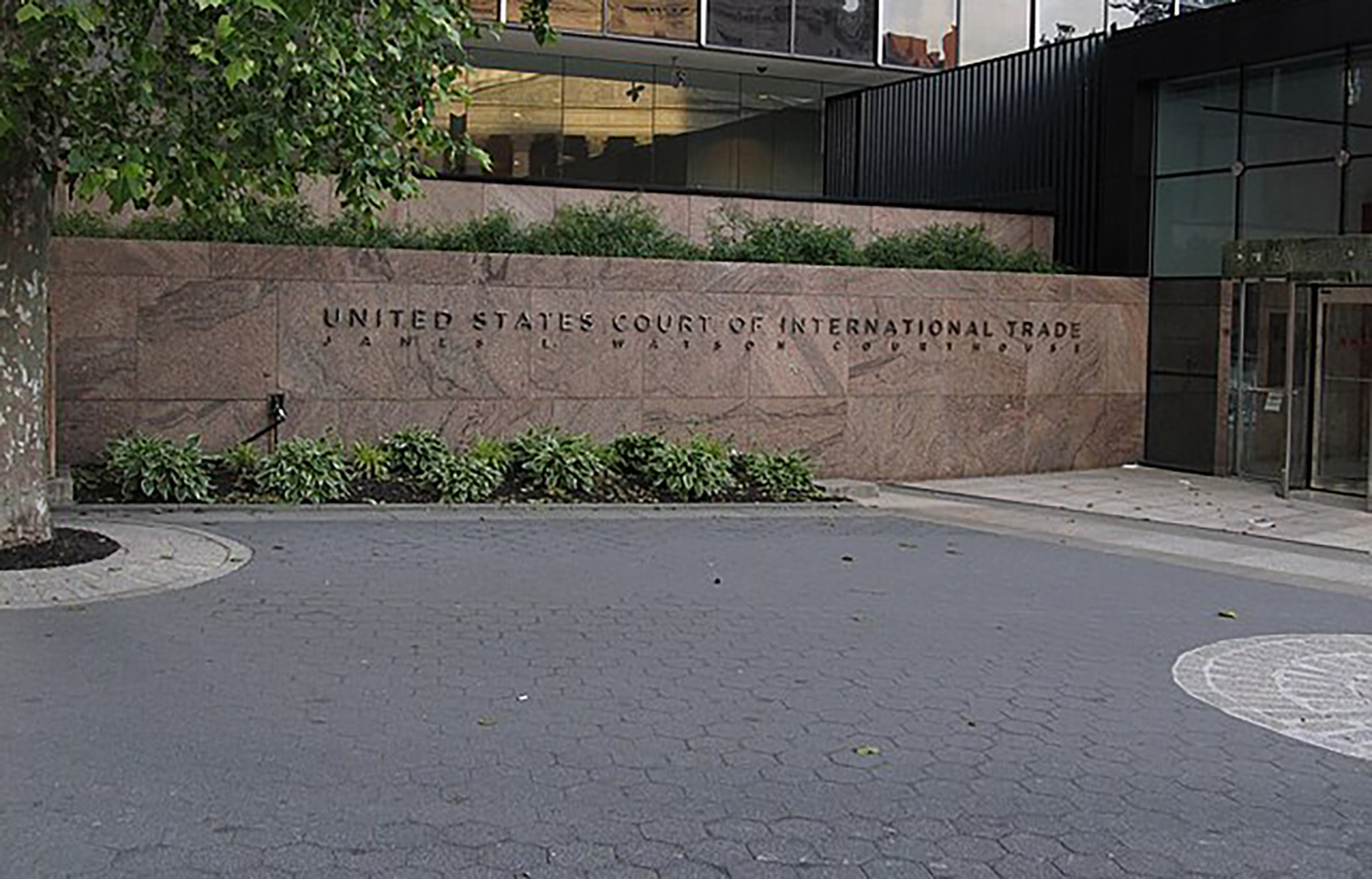
The administration of U.S. President Donald Trump has filed an appeal fighting against a U.S. Court of International Trade (CIT) ruling that found it needed to refund its International Emergency Economic Powers Act (IEEPA)-backed tariffs to all companies.
The U.S. Supreme Court ruled in February that Trump’s use of IEEPA to justify his sweeping tariff program was illegal, invalidating a wide swath of tariffs against virtually every country. That kicked off a complicated refund process facilitated by U.S. Customs and Border Protection (CBP), which trade lawyers predicted would take months even as the Trump administration continued to resist fully refunding companies forced to pay the tariffs.
In a filing submitted to the CIT on 10 August, the administration continued to push back on fully refunding the IEEPA tariffs, arguing the court was overstepping its authority by demanding refunds for every tariff.
The Trump administration’s filings claim the CIT’s injunctions overstep its authority and were too broad.
“The CIT entered the injunctions not in an attempt to remedy the concrete disputes before it but in an attempt to superintend the government’s entire process of refunding the IEEPA tariffs,” the appeal filing states. “That is not a proper judicial function. The universal injunctions should accordingly be vacated.”
The administration’s legal argument claims CIT Judge Richard Eaton overstepped authority by issuing a universal injunction directing the CBP to “liquidate … without regard to the IEEPA duties” any and all of the unliquidated IEEPA duties.
The government argues the CIT decided it was not bound by an earlier Supreme Court decision, Trump v. CASA, Inc., which determined federal courts cannot issue universal injunctions like the one issued by Eaton in the refund case.
The Trump administration’s filings said that approximately USD 100 billion (EUR 86.9 billion) in tariffs have already been completed. To issue the refunds, CBP created a new tool it dubbed the “Automated Commercial Environment Secure Data Portal (ACE Portal),” which the Trump administration said was created to process the refunds as quickly as possible.
The Trump administration has argued that CBP cannot reprocess tariffs for which a refund process is no longer available and that the current order to issue refunds to every company involved in the tariffs – not just companies that have sought to litigate – is overstepping the CIT’s authority.
“The CIT violated the principle of party presentation when it entered relief that no party had requested, failing even to allow the parties to brief the propriety of the relief,” the appeal states. “That error explains how the CIT could have erred so egregiously in failing to apply CASA, and it is an independent basis for vacatur of the injunctions.”
Vinicius Adam, a trade attorney with VAdam Law who advocated for companies to file lawsuits ahead of the refund process and represented seafood company Netuno in its tariff lawsuit, said the appeal “is not frivolous” but “is a little narrower than the news articles make it seem.”
According to Adam, CBP is questioning whether it can reliquidate finally liquidated entries, “thus allowing refunds to be issued for tariffs paid on those entries.” He said, currently, CBP’s position is that a court order is required to reliquidate entries.
“Based on the CIT's treatment of past cases, CBP may be correct,” Adam said. “Phase 3, which launches on 20 August is for reimbursements on finally liquidated entries but excludes non-litigants. Only those importers who filed lawsuits qualify for filing Phase 3 declarations seeking refunds.”
While the issue is narrow, Adam said the repercussions of the appeal could be big. If the court of appeals disagrees with the CBP, future challenges to tariffs could shift away from being handled judicially and move toward being handled internally by the CBP.
“The majority of importers may be able to wait and see what happens in those lawsuits and proceed with filing their claims directly with customs,” Adam said.
