






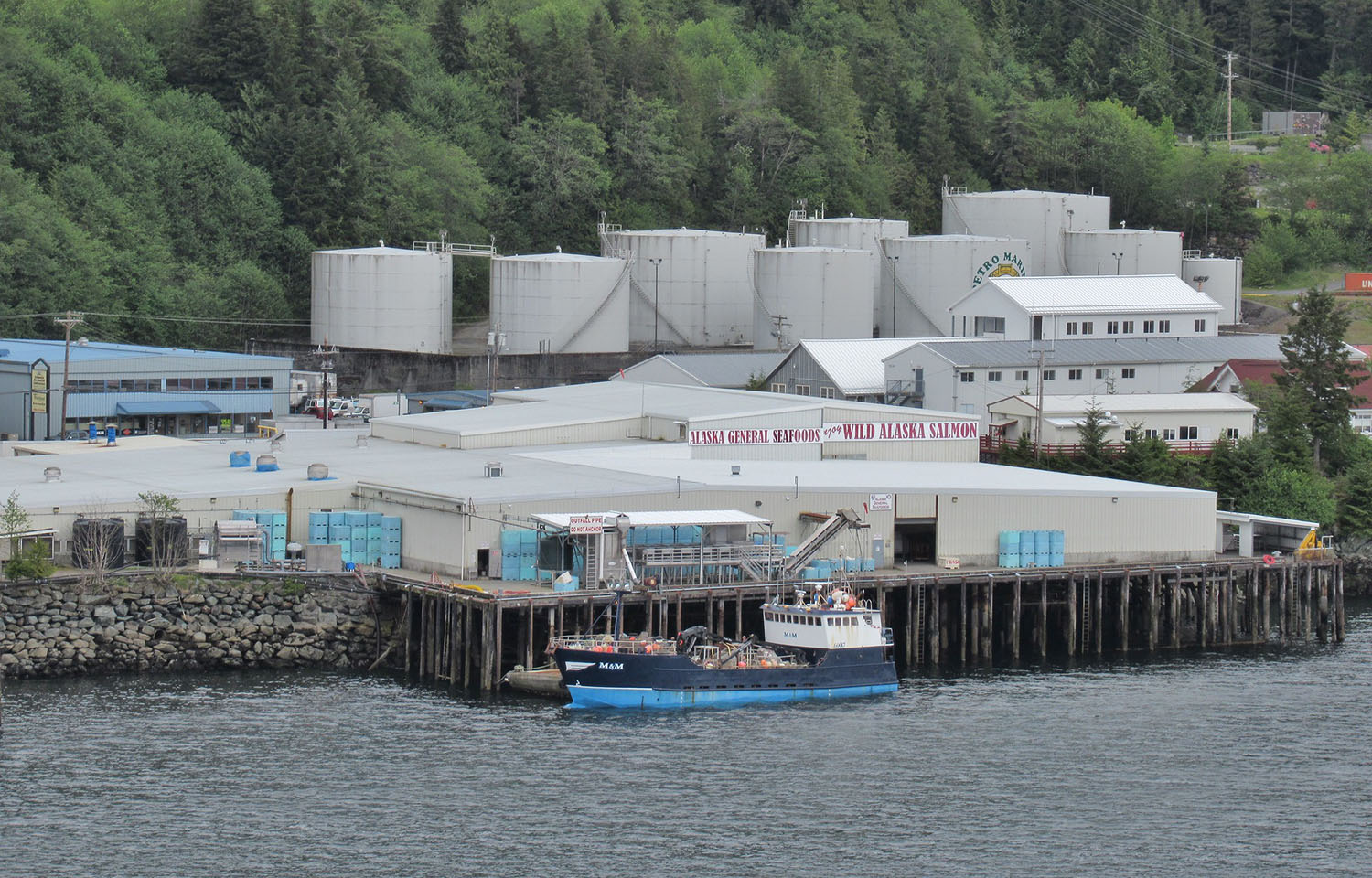
A U.S. federal appeals court has ruled that Kanaway Seafoods, doing business as Alaska General Seafoods (AGS), does not have to pay overtime to employees who were under lockdown during the Covid-19 pandemic.
In the ruling filed 10 January in the Ninth U.S. Circuit Court of Appeals in San Francisco, California, U.S.A., the court said that the district court that ruled on this case first was correct in stating that Anchorage, Alaska, U.S.A.-based AGS did not have to pay overtime in the case Flaherty v. Kanaway Seafoods, Inc.
The case centered around AGS’s requirement that workers at its Naknek and Ketchikan, Alaska-based processing facilities stay on the company's premises in April 2020 due to Covid-19 restrictions.
“First, the court correctly concluded that Plaintiffs were not entitled to compensation for their on-call time. Although Plaintiffs resided on their employer’s premises and were confined to company property due to the Covid-19 pandemic, the undisputed evidence shows that Plaintiffs were called in to work infrequently and were able to engage in a range of personal activities while on call,” the court said.
Plaintiffs’ contention that they “were effectively confined to their rooms while off shift” and “not allowed to associate with other employees” is contradicted by undisputed evidence, the court ruled.
Additionally, the parties agreed, through both their collective bargaining agreements and their conduct, that plaintiffs would be compensated “for actual call-in work but not for other off-duty time” or sleep time.
The ruling directly opposes a similar case recently settled by OBI Seafoods and Ocean Beauty.
Plaintiffs in that case alleged in a 2021 class action complaint that the seafood processor “knowingly and improperly delayed payment of wages for fish-processing employees, most or all of whom are foreign citizens on H‐2B visas temporarily working in the U.S. far from their homes in Latin America, Asia, and Europe.”
In a statement to SeafoodSource in early December, OBI CEO John Hanrahan said that workers in Naknek, Alaska – including all temporary workers under an H-2B visa and the plaintiffs for which the case centered around – were paid a daily stipend and were provided with free housing, meals, and laundry services for time spent in state-mandated quarantine prior to the start of the 2020 salmon season.
OBI Seafoods “values its employees, pays competitive wages, and complies with all federal, state, and local wage laws and regulations” Hanrahan said.
However, OBI ultimately agreed to settle the lawsuit, and was ordered to pay USD 2.1 million (EUR 2 million) to class-action members and USD 10,000 (EUR 9,700) each to the plaintiffs in the case, along with related settlement administration costs and attorneys’ fees.
