



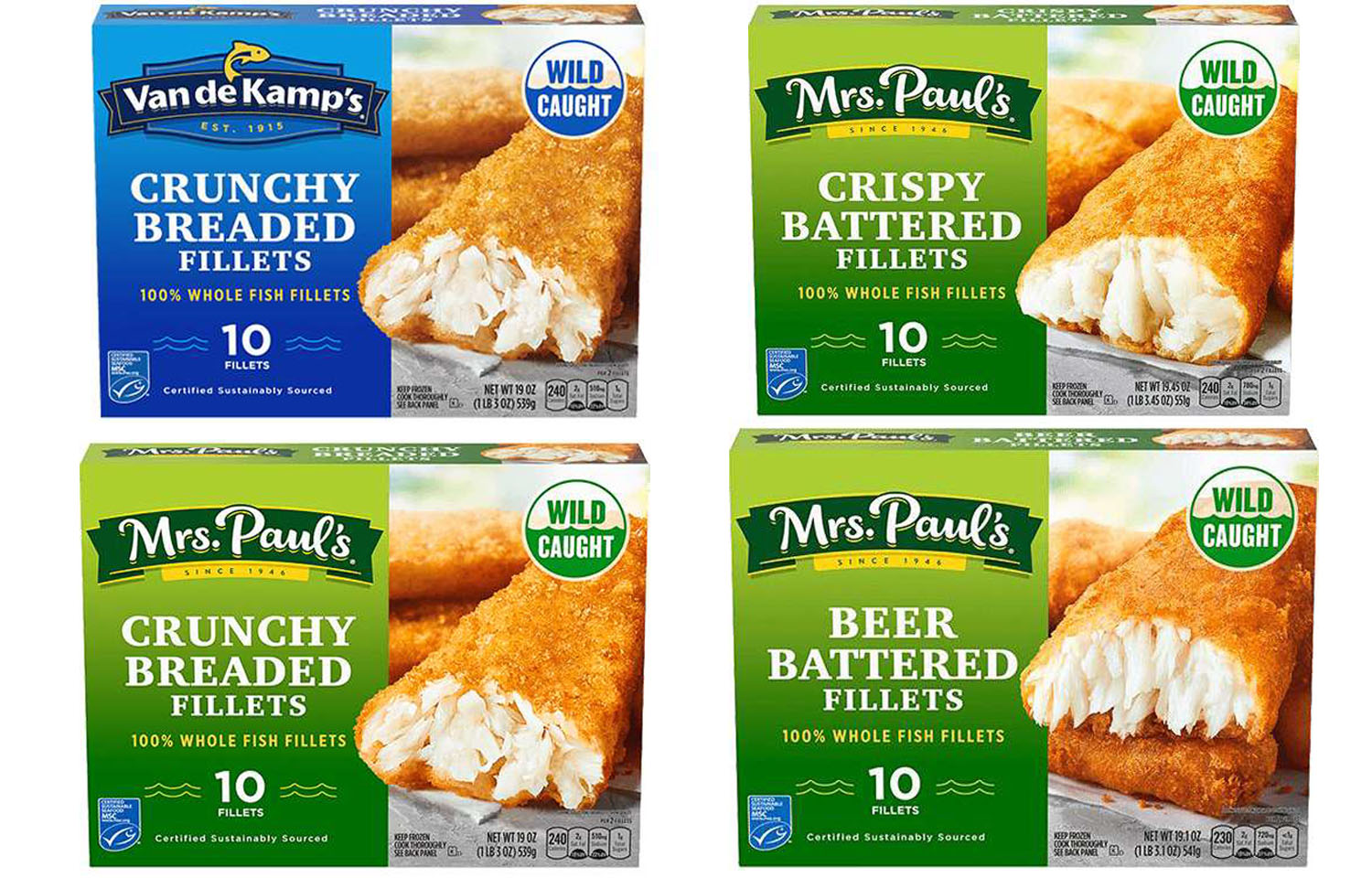
Conagra – the maker of Van de Kamp’s and Mrs. Paul’s frozen seafood products – is fighting back against a class action lawsuit claiming the company is short-weighting fish and mislabeling its products.
The class action complaint, filed in the U.S. District Court for the Northern District of Illinois in Chicago on 11 June, alleges Conagra “pumps up” its fish with the industrial filler sodium tripolyphosphate (STPP), which “may then ooze out as a white goo when the fish is cooked.” As a result of the addition, plaintiffs claim Conagra’s labels indicating the products are made with “100 percent Whole Fish” are inaccurate.
“STPP, a suspected neurotoxin, is typically used to manufacture things like rubber, paint, and antifreeze,” Plaintiffs Cindy Pappert, William Martin, and Catherine Foster said. “STPP also is used by unscrupulous businesses in the seafood industry to engage in short-weighting. That is the case here.”
In new filings submitted 23 August, Conagra asked the court to dismiss the lawsuit and its class action status, claiming the allegations lack any merit and that the plaintiffs can’t prove they have any standing in the case. The plaintiffs also fail to plausibly allege that Conagra – as opposed to fish processors generally – engages in the practice of short-weighting, the filings state.
“Plaintiffs’ complaint unleashes a sea-full of rhetoric about ‘seafood fraud,’ ‘misidentification and substitution of fish species,’ ‘short-weighting’ and ‘eutrophication of fresh water sources,’” the filing states. “But, plaintiffs fail to assert a single plausible claim for relief.”
According to the motion to dismiss, the plaintiffs “never provide a link from their outlandish allegations of generalized ‘seafood fraud’ to the fish fillets used in Conagra’s products – much less actual products purchased by plaintiffs,” Conagra said.
The plaintiff claims that the company’s “100 percent Whole Fish” labels are misleading are also without merit because the same boxes with the supposedly misleading labels are on products that clearly contain ingredients other than fish, the filing states.
“That claim fails for numerous reasons, foremost of which is that a reasonable consumer would never understand the challenged claim, presented on a frozen, breaded, and seasoned fish product, to mean that the product is [composed] exclusively of 100 percent fish, as plaintiffs implausibly claim,” the filing states. “Plaintiffs do not – and cannot – dispute that the base of the breaded, seasoned fish products is ‘100 percent Whole Fish Fillets.’”
Additionally, the motion states the plaintiff’s claim is without merit because the original complaint never had any allegations about the advertised weight of the challenged products or the weight of the products that the plaintiffs received, the motion states.
“Plaintiffs make no allegations that they saw or relied on the weight of the products when making their purchases,” the filing states. “Indeed, the products’ labeling discloses that each box contains “10 Fillets,” and plaintiffs make no allegations that their purchases did not include 10 fillets or otherwise contained any less (by item count or weight) product than labeled. The short weighting allegations should be dismissed for this reason alone.”
Instead of short-weighting products, STPP is “added to retain moisture” according to the products’ ingredients list, Conagra said.
“The plaintiffs also do not include any factual allegations that water is added to the fish fillets to pump up their weight (as opposed to, for example, being included as an ingredient in the products’ breading),” the filing states.
Even though the complaint claims the case “involves the widespread use of short-weighting on a massive scale,” the plaintiffs never allege that they received any less fish than what they bargained for or that they paid a price premium based on the amount of fish they believed they were purchasing, according to Conagra.
Elsewhere, Conagra is also facing a class-action lawsuit related to labeling.
A case filed in the U.S. District Court of Illinois in March 2023 claims the company’s sustainability labeling is misleading because the company sources seafood from unsustainable sources in Russia. The lawsuit also targeted the Marine Stewardship Council (MSC) labeling on the products, stating it was not enough for the company to use labels like “certified sustainably sourced.”
In March 2024, a federal judge allowed the lawsuit to proceed but narrowed the scope away from the MSC standard and said plaintiffs Abdallah Nasser and John Bohen cannot be granted injunctive relief – which would have required the company to immediately change the labeling on its packaging.
