






The second quarter of 2024 was another challenging period for Bergen, Norway-headquartered Grieg Seafood, with biological difficulties impacting the group’s performance and results, according to CEO Andreas Kvame.
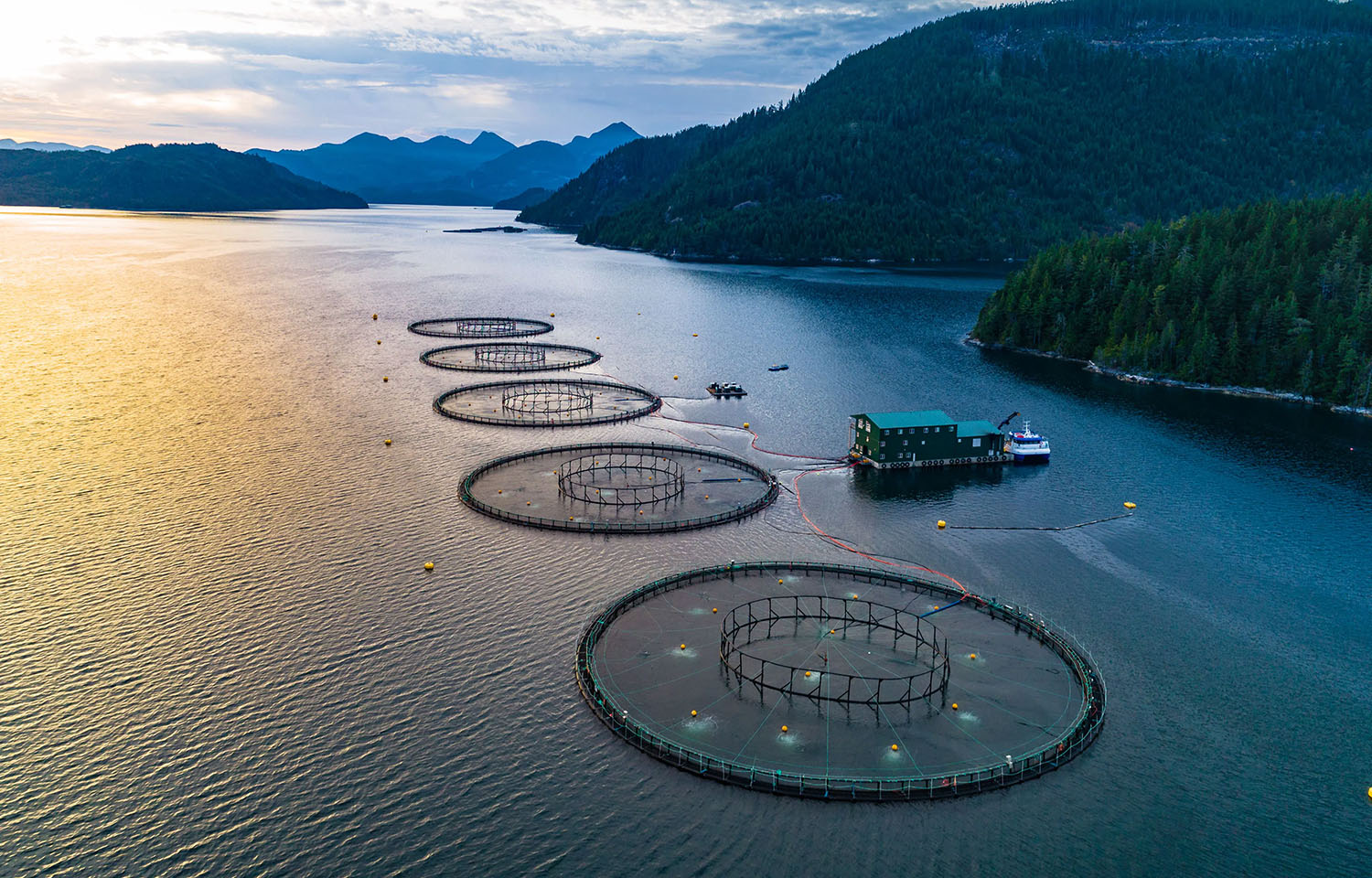
Grieg’s operations in British Columbia, Canada, were severely affected by low dissolved oxygen during the quarter, causing increased mortality rates, loss of feeding days, and reduced growth; while its Finnmark, Norway, harvest volumes continued to be impacted by the parasite Spironucleus salmonicida and string jellyfish, which were issues that carried over from the first quarter of the year.
Regarding Finnmark, by the end of July, Grieg had harvested fish previously exposed to Spironucleus salmonicida. Combined with measures taken to improve fish health overall, biological performance in the region is improving and costs are expected to decrease, Kvame said. Kvame added in the company’s Q2 2024 results, released 21 August, that he believes Finnmark is heading toward better performance.
Grieg’s Finnmark harvest volume for Q2 ended at 3,886 MT, compared with 5,573 MT in Q2 2023.
Meanwhile, earnings and farming costs in the Rogaland region of Norway were impacted by planned low harvest volumes – down from 11,536 MT in the same period a year prior to 2,771 MT, as part of plans to build biomass.
“Rogaland was the first region to implement our post-smolt strategy. Since implementation, we have proved that the strategy contributes to good biology and high average weight, underscoring our strong conviction that this is a key element to securing good fish health and welfare,” Kvame said.
Across the Atlantic Ocean, Grieg’s British Columbia (B.C.) farms harvested 8,615 MT, up from 5,537 MT, while no fish were harvested in Newfoundland (NL).
Kvame also advised that amid the “uncertainty” created by the Canadian government’s decision to ban open net-pen fish farming in British Columbia from 1 July 2029 onward, Grieg has suspended all strategic investment in the region.
Also in Canada, he said the process to identify long-term partners to buy into the development of the company’s operations there is still ongoing, and the company is hopeful to reach a conclusion on a partnership in the second half of 2024.
Company-wide, according to the Q2 report, the group’s operational EBIT fell from NOK 547 million (USD 52 million, EUR 46.8 million) in Q2 2023 to a loss of NOK 35 million (USD 3.3 million, EUR 3 million) this year. Its total harvest volume for the quarter fell 33 percent to 15,272 metric tons, (MT) down from 22,645 MT previously. This resulted in a negative operational EBIT per kilogram, with teh company losing NOK 2.30 (USD 0.22, EUR 0.20) per kilgoram of fish, down from a gain of NOK 24.20 (USD 2.30, EUR 2.07) in Q2 2023.
The group's sales revenue per kilogram for the quarter was NOK 82.70 (USD 7.86, EUR 7.08), down from NOK 91.20 (USD 8.67, EUR 7.80) in Q2 2023, with the decrease primarily due to most of the harvesting occurring toward the end of the quarter when prices were lower.
Its farming costs for the quarter averaged NOK 83.20 (USD 7.91, EUR 7.12) per kilogram, up from NOK 66.90 (USD 6.36, EUR 5.72) a year previously. This increase was largely attributed to 56 percent of the Q2 2024 volume being harvested in B.C., where farming costs per kilogram are often higher than for Grieg’s Norwegian production.
For the first half of 2024, Grieg’s harvest totaled 36,347 MT, versus 38,003 MT in H1 2023. Total sales revenue for the six-month period ended at NOK 3.81 billion (USD 362.3 million, EUR 326 million), down from NOK 3.92 billion (USD 372.7 million, EUR 335.4 million) previously. Operational EBIT ended at NOK 257 million (USD 24.4 million, EUR 22 million), compared with NOK 933 million (USD 88.7 million, EUR 79.8 million).
The group's farming costs for H1 2024 ended at NOK 79.10 (USD 7.52, EUR 6.77) per kilogram, a year-over-year increase of NOK 14.40 (USD 1.37, EUR 1.23).
Grieg’s total expected harvest volume for the third quarter of 2024 is 16,700 MT, comprising 5,000 MT from Finnmark, 8,500 MT from Rogaland, and 3,200 MT from B.C. For the full year, the company has guided a harvest volume of 78,500 MT. Of this total, Rogaland is projected to supply 28,000 MT, Finnmark 27,000 MT, B.C. 12,500 MT, and NL 11,000 MT.
In the longer term, its business strategy includes ambitions to increase its salmon harvest volume to 120,000 MT to 135,000 MT. The Q2 report advises this growth will mainly be driven by improved utilization of current operations, in addition to further development of NL production.
