






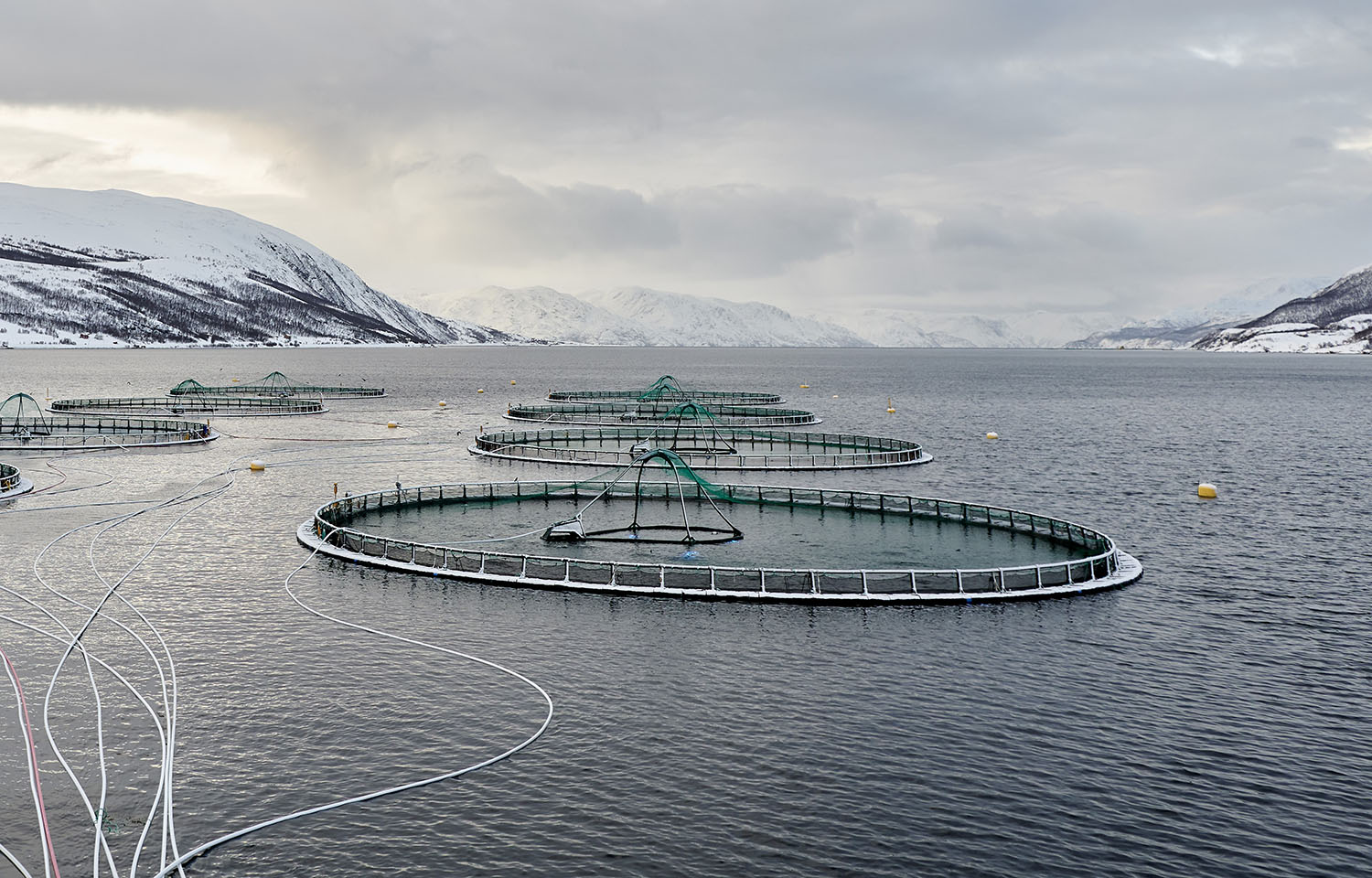
Grieg Seafood (GSF) ended Q3 2024 with its Norwegian operations reporting a record-high standing biomass in the sea after all-time high seawater production over the three-month period.
However, while its underlying farming performance was good, the Bergen, Norway-headquartered salmon producer’s financial performance was impacted by seasonally lower spot prices and costs it carried over from historic incidents that pushed it into losses.
CEO Andreas Kvame said the quarter was a “mixed bag” for the group. Developments in the company’s operations in the Norwegian regions of Rogaland and Finnmark were “particularly good,” with Finnmark utilizing all of its maximum allowable biomass (MAB) capacity and rebuilding biomass after challenges with the Spiro parasite (Spironucleus salmonicida).
While the region is still facing biological challenges, including sea lice, Kvame said proactive investments in treatment capacity have brought positive results and are contributing to better biological control and fish welfare.
The company’s revenue increased from the NOK 1.16 billion (USD 104.2 million, EUR 99 million) it posted in Q3 2023 to NOK 1.46 billion (USD 131.2 million, EUR 124.6 million) in Q3 2024. Despite the higher revenue and better biology, GSF posted an EBIT loss of NOK 175 million (USD 15.7 million EUR 14.9 million) in Q3 2024, worsening from a loss of NOK 86 million (USD 7.7 million, EUR 7.3 million) in Q3 2023.
Its total harvest volume climbed 45 percent from 12,245 metric tons (MT) to 17,806 MT – which resulted in its operational EBIT per kilogram working out to a loss of NOK 9.80 (USD 0.88, EUR 0.84) per kilogram of fish.
However, Grieg’s pre-tax profit for the quarter totaled NOK 44 million (USD 4 million, EUR 3.8 million), compared to a loss of NOK 27 million (USD 2.4 million, EUR 2.3 million) in Q3 2023.
Kvame said that the company’s Canadian operations were also mixed during the quarter. Grieg’s Q3 operations in British Columbia (BC) were impacted by an algae bloom, which significantly reduced survival rates and impacted growth.
BC’s harvests for 2024 were completed during the quarter – ending the year at 12,500 MT after harvesting 3,217 MT in Q3 2024 – down from the 6,108 MT it harvested in the same period of 2023.
The company’s BC operations are also still facing the looming threat of the Canadian government’s intention to remove net pen farming from the region by 30 June 2029.
“A decision on the transition plan for the salmon farming industry in the region is yet to be made. As Grieg Seafood awaits the transition plan to be concluded, investments are put on hold,” Kvame said.
Kvame said Grieg’s operations in Newfoundland, Canada, continue to develop according to plan, and while no fish were available for harvest during Q3, the harvesting of its second generation started in October and the total harvest for the full year is expected to be around 11,000 MT.
Kvame said the company is in the process of identifying potential long-term partners for GSF’s Canadian operations and that it is in dialogue with parties for both strategic partnerships and a potential sale of its business.
“As the process is taking somewhat longer time than expected, we have established a NOK 750 million [USD 67.5 million, EUR 64.1 million] bridge loan facility to maintain financial flexibility,” Kvame said.
In Norway, the company’s Rogaland operations posted a Q3 2024 harvest volume of 8,543 MT, up from 4,783 MT in Q3 2023, while its Finnmark operations harvested 6,045 MT, up from 1,354 MT in Q3 2023.
In the fourth quarter, GSF’s expected harvest volume across its divisions is 24,400 MT, with Rogaland providing 7,300 MT, Finnmark 11,400 MT, and Newfoundland 5,700 MT.
Grieg’s guidance predicts a total harvest volume of 78,500 MT for 2024.
“Looking forward, investments in operational assets and biomass are mainly developing according to plan,” Kvame said. “We are excited for Rogaland's first smolt stocking in Årdal Aqua and look ahead to the completion of the facility's remaining units in 2025. I am also pleased to say the construction of our new post-smolt facilities in Finnmark and Newfoundland, in addition to the VAP facility at Gardermoen, is progressing well.”
The report advises that so far in Q4 2024, Grieg has achieved good seawater production in all regions, but Finnmark has been hit by string jellyfish at its Vinnalandet site, causing elevated mortality at the location. Early harvesting has been implemented, and due to the lower harvest weights, Q4 farming costs are expected to increase compared to the last quarter, with lower prices achieved.
Costs related to the mortality write downs and higher harvest costs are estimated in the range of NOK 70 million to NOK 90 million (USD 6.3 million to USD 8.1 million, EUR 6 million to EUR 7.7 million) for Q4.
For 2025, the company is projecting a total harvest of 84,000 MT, comprising Rogaland at 30,000 MT, Finnmark at 32,000 MT, BC at 12,000 MT, and Newfoundland at 10,000 MT.
