






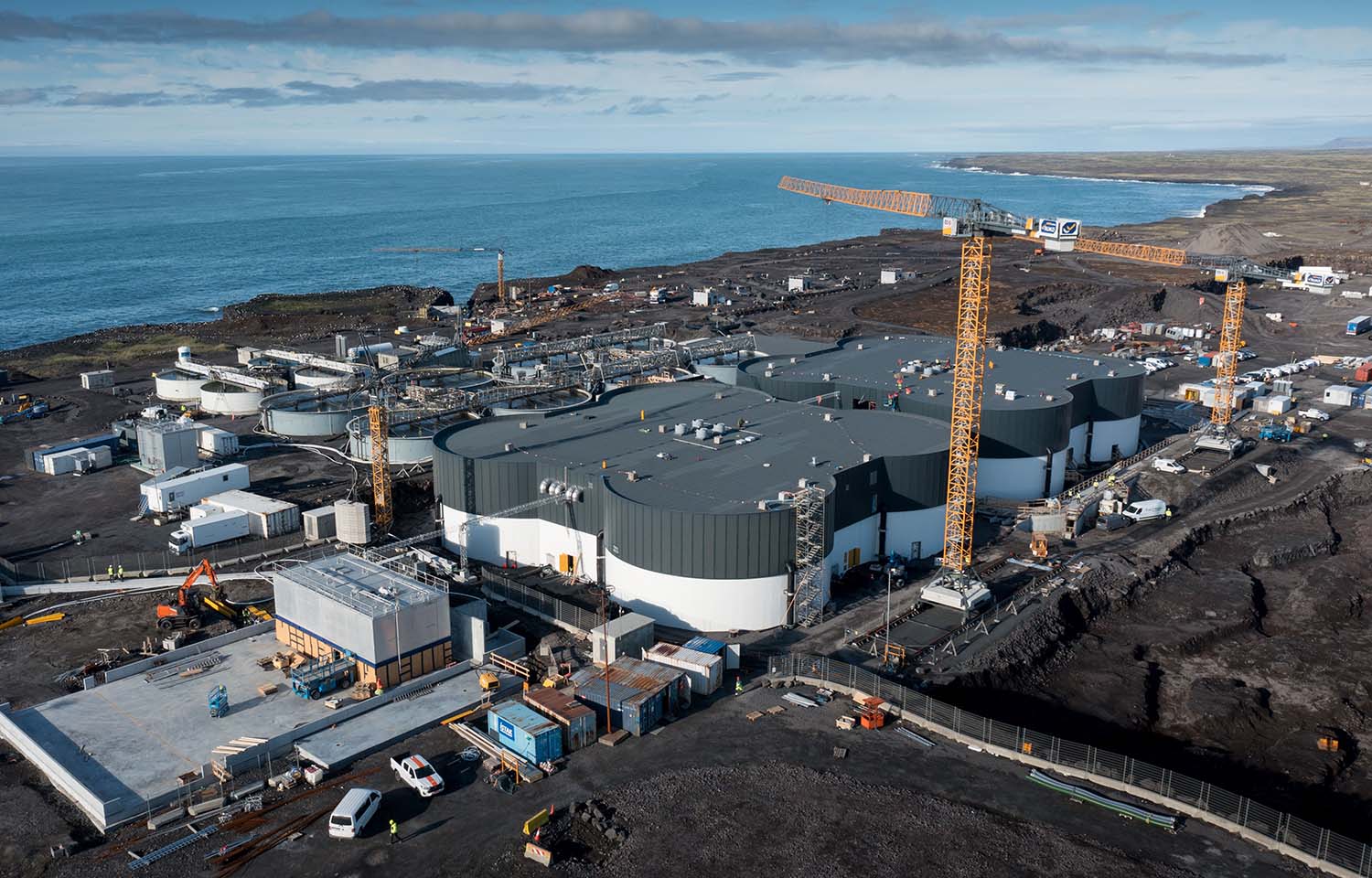
Icelandic land-based salmon company First Water has successfully raised another EUR 24 million (USD 27 million) through a share capital increase as it works to establish a farm in Thorlakshofn, Iceland.
The company – founded as Landeldi in 2017 – completed its first commercial harvest of land-based salmon in June 2023. The company uses nearby geothermal and hydroelectric power to provide renewable energy to its land-based salmon farming operations, and has plans to increase total farming capacity to 28,000 metric tons (MT) over four phases with an ultimate goal of reaching 50,000 MT of production by 2028.
The company said the first of six development phases on the project is nearing completion, and it is now preparing for the next phase. With the EUR 24 million from the share capital increase, First Water has raised a total of EUR 185 million (USD 212 million) in equity and EUR 80 million (USD 92 million) in construction financing.
“This capital increase marks an important milestone in First Water’s ongoing development in Þorlákshöfn (Thorlakshofn) and enables the company to continue expanding and advancing its operations of its land-based salmon facility,” First Water CEO Eggert Þór Kristófersson said in a release.
Kristófersson said the company is now among the first companies to produce 5 kilogram gutted land-based salmon in the world.
“This high-quality product is a true game-changer for our operations, as demand is exceptionally strong,” he said. “We have already sold approximately 2,200 MT of premium land-based salmon.”
First Water said the company has reached a turning point in its sales operations, and that all of its production so far has been sold to the U.S. and Europe. The company is using 25 meter tanks, which it said allows for stable year-round supply of larger premium-quality salmon.
The company said once the second phase is complete, production capacity will reach 10,000 MT of head-on gutted salmon. It also said the biological results from its existing farming operations are promising enough the total production capacity could actually be 60,000 MT a year.
“Our focus now is on continuing construction at our Laxabraut facility in Þorlákshöfn, securing long-term financing, and strengthening our sales and marketing efforts,” Kristófersson said.
