






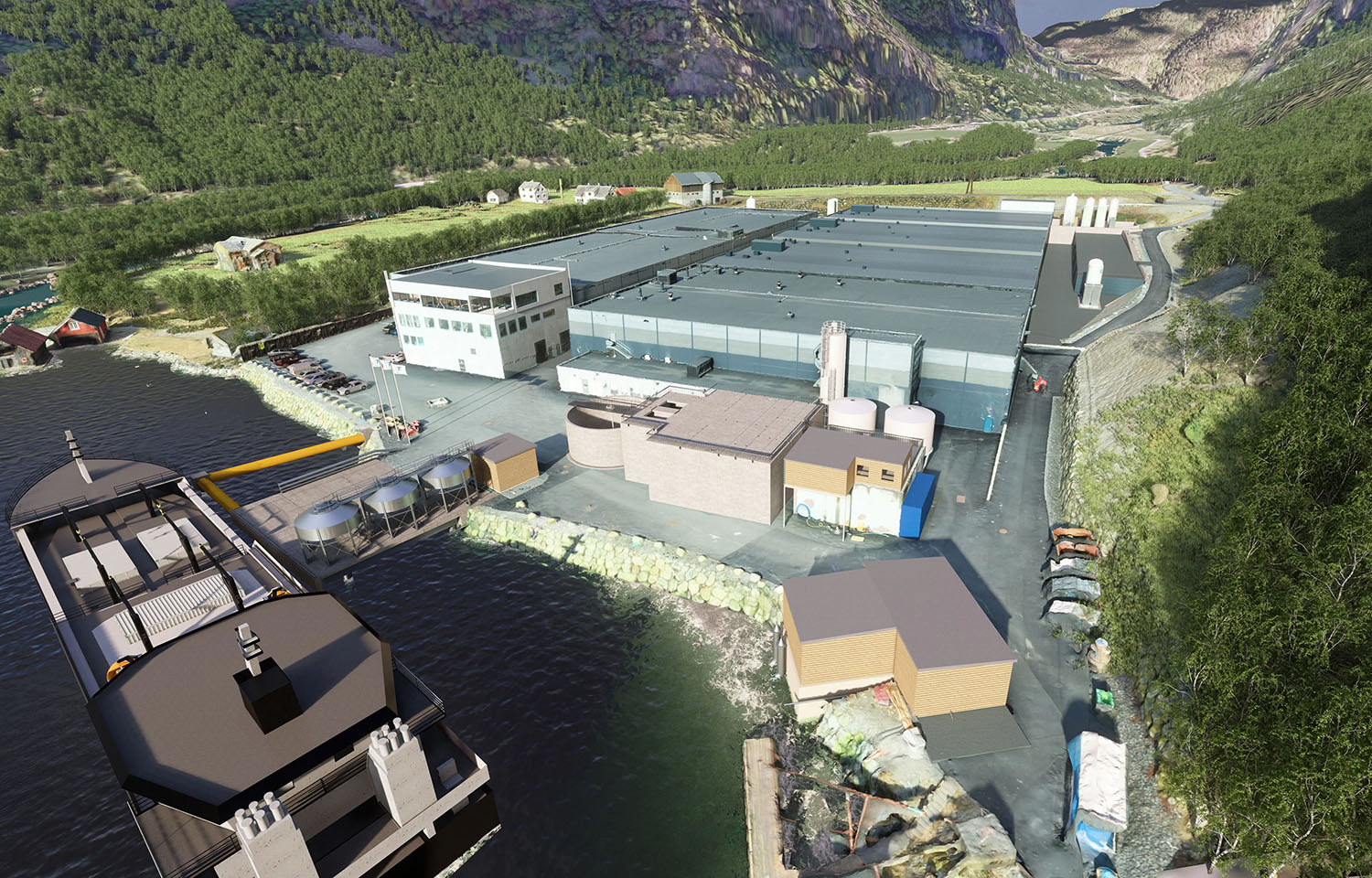
Bergen, Norway-headquartered Grieg Seafood has received approval from Norwegian and U.S. competition authorities for the divestment of its operations in Canada, as well as Finnmark, Norway, and announced that the same process with Canadian authorities is progressing, according to CEO Nina Willumsen Grieg.
Delivering the firm’s Q3 2025 results, Willumsen Grieg said the expectation is that her firm will be able to close its NOK 10.2 billion (USD 988.3 million, EUR 853 million) transaction with Cermaq Group for those operations before the end of this year.
With the deal in the rearview, Willumsen Grieg said that the company would enter 2026 mainly focusing on its core Norwegian operations in the Rogaland region.
Regarding those core operations in Rogaland, the firm harvested 6,820 gutted weight tons (GWT) of fish in the region in Q3, compared to 8,543 GWT in Q3 2024. The reduced volume, together with lower market prices, led to a NOK 103.6 million (USD 10.3 million, EUR 8.9 million) year-over-year drop in Rogaland’s revenues to NOK 501.7 million (USD 49.9 million, EUR 43 million) in the three-month period. At the same time, its operational EBIT fell by NOK 53.5 million (USD 5.3 million, EUR 4.6 million) to NOK 21.7 million (USD 2.2 million, EUR 1.9 million).
Overall, Grieg’s Q3 revenues fell by NOK 102.1 million (USD 10.2 million, EUR 8.7 million) to NOK 754.4 million (USD 75.1 million, EUR 64.6 million), while the transitional costs tied to its restructuring amid the Cermaq sale led to an operational EBIT of NOK -1.2 million (USD -119,408, EUR -102,784). The net loss from its continued operations was NOK 342.6 million (USD 34.1 million, EUR 29.3 million), compared to a loss of NOK 106.6 million (USD 10.6 million, EUR 9.1 million) in Q3 2024.
Though the firm reported drops in several financial metrics year over year, operationally, Q3 featured strong performance from Grieg’s freshwater facilities, as it released 3 million smolts with an average weight of 890 grams.
However, out at sea, the environment was challenging, characterized by high water temperatures and sea lice pressure, Willumsen Grieg said.
“By taking out our non-performing fish groups at a higher cost this quarter, we were able to ensure a maximum allowable biomass [MAB] into Q4 – keeping our guidance for the year at 30,000 GWT,” she said.
Q3 2025 farming costs for Grieg averaged NOK 70.40 (USD 7, EUR 6.03) per kilogram, and while these are expected to come down in Q4, they are likely to remain above the long-term target of NOK 60 (USD 5.97, EUR 5.14) per kilogram, Willumsen Grieg confirmed.
“[Q3] has been a lot about setting up the structure for the new Grieg Seafood and getting started on cost reductions. As we emphasized last quarter, we are moving forward with a clear direction,” she said. “We will go from global to regional and from growth to profitability. Our goal is simple: operational excellence, and we have made significant progress this quarter.”
With cost discipline “a top priority,” the firm has reduced staffing across sales and shared service functions by 55 percent, Willumsen Grieg said.
“It has been a tough task and a tough quarter for all – having to say goodbye to talented and valued colleagues, but today, we have a rightsized and highly capable team that’s ready to deliver,” she said.
Looking forward, Willumsen Grieg reaffirmed that the “key strategic building blocks” are to strengthen Rogaland and enhance profitability through post-smolt acceleration and MAB optimization and to futureproof the company against changing political and regulatory landscapes.
“The Q3 results have not met our expectations. However, looking at the underlying fundamentals of our production, the organizational changes we have implemented, and a positive market outlook for 2026, I am optimistic about next year,” she said.
