



Royal Greenland has posted another year of losses, calling 2024 a year “marked by necessary but difficult decisions.”
The vertically integrated fishing company’s net profit before tax was a loss of DKK 196 million (USD 27.3 million, EUR 26.3 million) in FY 2024, a slight improvement over the DKK 255 million (USD 38.9 million, EUR 34.2 million) it lost in 2023. Net profit for the year worsened to a loss of DKK 265 million (USD 40 million, EUR 35 million), down from a loss of DKK 211 million (USD 32 million, EUR 28 million).
That loss came on DKK 5.622 billion (USD 784.9 million, EUR 752.4 million) in revenue, down from the DKK 5.796 billion (USD 808.5 million, EUR 778.6 million) it posted in 2023.
The company said difficult conditions in Norway and Chile lead to financial challenges, which impacted its final results. The company said its expected returns from Chile did not materialize, resulting in a DKK 220 million (USD 33 million, EUR 29 million) impairment leading it to contemplate the future of its Chilean business.
“The investment in 2019 has not lived up to expectations,” Royal Greenland said in its report. “The business conditions have turned out to be significantly weaker than we expected, which has had a significant negative impact on our financial results.”
Royal Greenland was criticized for its investment in Chile by former Greenland Prime Minister Múte Bourup Egede in 2024 amid a debate over the country’s new fisheries law.
“It cannot be right that a company owned by the Greenlandic people, which has to carry out a specific task in this country, also invests outside the country with losses of millions, which have no direct relevance to its core products, as for example in Chile,” Egede said at the time.
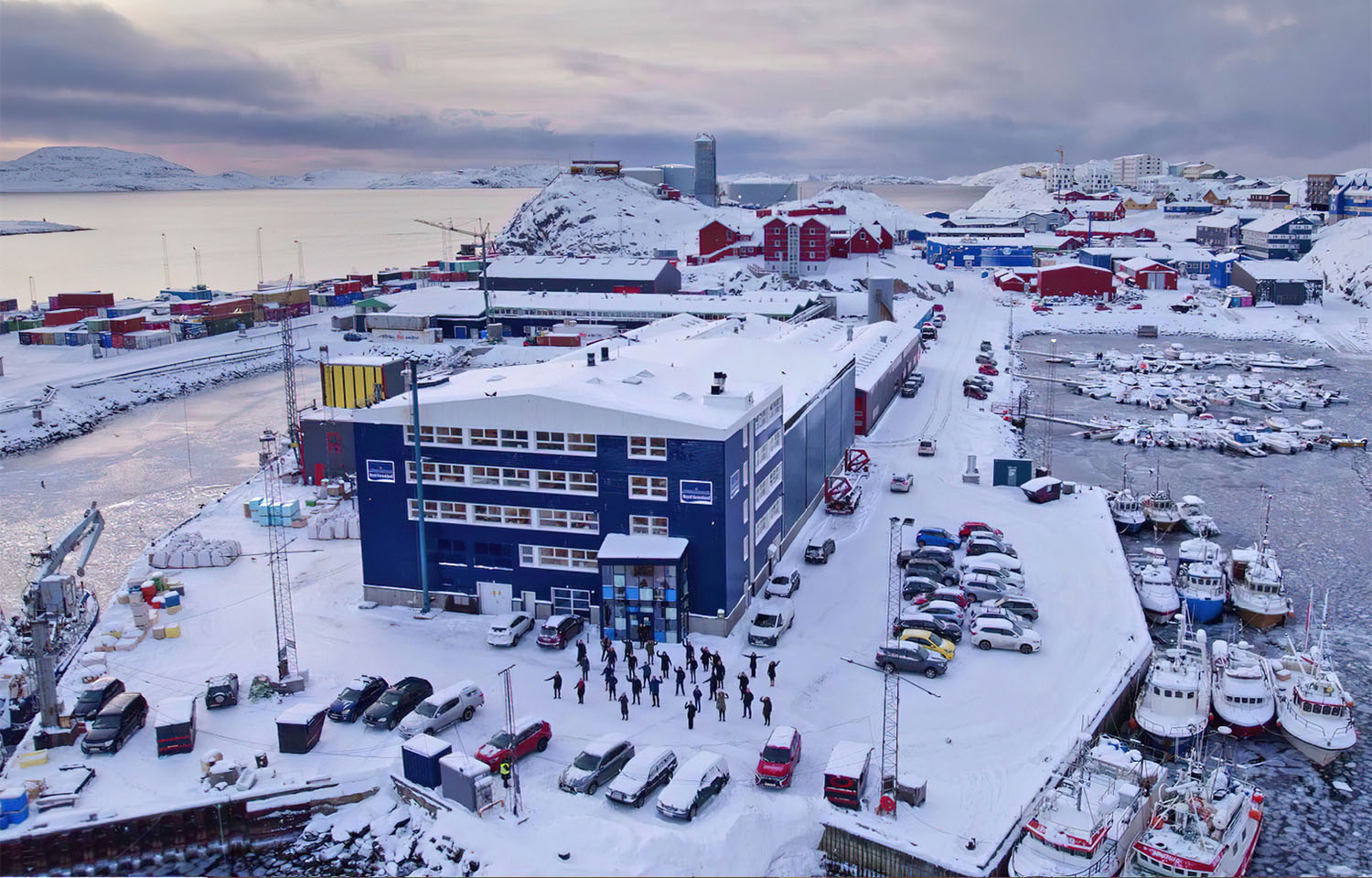
That law, approved in May 2024, comes with a 10-year transition period that will require all companies conducting commercial fishing to be based in Greenland. Royal Greenland said it would further anchor itself to Greenland through a new head office in Nuuk, scheduled to be completed in 2026 or 2027, as well as through investments in more executives and managers from the nation.
Royal Greenland said its troubles in Norway stemmed from its partner, Maniitsoq, losing its license to fish for snow crab in 2024. That loss resulted in Royal Greenland seeing a DKK 57 million (USD 8.6 million, EUR 7.6 million) before tax impairment on its receivables “to reflect the current situation.”
The company also had to grappled with a fire at its shrimp and crab factory in Matane, Quebec, Canada, which resulted in a total loss of the factory.
“The insurance case has not yet been concluded, but a preliminary sum insured has been recognised in the result for 2024 based on a conservative assessment. We are awaiting the final statement,” Royal Greenland said.
The company said that despite the array of challenges and losses it experienced in 2024, it has taken a number of steps and made several operational improvements during the year as part of its strategy to return to profitability in 2025
That strategy, which the company has called its “Back to Black Action Plan,” involved cost-cutting measures which included closing locations in France, Norway, and Italy and reassigning or firing staff – including Susanne Arfelt Rajamand, who had been named CEO in November 2022.
Current CEO Preben Sunke said that those actions have combined to result in a savings of DKK 52 million (USD 7.9 million, EUR 6.9 million), which combined with market conditions improved operating profit by DKK 116 million (USD 17.7 million, EUR 15.5 million) compared to 2023.
“The effects of the action plan will continue into 2025, and we expect to return to positive earnings in 2025,” Sunke said.
Royal Greenland’s profit from primary operations was up significantly in FY 2024, increasing to DKK 161 million (USD 24.6 million; EUR 21.6 million) after it ended 2023 taking a DKK 81 million (USD 12.35 million; EUR 10.9 million) loss in the category.
Sunke also said the company has made improvements on its primary business, and better market conditions for snow crab, cooked and peeled shrimp, and cod all helped the company’s bottom line.
"I am pleased that we have achieved solid results in both cod, halibut and cooked and peeled prawns. Our land-based cod production in Greenland is in balance for the first time, and we see stable demand and rising prices across Europe, Asia, and North America. This gives us a good starting point for 2025,” Sunke said.
Other positive news for the company included a joint venture it entered with First Nation group Wagmatcook, which acquired 51 percent of the snow crab activity in Nova Scotia, Canada. It also said it has begun construction of a new headquarters in Nuuk, Greenland, which “will create a better framework for employees and clarify Royal Greenland as a Greenlandic-owned company with international activities.”
