


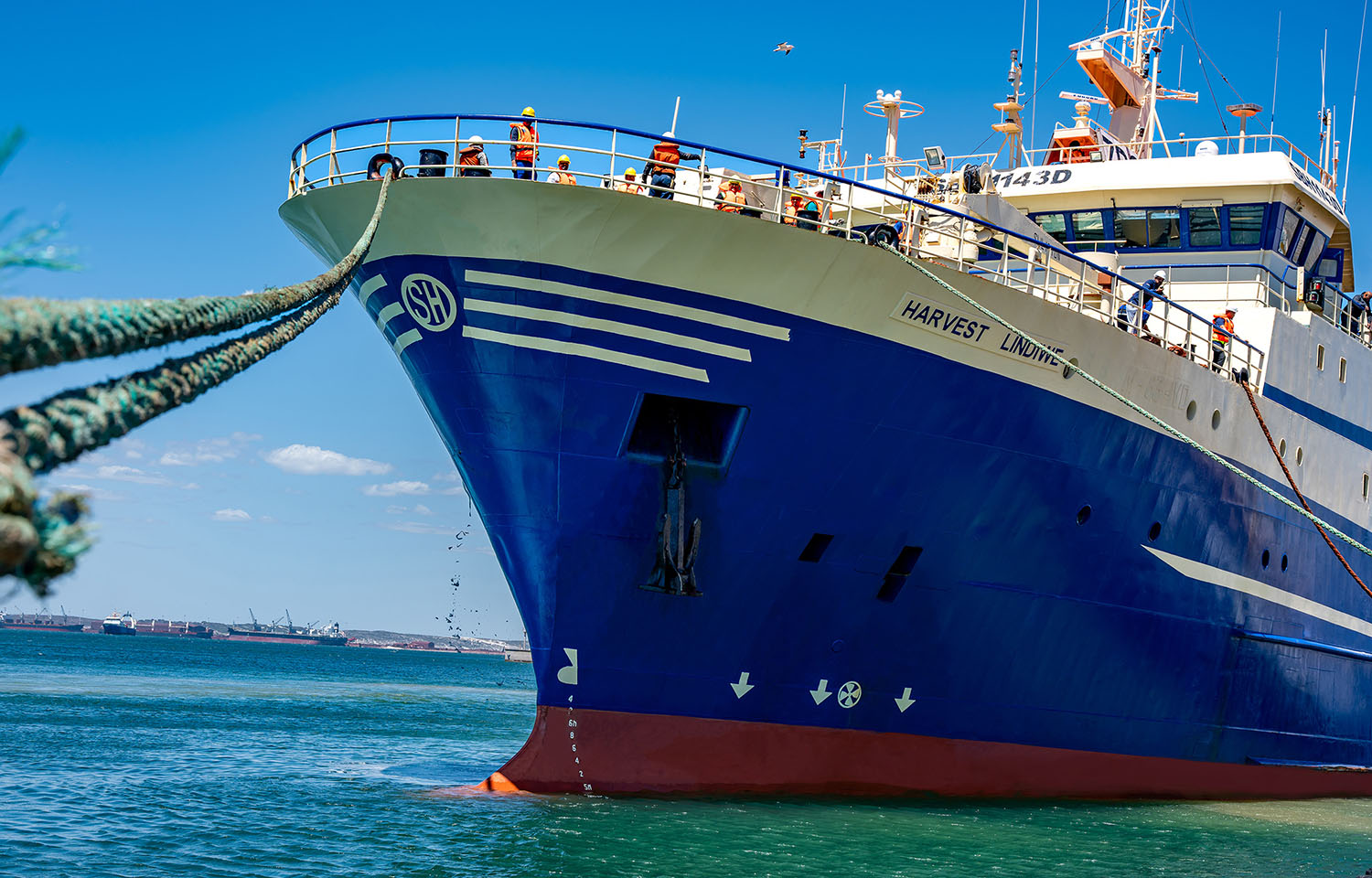
Cape Town, South Africa-based Sea Harvest Group continued its positive trajectory in H1 2025, posting an increase in revenue and EBITDA.
Sea Harvest Group posted revenue of ZAR 4.4 billion (USD 253.4 million, EUR 215.8 million) in H1 2025, marking an increase of 34 percent over the ZAR 3.3 billion (USD 190 million, EUR 162 million) the company posted in the same period in 2024. The company’s EBIT also increased, rising 58 percent to ZAR 589 million (USD 33.9 million, EUR 28.9 million), up from ZAR 373 million (USD 21.5 million, EUR 18.3 million) in H1 2024.
The company’s cost of sales also increased in the period, rising 34 percent year over year.
Despite those cost increases, the company said its gross profit still increased by 33 percent to ZAR 1.25 billion (USD 72 million, EUR 61 million), up from ZAR 944 million (USD 54 million, EUR 46 million) in 2024. The company said top-line growth and volume efficiencies also helped its operating profit surge 104 percent to ZAR 633 million (USD 36 million, EUR 31 million), up from ZAR 311 million (USD 17.9 million, EUR 15.2 million). Profit after taxation also increased 71 percent to ZAR 315 million (USD 18.1 million, EUR 15.4 million), up from ZAR 184 million (USD 10.6 million, EUR 9 million).
The results came after a year in 2024 which the company said was one of the most challenging years since it had listed publicly in 2017.
“The last three years have been tough as fishing catch rates were at the lower end of the cycle and fuel prices at their peak,” Sea Harvest Group CEO Felix Ratheb said. “This necessitated determined cost reductions and a focus on maximizing value for species in high demand globally.”
The company said that 2025 has so far seen significantly better conditions, with firm global and local demand for its seafood products coupled with improved catch rates in its South Africa-based hake business. The total allowable catch of hake increased by 5 percent in the first half of 2025 thanks to positive signs in the stock’s biomass, and the company’s catch rates were up 49 percent in the period. Volumes were up 15 percent – in part thanks to the addition of two new freezer trawlers in Sea Harvest’s fishing fleet.
Sea Harvest said that in addition to improved catch rates and harvests, the company also saw a reduction in fuel prices, which were 18 percent lower than they were in H1 2024.
As a result, the South African fishing group saw its revenue increase 19 percent in H1 2025 to ZAR 2.1 billion (USD 121 million, EUR 103 million) and its EBIT nearly double to ZAR 429 million (USD 24 million, EUR 21 million).
“Once catch rates turned in 2025 and fuel prices normalized, the business was proved ‘fit’ for operational excellence which resulted in significantly improved performance,” Ratheb said. “Since listing, our strategy to secure our quota volumes, invest in our assets, enhance margins, and grow through acquisitions has built a substantial, diversified seafood group.”
The company’s pelagic fishing division, which the company acquired in May 2024 after announcing intentions to acquire the business in January of the same year, also performed strongly despite some challenges. Sea Harvest said the company’s anchovy catch was at a record low, and pilchard total allowable catch was lower than expected. However, a strong red-eye catch and high fish oil yields helped improve the results.
“Benefiting from good production throughput, increased sales volumes, good cost control, and canned product price increases, the business offset some of the effects of the lower fishmeal and fish oil pricing,” Sea Harvest Group said.
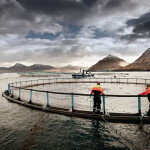
Sea Harvest Group’s aquaculture segment also saw improvement in the period, with its revenue increasing to ZAR 166 million (USD 9.5 million, EUR 8.1 million), up 63 percent from the ZAR 102 million (USD 5.8 million, EUR 5 million) it posted in H1 2024. However, lower selling prices and a stronger South African rand affected the valuation of its assets, leading to a fair value loss of ZAR 41 million (USD 2.3 million, EUR 2 million) in H1 2025, compared to a gain of ZAR 41 million in 2024.
The company said abalone market conditions deteriorated in the period, with lower demand in key markets resulting in 24 percent lower prices in H1 2024 than in H1 2025.
The company added that its Australian business – which it acquired in 2022 – saw higher revenue and “excellent operational performance,” leading to an EBIT of ZAR 300,000 (USD 17,000, EUR 14,000) compared to losses of ZAR 15 million (USD 860,000, EUR 736,000) in the same period in 2024.
Looking forward, the company said it is preparing to collaborate with the Marine Stewardship Council (MSC) in recertifying the nation's hake fishery in 2026. Ratheb said the next three years will be a new strategic phase where the company will work to build on its successes so far.
“Our outlook for our South African fishing business remains positive, driven by a stable biomass, security of tenure, very strong demand fundamentals globally, and economies of scale delivering strong margins,” Ratheb said. “Although still a smaller part of our business, our abalone and Australian operations are being restructured to prepare for long-term recovery as market fundamentals improve.”
