




Nissui’s sales were up 10 percent year over year in Q1 2024 to JPY 220 billion (USD 1.5 billion, EUR 1.4 billion), but the Japanese seafood conglomerate recorded flat operating profit and a slight decline in its ordinary profit.
Nissui credited a solid performance by its Food Products Business, a recovery in its Marine Product Business, and a weak yen for its sales boost.
Its operating profit for the quarter, which ended 30 June, remained flat at JPY 9.7 billion (USD 65.9 million, EUR 60.3 million), and its ordinary profit dropped 2.1 percent to JPY 9.5 billion (USD 64.6 million, EUR 59.1 million).
“During the first quarter of the fiscal year, the Japanese economy showed positive signs,” Nissui said. “On the other hand, the situation is still uncertain due to the prolonged situation in Ukraine, rising political tension in the Middle East, and price rises caused by the weakening yen.”
Nissui has successfully pushed through price increases and is reaping the benefits, though sales volume declined for both its overseas sales and in Japan, according to the company. Lower costs for its Food Products Business increased profitability, with sales rising 12.5 percent by value to JPY 123 billion (USD 835.7 million, EUR 764.5 million) in the quarter and operating profit reaching JPY 1.5 billion (USD 10.2 million, EUR 9.3 million) – split between JPY 900 million (USD 6.1 million, EUR 5.6 million) from overseas and JPY 500 million (USD 3.4 million, EUR 3.1 million) from its Japanese operations.
“In Japan, in addition to the effect of price increases, the price of surimi has been stable at a low level, covering the yen depreciation and logistics costs. Profit also increased overseas thanks to the decreasing cost of white fish. The chilled business was favorable as the sales to the convenience stores were firm, and there was an effect of newly consolidated subsidiaries,” it said.
Stable sales from trading in its Marine Products Business helped push Nissui to better its quarterly year-over-year performance from that unit. The company’s Marine Products segment recorded JPY 85 billion (USD 577.6 million, EUR 528.3 million) in sales, up 8.4 percent. However, its operating profit was down 52 percent to JPY 2 billion (USD 13.6 million, EUR 12.4 million).
“In Japan, profits increased due to strong sales of salmon trout, frozen tuna, and fish oil in the trading business. In North American processing, profits declined due to a continuous low-price condition of surimi and fillet,” Nissui said. “Sales increased due to the strong performance of domestic trading and the impact of foreign exchange rates, operating income decreased due to the impact of higher costs in aquaculture and early landing, as well as lower selling prices."
Nissui’s North American operations, led by its UniSea and Gorton’s subsidiaries, saw reduced profits and its sales shoot up JPY 1.2 billion (USD 8.2 million, EUR 7.5 million) to JPY 17.3 billion (USD 177.6 million, EUR 107.5 million). European sales – primarily accrued through its Cité Marine holding – rose JPY 1.1 billion (USD 7.5 million, EUR 6.8 million) to JPY 20 billion (USD 13.6 million, EUR 12.4 million).
Profits declined in the North American processing business because of the continuous low-price condition of surimi and fillet,” it said. “The U.S. economy continued to be strong as employment and income improved, and personal consumption continued to increase, while high inflation and rising policy interest rates continued. In Europe, loosening inflation pressure and improving personal consumption supported the economy.”
Nissui’s Salmones Antartica operations in South America were loss-making, with trout market prices below USD 6.50 (EUR 5.95) per kilogram and the company expecting to lose JPY 500 million (USD 3.4 million, EUR 3.1 million) in FY2024.
“In addition to the low survival rates by fish harvesting and cost increases in feed prices, a decrease in fish weight did not lead to an increase in the unit sales price, resulting in a decrease in profit,” Nissui said.
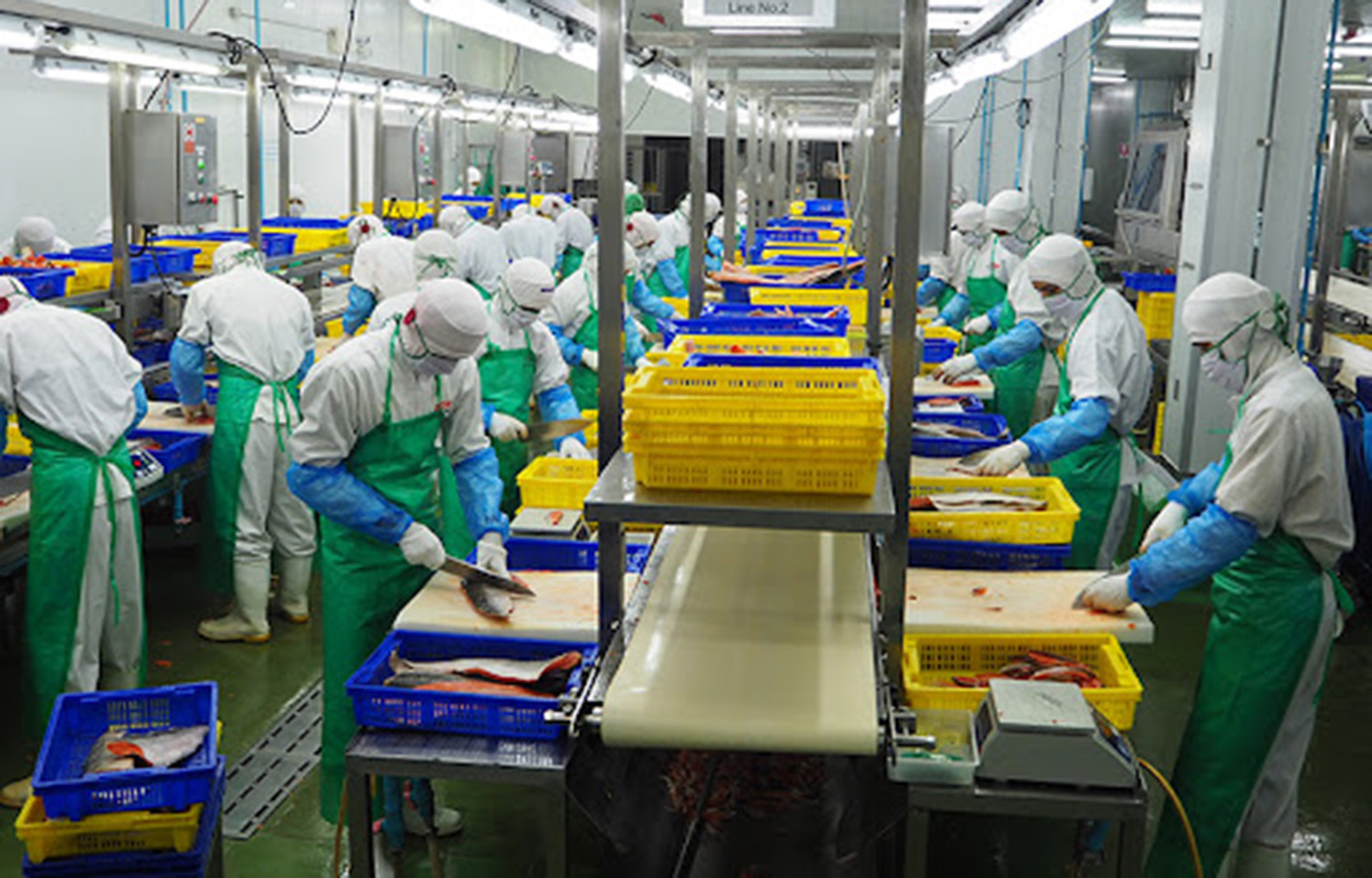
Nissui is in the midst of a medium-term business plan dubbed “Good Foods Recipe 1,” which has the goal of increasing profitability through expansion of its sales of highly processed value-added products. That effort is being fueled by the company’s plan to spend JPY 17 billion (USD 113 million, EUR 105 million) to expand its seafood-processing capabilities in the United States and European Union.
Additionally, the company continues to seek optimization of its existing business operations, including consolidation of its tuna-farming business in Japan, and Nissui said in February it had allocated JPY 20 billion (USD 133 million, EUR 123 million) for acquisitions and JPY 120 billion (USD 800 million, EUR 740 million) for improving its domestic food processing capacity.
