






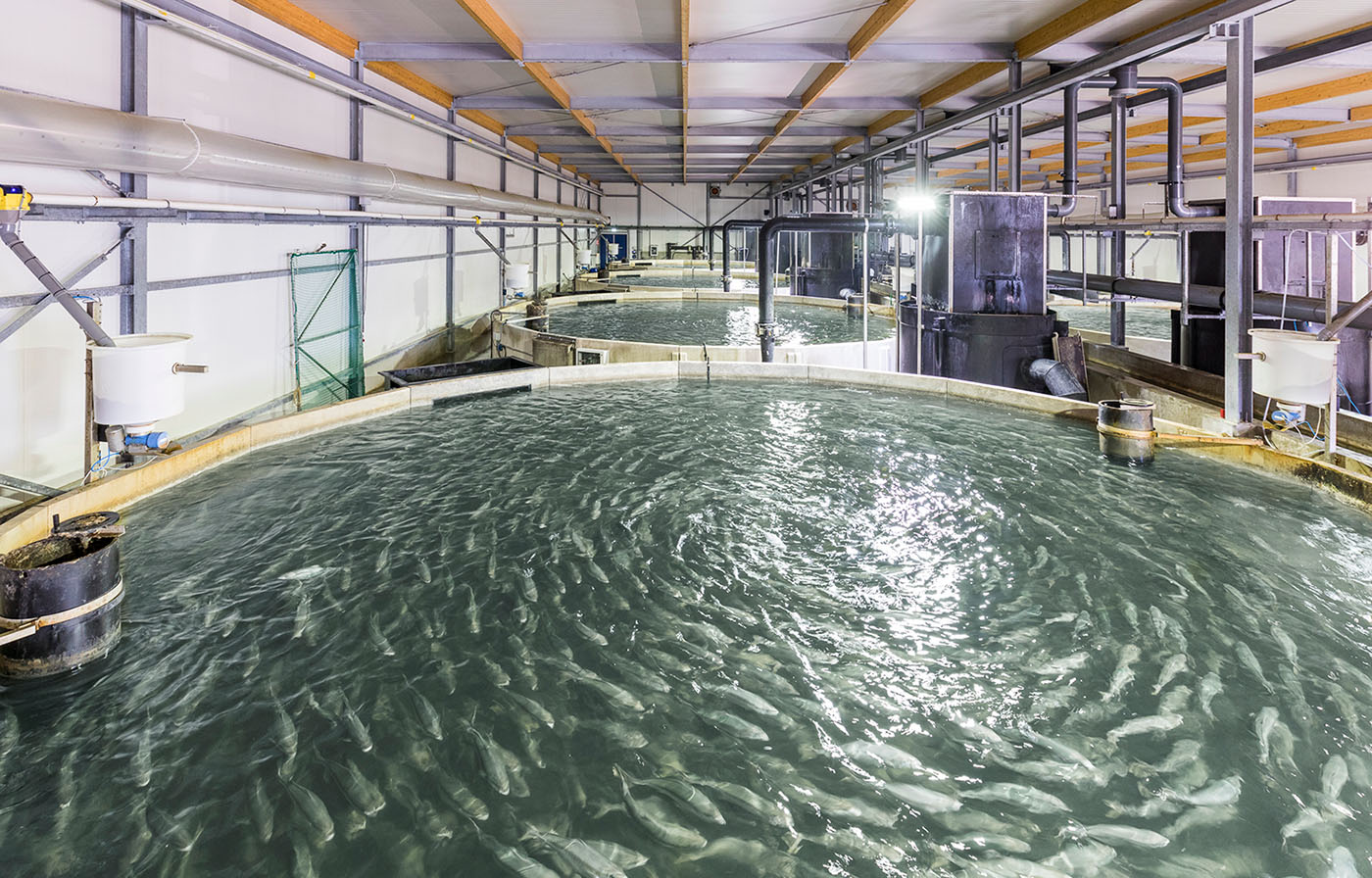
Land-based aquaculture company The Kingfish Company said it had a “strong commercial performance” in Q2 2025 as the company posted a record increase in sales volume.
In its latest Business Update, the Kats, Netherlands-headquartered company confirmed that it sold 723 metric tons (MT) of yellowtail kingfish harvested from its Kingfish Zeeland recirculating aquaculture system (RAS) in Q2 2025, marking an increase of 41 percent over the 512 MT it posted in the same period of 2024. Those sales generated EUR 9.6 million (USD 11.1 million) – an increase of 31 percent over the EUR 7.3 million (USD 8.4 million) in sales revenue achieved in Q2 2024.
The Kingfish Company said that while it posted higher sales volume and revenue in the three-month period, its average revenue per kilogram dropped to EUR 13.20 (USD 15.27) from EUR 14.20 (USD 16.42) per kilogram in Q2 2024. Kingfish attributed the decline to a higher proportion of frozen product sales. This, it said, followed a build-up of inventory in prior quarters to align the farm’s biomass with sales development.
Promotional pricing efforts aimed at expanding market reach and accelerating inventory turnover also impacted average pricing, the company said.
According to Kingfish, there’s increasing demand for its fresh products in Europe, but growth in the U.S. market has leveled off. The latter trend, it said, came despite a 36 percent revenue increase quarter over quarter.
A spokesperson for The Kingfish Company told SeafoodSource that a weakening U.S. dollar and the newly introduced 15 percent tariffs on the E.U. have impacted the competitiveness of imported products in the U.S. market – creating a more challenging environment for European exporters.
Kingfish said its expectation is that the ongoing trade uncertainty could continue to constrain its market potential in the U.S. However, the spokesperson said the company is “uniquely positioned” in this regard as it’s currently the only yellowtail kingfish producer with all the required local, state, and regulatory permits in place to develop a land-based facility in the country.
“These [trade] factors naturally impact the competitiveness of our exports to the U.S. market. At the same time, they reinforce the strategic rationale behind our Kingfish Maine project. Being able to produce locally in the U.S. would mitigate exposure to currency fluctuations and trade barriers, making our business case for domestic production even more compelling,” the spokesperson said. “This site, located in Jonesport, Maine, offers favorable conditions for aquaculture and has received strong support from the local community. We are actively exploring strategic partnerships to advance this opportunity, in line with our long-term vision for sustainable growth.”
The permitting issues facing the 8,500-MT capacity site were finally resolved in the first quarter of this year.
While it is still early in the process of evaluating potential collaborators, the company said it is generally seeking partners with complementary expertise – particularly those with a strong track record in the animal protein sector, experience in executing large U.S. construction projects, or having nationwide seafood distribution networks, the spokesperson said.
“The Kingfish Company brings deep technological and biological know-how, including industry-leading expertise in yellowtail kingfish genetics and production,” they said.
Meanwhile, from an operational perspective, the Kingfish Zeeland facility increased its production by 40 percent in Q2 2025 compared with Q1 2025, reaching 707 MT, with the update stating that following the biomass reduction implemented earlier this year, the farm has now returned to optimal levels.
With well-aligned biomass growth, harvest, and sales, the company is now operating under improved biological and production conditions, it said.
“After commissioning our Phase 2 expansion, biological performance exceeded expectations,” the spokesperson said. “This experience has reinforced the importance of tightly aligning production planning with sales forecasts, especially in land-based RAS operations, where inventory dynamics are particularly sensitive.”
As it aligns biomass with sales, the company is also working to expand its sales channels to give greater flexibility to inventory levels.
“These learnings are being integrated into our operational planning to support continued efficiency and responsiveness,” the spokesperson said.
