




California, U.S.A.-based Tsar Nicoulai Caviar is already making progress on turning around caviar producer and sturgeon farmer Sterling Caviar.
Sterling Caviar was founded by Stolt Sea Farm in 1983, but after posting years of losses, the company sold its operations to Eugene Fernandez in 2020. Fernandez told SeafoodSource he was confident that he could turn the company around and improve its finances, but his efforts weren’t enough; the company entered receivership in April 2024. What followed was a series of lawsuits between multiple companies that were involved with the struggling company.
When the dust finally settled, Tsar Nicoulai Caviar purchased Sterling Caviar out of receivership in December 2024, creating what is now the largest caviar-producing company in the U.S.
Masoud Mark Bolourchi, the CEO of Tsar Nicoulai Caviar, told SeafoodSource that since taking over Sterling Caviar’s operations, the company has already found a number of efficiencies that will help bring it back in line financially.
“We are really working very hard to get their systems more effective and more efficient,” Bolourchi said.
Despite only having control over Sterling Caviar for a few months, the company has already found several ways to tighten up some of the processes and save money.
“We have reorganized the teams, and we are really working very hard at reorganizing their processes; we have achieved some interesting results immediately. We are saving more than 50 percent on power consumption,” Bolourchi said.
Just by optimizing and rearranging how some of the processes work at the firm's facility, power consumption costs have gone from over USD 1.4 million (EUR 1.3 million) per year to around USD 300,000 (EUR 278,000) per year, he said.
Bolourchi said they have also adjusted the feeding regimes of the sturgeon living on the farm and have started to see more normal growth that puts the company back on a positive track.
“By optimizing and saving – [via] energy saving and labor saving methods of working – we are seeing some sign of profit making,” Bolourchi said. “That’s quite encouraging.”
Optimizing the systems to return to profitability is just the short-term plan to stabilizing Sterling Caviar financially, Bolourchi said. Tsar Nicoulai is already thinking several years in advance in terms of its plans – which is typical in the caviar and sturgeon-farming business.
“With sturgeon farming, you have to plan about eight to nine years ahead,” Bolourchi said. “We now have the capacity and the growth capability to reach producing over 100 metric tons of caviar in eight years, and we will be one of the biggest global producers in that product.”
Tsar Nicoulai, even before the Sterling Caviar purchase, was a big player in the caviar industry.
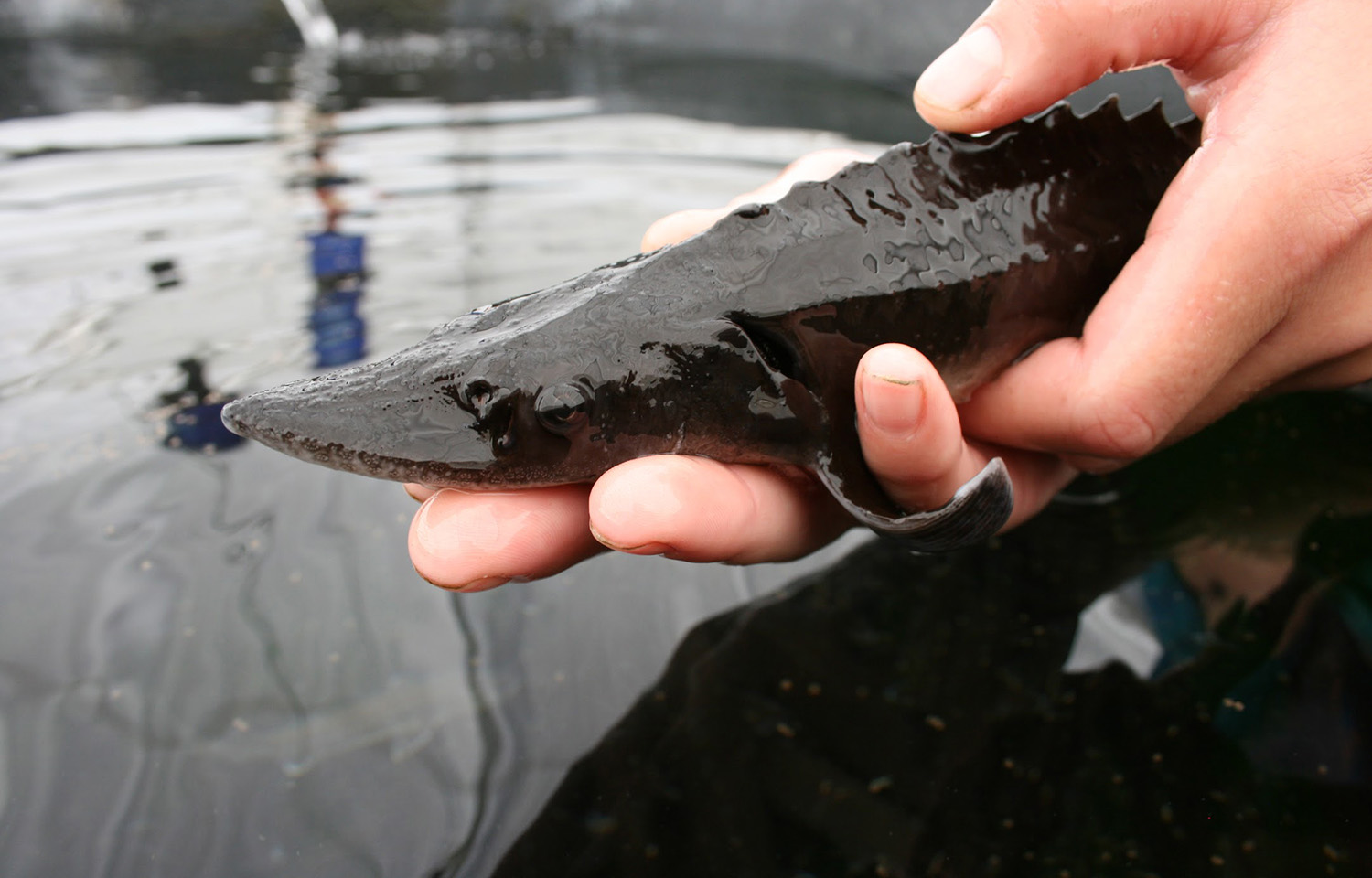
The company has over 120 tanks and more than 1 million pounds of sturgeon biomass. Bolourchi said with the purchase, the company is now the largest producer of caviar in the Americas – and it also wants to become a large producer of other sturgeon products. The company harvests males after the fish can be sexed – as male sturgeon do not produce caviar – and has developed alternative sources of revenue by processing and smoking the meat from the fish.
“We are expanding our new product development, and every year, we are introducing at least one or two new products to the market,” Bolourchi said. “We have, in the past couple of years, produced a sturgeon pâté, which is now featured in Whole Foods nationally and many Costco locations.”
Tsar Nicoulai Caviar is also producing salmon products in its own smokehouse and, last year, added a smoked salmon tzatziki that Bolourchi said has proven popular. It’s also working on sturgeon chips, which Bolourchi said is a snack food that is high in omega-3s.
Bolourchi said the products span beyond just food, as well. The company is working with a tannery that produces leather from sturgeon skin and is also working with a laboratory in the U.S. state of Massachusetts to harvest blood plasma from sturgeon.
“The sky is the limit,” Bolourchi said. “There is a lot of potential that can be discovered.”
The company’s push for efficiency and utilizing every product it can is nothing new, Bolourchi said.
Tsar Nicoulai had already been producing a significant share of its energy from solar, and it also harvests its own oxygen for fish using solar energy. The goal is to ensure nothing on the farm is wasted, he said.
“We throw away nothing. We recycle our water; we grow some hyacinths and leaves and things for the aquarium industry from nutrients from our fish,” Bolourchi said.
The latest effort is a partnership with an almond farmer in California’s Central Valley.
“Almonds use a little bit more water than other products, so in order to make it more efficient, we’re putting sturgeon farms in the almond farm, use the water once with the sturgeon, and provide the effluent water which is loaded with nutrients for the almond farm,” Bolourchi said. “Sustainability is our only way to do business. We do not want to spare anything or compromise on that. We want to make sure whatever we do is good for our grandchildren.”
The eventual goal is to create a caviar industry in the U.S. that’s larger than any other in the world; Bolourchi said the U.S. has the resources to make it happen, including the scientists and biologists who can improve the processes.
“We are increasing our capabilities to become a global player,” Bolourchi said. “We’re going to make this group of farms the largest in the world, bar none.”
