




The California Department of Fish and Wildlife (CDFW) announced a fishery restoration partnership with the Hoopa Valley Tribe to help salmon populations recover.
“This partnership demonstrates how Tribal and state agencies can work together to achieve multiple resource management goals,” CDFW Director Meghan Hertel said in a release. “I’m incredibly proud of the hard work by our Tribal partners and CDFW staff that led us to this historic accomplishment.”
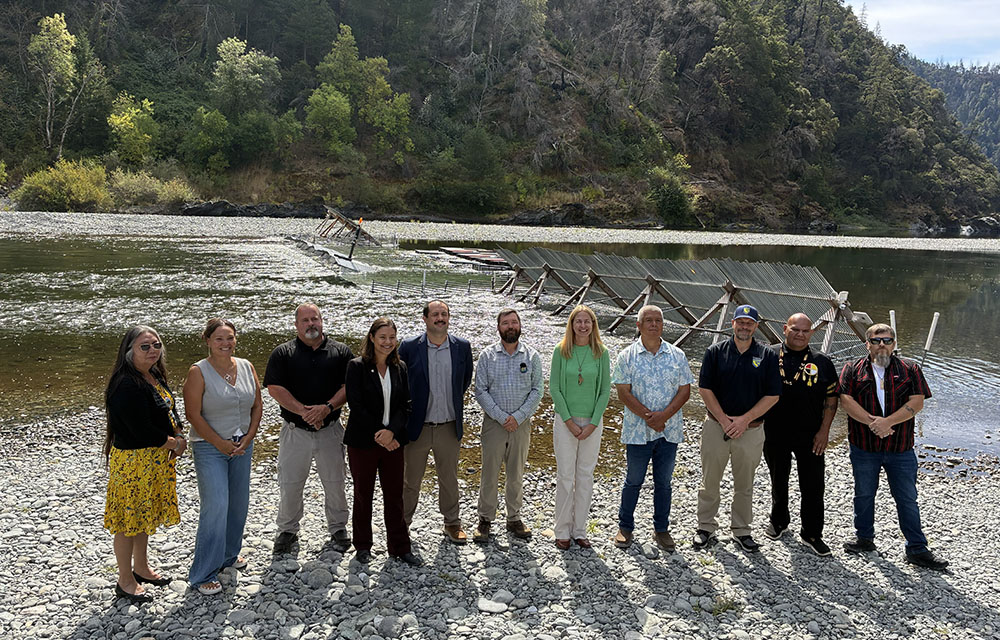
Under the agreement, the two governments have incorporated a selective harvest program within the Trinity River Restoration Program, enabling the Tribe to continue harvesting fish while combining its monitoring capacity with the state’s. Both the state’s Willow Creek Weir and the Tribe’s Selective Fish Harvest Weir downstream of the Willow Creek Weir will be discontinued and replaced by a single weir in the Lower Trinity River on the Hoopa Valley Reservation. CDFW said the consolidation will improve passage and in-river survival for fish while making more effective use of staff, funding, and resources for monitoring.
The two governments said the partnership utilizes both tribal Traditional Ecological Knowledge (TEK) and CDFW scientific monitoring.
“By combining our monitoring programs and selective harvest into a single operation, we are improving efficiency, reducing impacts to migrating fish, strengthening the scientific foundation of fisheries management and continuing to support the cultural, subsistence, and economic needs of the Hupa people,” Hoopa Valley Tribal Chairman Joe Davis said in a release.
