






U.S. President Donald Trump has withdrawn the federal government from a salmon restoration deal with Tribes in the Pacific Northwest region, marking the latest development in the president’s efforts to undo his predecessor’s legacy on salmon restoration in the region.
“We are dismayed that an agreement that was among the best roadmaps charted for helping Columbia Basin salmon – representing years of work by Tribes, states, and the federal government – was undone with the stroke of a pen,” Columbia River Inter-Tribal Fish Commission Chair Jeremy Takala said in a statement. “This action, done without consultation with the Tribes, dismantles what should have been celebrated as a historic achievement. If you love salmon, steelhead, sturgeon, and lamprey, the Resilient Columbia Basin Agreement was a groundbreaking commitment that provided critical funding for Tribal and other hatcheries, habitat restoration, predation management, infrastructure upgrades, and support for energy projects that would be less burdensome on the environment and Tribal cultural resources.”
Former U.S. President Joe Biden had made salmon restoration – especially in the Columbia River Basin – a priority during his administration, investing in recovery efforts for the species. In 2023, Biden signed an agreement with the Confederated Tribes of the Colville Reservation, the Coeur d’Alene Tribe, and the Spokane Tribe of Indians to reintroduce salmon in the Upper Columbia River Basin.
Shortly after that, Biden issued a memorandum titled “Restoring Healthy and Abundant Salmon, Steelhead, and Other Native Fish Populations in the Columbia River Basin,” which directed the federal government to utilize its resources to help wild salmon populations in the basin recover and support the treaty rights of Tribes.
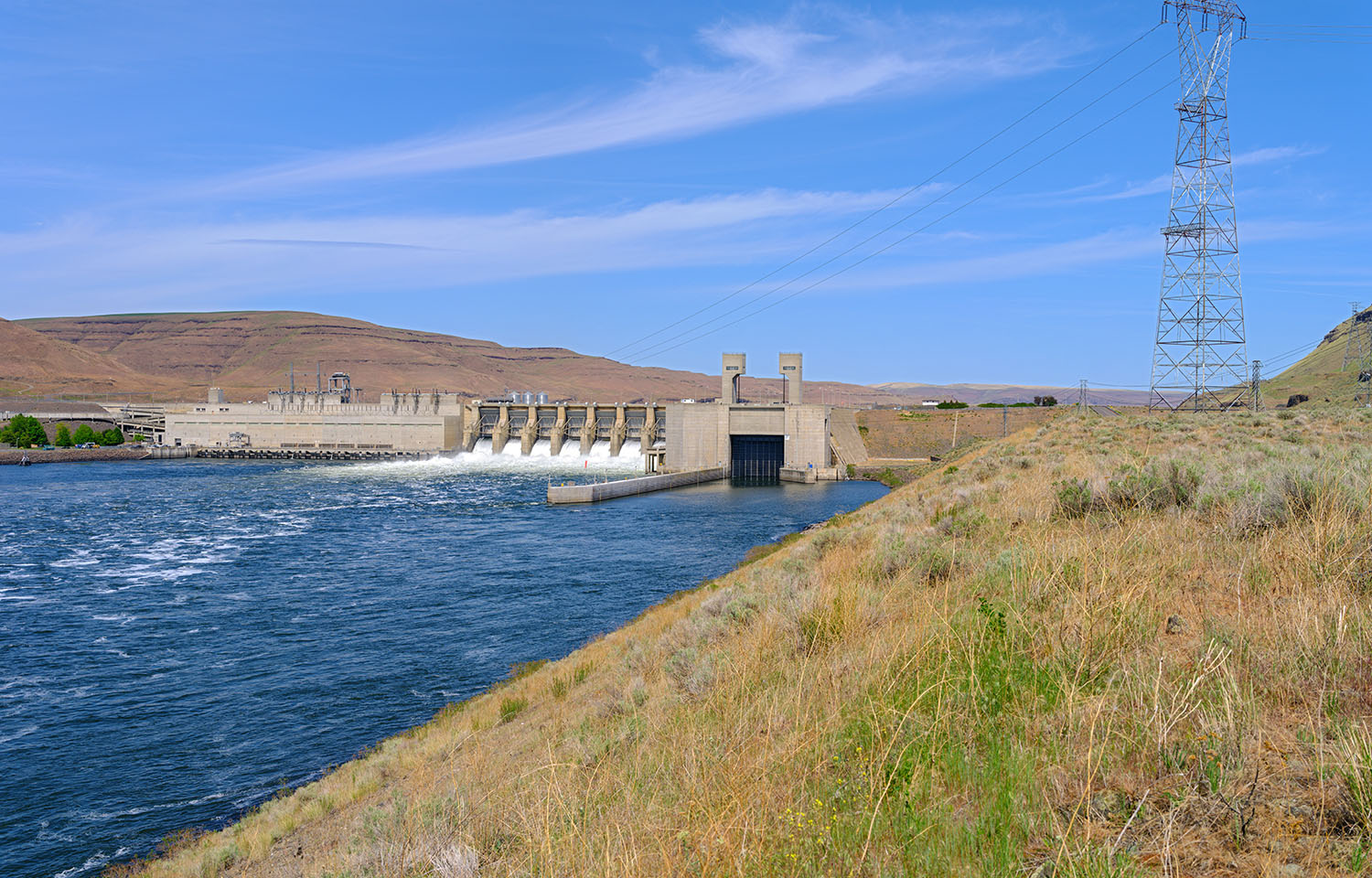
Then, in December 2023, in response to litigation, the Biden administration signed a deal with four Lower Columbia Basin Tribes and the state governments of Oregon and Washington to provide financial support for Tribe-owned energy projects that could replace power generated by four Lower Snake River dams. While the Biden administration claimed that it was not explicitly calling for those dams to be removed, opponents claimed dam removal was an implicit part of the president’s policy.
Comments at the time suggested participants in the deal intended to see the dams removed.
“The federal dams on the Lower Snake and mainstem Columbia rivers have had – and continue to have – devastating impacts on the salmon and our people, burdening our Treaty partnership,” Nez Perce Tribe Chairman Shannon F. Wheeler said in a White House press release announcing the deal in 2023. “So today, as Six Sovereigns joining together with the United States to advance salmon restoration throughout the Basin – including preparation for breach of the four Lower Snake River dams – we are also witnessing the restoration of Tribal Treaties to their rightful place under the rule of law.”
U.S. lawmakers in Congress have then attempted to reverse the deal, with legislators introducing a package of bills blocking dam removals and undoing Biden’s policy. While those bills have not progressed since, Trump’s latest action may make them unnecessary.
In a 12 June 2025 memo, Trump rescinded Biden’s 2023 memo and directed the federal government to withdraw from the 2024 deal with the Tribes.
In his memo, Trump stated it was necessary to renege on the agreement in order to protect the region’s hydroelectric power supply. In pulling out of the deal, Trump said Biden’s policy had elevated “’equitable treatment for fish’ and misplaced concerns about climate change above the Nation’s interests in reliable energy resources and the needs of American citizens.”
“My Administration is committed to protecting the American people from radical green agenda policies that make their lives more expensive and to maximizing the beneficial uses of our existing energy infrastructure and natural resources to generate energy and lower the cost of living,” Trump said.
According to environmental law group Earthjustice, which represents groups that agreed to a long-term stay of litigation as part of the original deal, advocates had been working with the Trump administration to secure support for the Columbia River Basin agreement. Those efforts ultimately fell short.
“This move by the Trump administration to throw away five years’ worth of progress is shortsighted and reckless,” Idaho Conservation League Salmon & Energy Strategist Mitch Cutter said in a statement. “The Resilient Columbia Basin Agreement was a landmark achievement between the federal government, states, Tribes, and salmon advocates to find solutions for salmon and stay out of the courtroom. Now, it’s gone thanks to the uninformed impulses of a disconnected Administration that doesn’t understand the Pacific Northwest and the rivers and fish that make our region special. The Idaho Conservation League will continue to do what it must to safeguard our wild fish and restore them to true abundance.”
Tribal representatives were also quick to denounce Trump’s memo.
“This action tries to hide from the truth. The Nez Perce Tribe holds a duty to speak the truth for the salmon, and the truth is that extinction of salmon populations is happening now,” Nez Perce Tribe Chairman Shannon Wheeler said in a statement. “People across the Northwest know this, and people across the Nation have supported us in a vision for preventing salmon extinction that would at the same time create a stronger and better future for the Northwest. This remains the shared vision of the states of Washington and Oregon, and the Yakama, Umatilla, Warm Springs, and Nez Perce Tribes, as set out in our Columbia Basin Restoration Initiative. It is a vision we believe is supported, publicly or privately, by most people in the Northwest. And, it is a vision underlaid by the treaties of our Northwest Tribes by the U.S. Constitution that protects those treaties and by the federal statutes enacted by Congress to protect salmon and other species from extinction.”
Trump’s memo comes shortly after his administration announced its intention to eradicate tens of millions of dollars in funding for salmon recovery starting in fiscal year 2026. Trump has proposed cutting all funding for the Pacific Coastal Salmon Recovery Fund, a program that has provided more than USD 60 million (EUR 51.8 billion) in federal financial support to salmon recovery efforts along the West Coast.
The program has provided USD 1.9 billion (EUR 1.7 billion) in funding since it was established in 2000, and Democrats included massive short-term spending increases for the program in the Bipartisan Infrastructure Law (BIL) and the Inflation Reduction Act (IRA). The Trump Administration has included language in the One Big Beautiful Bill rescinding any unspent BIL and IRA funds that were allocated for that purpose.
Conservation and Tribal groups in the region have vowed to continue supporting salmon recovery regardless of the federal government’s changed policy.
“Despite the administration’s withdrawal, the partnership between our four tribes and the states of Oregon and Washington endures,” Takala said. “We are still united in the cause of protecting salmon and rivers, and there are many efforts and pledges between us that continue this vital work.”
